


“Drivers have benefitted from car insurance price drops for some time now. But now we’re seeing that prices are starting to increase slightly in recent months, which means motorists could soon see their price increase when it comes to their renewal.
“Car insurance prices are generally calculated based on risk and claims. And while there have been fewer reported claims in recent years, the increases we’re starting to see are likely down to the fact that when a claim is made, it’s more expensive for insurers to rectify. This isn’t something drivers can control, but it doesn’t mean to say they can’t still save money on their insurance.
“Shopping around when it comes to renewal is key to knowing you’re getting the best price. But not leaving it to the last minute could mean you save even more. That’s as our data shows that getting a quote 28 days before your renewal is due could save you as much as 53% on your price. So being organised and getting it sorted early can pay off.”
Willis Towers Watson approved
Key findings and trends
Car insurance now costs £719 on average
Savings for young drivers, but costs remain high
Your postcode affects the price
What our car insurance expert says
How much is car insurance?
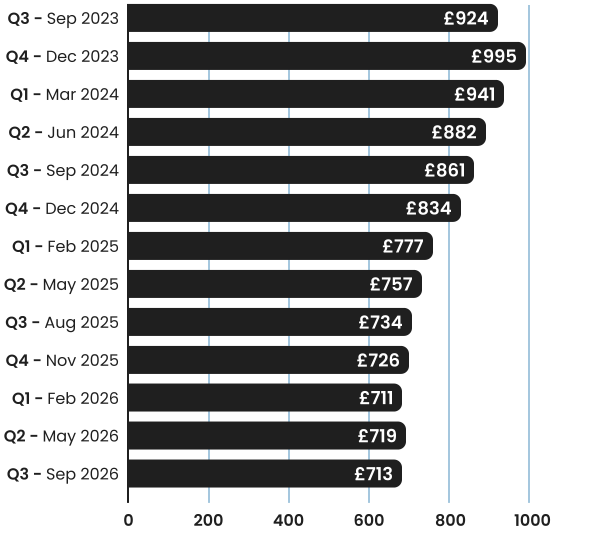
The average cost of comprehensive car insurance in the UK is now £719, based on the latest Confused.com Car Insurance Price Index, powered by WTW.
Car insurance prices have been gradually falling since the start of 2024, after reaching record highs at the end of 2023. The graph shows how average premiums have changed over the past three years, highlighting a steady easing in prices, rather than a sudden drop.
Where this data comes from
The Confused.com Car Insurance Price Index is the most comprehensive analysis of car insurance pricing in the UK. It’s built using over 6 million real car insurance quotes, collected every quarter from drivers shopping for cover through Confused.com.
All figures refer to new comprehensive car insurance policies, unless stated otherwise, and are based on the prices drivers were actually quoted, not estimates or insurer price lists. Because we’ve been tracking this data consistently over many years, we’re able to show how prices change over time, rather than relying on one-off snapshots.
Why do prices change?
Car insurance prices usually respond to wider market conditions. They’re influenced by:
- The cost and frequency of claims
- Repair, parts, and labour costs
- Levels of theft and accidents
- Competition between insurers
How to reduce car insurance
If your car insurance still feels expensive, there are a few tweaks you can do to help bring costs down – without having to change or compromise your cover.
Explore our guide for more tips on how to save on your car insurance.
The expert view
Confused.com motor general manager and car insurance expert, Matt Crole-Rees, shares his update on the latest data, including tips on what you can do to get cheaper car insurance:
How is car insurance calculated?
Car insurance pricing is based on risk levels.
Insurers use your details to estimate how likely you are to make a claim and how much that claim could cost. The higher the risk, the higher the price. That’s why prices can vary so much from one driver to the next.
Use the Confused.com car insurance calculator to see how changes to your details could affect what you pay.
Tell us your details to get the average car insurance price for your area
Your age
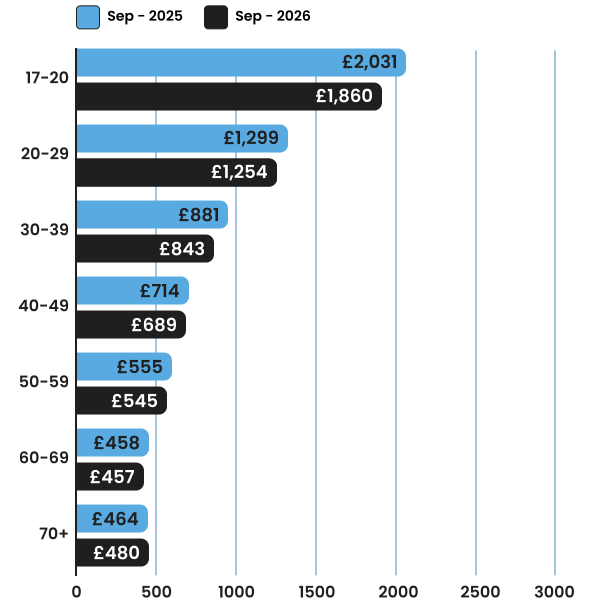
Younger drivers still pay the most overall. 17-year-olds now pay £1,695 on average, even though prices have decreased over the past year. That’s because newer drivers typically have less experience and little or no no-claims history, which increases risk in the eyes of insurers.
As drivers get older, prices usually come down. On average, premiums don’t fall below £1,000 until around age 30, and they only start to look closer to the UK average in the mid-to late 30s. From there, prices tend to level out, with drivers in their 60s paying some of the lowest amounts, at around £465, on average.
Average car insurance cost by age
| May - 2025 | May - 2026 | |
|---|---|---|
| 17-20 | ||
|
17-20
|
£2,045
|
£1,813
|
| 20-29 | ||
|
20-29
|
£1,351
|
£1,255
|
| 30-39 | ||
|
30-39
|
£916
|
£850
|
| 40-49 | ||
|
40-49
|
£732
|
£699
|
| 50-59 | ||
|
50-59
|
£565
|
£552
|
| 60-69 | ||
|
60-69
|
£471
|
£459
|
| 70+ | ||
|
70+
|
£480
|
£482
|
Your location
Even if two drivers look identical on paper, living in different areas can mean very different prices. That’s because insurers take into account things like:
- Crime and theft rates in the area
- Traffic levels and congestion, which can increase the chance of accidents
- How often claims happen locally, and how expensive they tend to be
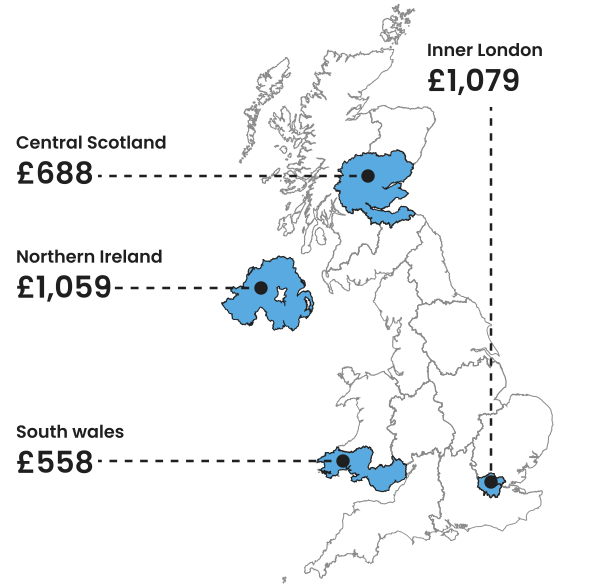
This is why Inner London is the most expensive area in the UK for car insurance, while drivers in the South West typically pay some of the lowest prices. Other areas, such as Manchester and Merseyside, have seen bigger price drops over the past year. The map shows how average prices compare across England, Scotland, Wales and Northern Ireland.
Driving habits
How often you use your car might have a bigger impact on your car insurance price than you may think.
People who drive around 11,000 to 14,000 miles a year tend to pay less, while prices rise at both ends of the scale.
- Drivers covering around 14,000 miles a year pay about £601 on average
- Those who say they drive around 5,000 miles pay closer to £768
- At the highest mileages, prices increase again, with drivers doing around 50,000 miles paying close to £946
That’s a difference of more than £300 a year, based on mileage alone.
Why mileage affects the price
Driving very little isn’t always cheaper. Lower mileage can mean less regular driving, which insurers may see as higher risk. On the other hand, higher mileage means more time on the road, increasing the chance of an accident.
It’s also important to be accurate. Underestimating your mileage to get a cheaper price can backfire - not only could it cost more, but being over your declared mileage when making a claim could cause problems with your cover.
The table shows how average premiums change across different mileage ranges.
| Mileage | |
|---|---|
|
Up to 1,000
|
£737
|
|
Up to 2,000
|
£698
|
|
Up to 3,000
|
£727
|
|
Up to 4,000
|
£772
|
|
Up to 5,000
|
£768
|
|
Up to 6,000
|
£733
|
|
Up to 7,000
|
£716
|
|
Up to 8,000
|
£694
|
|
Up to 9,000
|
£647
|
|
Up to 10,000
|
£702
|
|
Up to 11,000
|
£614
|
|
Up to 12,000
|
£614
|
|
Up to 13,000
|
£610
|
|
Up to 14,000
|
£601
|
|
Up to 15,000
|
£683
|
|
Up to 16,000
|
£604
|
|
Up to 17,000
|
£619
|
|
Up to 18,000
|
£619
|
|
Up to 19,000
|
£631
|
|
Up to 20,000
|
£722
|
|
Up to 21,000
|
£680
|
|
Up to 22,000
|
£644
|
|
Up to 23,000
|
£662
|
|
Up to 24,000
|
£667
|
|
Up to 25,000
|
£722
|
|
Up to 30,000
|
£717
|
|
Up to 50,000
|
£946
|
The car you drive
Insurers look at how expensive a car is to repair or replace, how likely it is to be stolen, and how it’s performed in past claims. That’s why cars are placed into insurance groups. These groups help insurers assess risk, and they can make a noticeable difference to your premium.
In general, cars tend to be cheaper to insure if they:
- Are less powerful and have smaller engines
- Cost less to repair or replace
- Have strong safety and security features
- Are less likely to be stolen
More powerful cars, higher repair costs, or models that are targeted by thieves usually sit in higher insurance groups, which can mean your car insurance is more expensive.
Use the Confused.com car insurance group checker to see which group your car falls into and how choosing a different model could affect your insurance cost.
Car insurance group checker
The car
Insurance group
Group
9/50
Your occupation
Insurers use occupation as one of many signals to help assess risk, based on how claims have historically varied across different roles. The type of job you have can suggest things like driving patterns, mileage and working hours.
In general, jobs that have regular hours and involve lower mileage and less time driving tend to be cheaper to insure. However, small wording changes can sometimes make a difference. Two job titles that sound similar can be treated differently by insurers, even if the role itself hasn’t changed.
For example, someone listed as a “Fast Food Caterer” pays £1,312 on average, while a “Caterer” pays £733 - a potential saving of £579. Likewise, a “Mechanic” pays £1,266 on average, compared to £672 for a “Mechanical Engineer” - a difference of £594.
The table shows some of the cheapest job titles for car insurance, based on average premiums.
*All data based on quotes made by Confused.com customers between March 2025 - May 2026. Prices based on the average median price displayed. The top and bottom 10 occupations were selected based on a minimum of 2,000 quotes per occupation. ‘Alternative’ occupations may include roles where fewer than 2,000 quotes were returned.
| Job title | Average car insurance premium* |
|---|---|
|
Paramedic
|
£297
|
|
Police Sergeant
|
£333
|
|
Police Civilian Attached (staff)
|
£333
|
|
Civil Service Clerical
|
£337
|
|
Local Government Officer
|
£339
|
|
Local Authority Employee
|
£343
|
|
School Caretaker
|
£353
|
|
Postman/Postwoman
|
£353
|
|
Medical Secretary
|
£358
|
|
Counsellor
|
£359
|
England
England shows the widest variation in car insurance prices anywhere in the UK.
Drivers in Inner London pay the most, with average premiums of £1,088, even with prices falling by 8% over the past year. Other large cities and urban areas also tend to be more expensive, where traffic levels, theft and claims costs are likely to be higher.
The South West is the cheapest region in England, with drivers paying £504 on average.
Some of the biggest price drops over the past year have been seen in Manchester and Merseyside, where premiums have fallen by £89 on average.
| Region | Average car insurance premium |
|---|---|
|
South West
|
£504
|
|
West of England
|
£564
|
|
South of England
|
£580
|
|
North of England
|
£606
|
|
South East
|
£620
|
|
North East
|
£624
|
|
East
|
£627
|
|
North West
|
£663 |
|
Midlands - North
|
£666 |
|
South Central England
|
£686
|
|
Midlands - East
|
£709
|
|
Leeds / Sheffield
|
£798
|
|
Manchester / Merseyside
|
£807
|
|
Midlands - West
|
£860
|
|
London - Outer
|
£899
|
|
London - Inner
|
£1,088
|
Wales
Car insurance in Wales is generally cheaper than the UK average, though prices still vary depending on where you live. Drivers in Central and North Wales pay the least, with average premiums of £511. Prices are higher in South Wales, where larger cities like Cardiff tend to see higher traffic levels. Here, drivers pay around £570 on average.
Overall, prices across Wales have continued to fall over the past year, helping to keep premiums relatively stable compared to some other parts of the UK.
| Region | Average car insurance premium |
|---|---|
|
Central & North Wales
|
£511
|
|
Wales - South
|
£570
|
Scotland
Car insurance in Scotland remains relatively affordable overall. Drivers in the Scottish Borders pay the least, with average premiums of £539. Prices are higher in Central Scotland, where larger cities like Glasgow and Edinburgh see more congestion and potentially higher claims costs. Here, drivers pay around £717 on average.
Elsewhere, premiums sit somewhere in between. Drivers in East and Northeast Scotland pay around £599, while those in the Highlands and Islands pay £583 on average.
Prices in Scotland are now around 1-2% more expensive year-on-year. This is a marginal increase, but car insurance costs here are relatively low compared to the UK average.
| Region | Average car insurance premium |
|---|---|
|
Scotland - Borders
|
£539
|
|
Scotland - Central
|
£717
|
|
Scotland - East & NE
|
£599
|
|
Scotland - Highlands & Islands
|
£583
|
Northern Ireland
Northern Ireland is one of the more expensive parts of the UK for car insurance, with average premiums of £1,020.
While car insurance premiums have increased minimally in Scotland year-on-year, prices in Northern Ireland have risen significantly over the past 12 months by £168 (20%). This suggests different market conditions compared to the rest of the UK.
| Region | Average car insurance premium |
|---|---|
|
Northern Ireland
|
£1,020
|
How we conducted this research
The Confused.com Car Insurance Price Index is based on more than 6 million real car insurance quotes, collected every quarter from drivers shopping for cover through Confused.com. This makes it the most comprehensive analysis of car insurance pricing in the UK.
The data used in this report was collected in Q2 2026 and reflects the prices drivers were actually quoted, rather than estimates or insurer price lists. Unless otherwise stated, all prices refer to new comprehensive car insurance policies.