


Key takeaways
- Accidental damage is an add-on to your home insurance policy. It can cover certain types of pet damage, but check your policy to see what exactly is covered.
- Your dog or puppy might chew for a variety of reasons, try getting them a variety of toys and making sure they have the right amount of exercise. Plus, a place to rest and have quiet time.
- If your cat scratches your furniture, get a sturdy scratching post and place this in front of the area where they scratch. Provide a variety of textures for them if you can.
Is pet damage covered by standard home insurance?
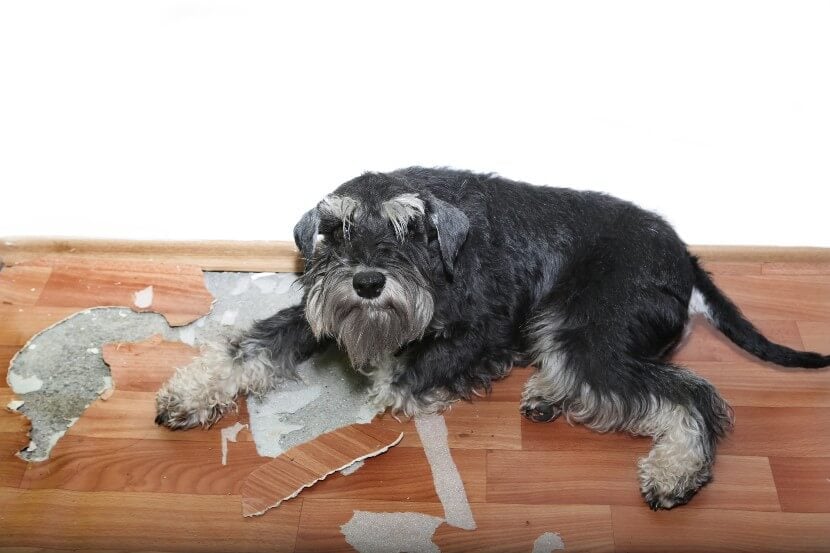
Pet damage isn’t usually included on a standard home insurance policy. But if you know your pet is prone to causing damage, extended accidental damage cover could help.
Understanding accidental damage cover for pets
Accidental damage cover for pets usually covers damage such as:
- Chewing
- Scratching
- Staining the carpet
Here are some scenarios where accidental damage for pets might come in handy:
- Your dog knocks over a vase with their tail
- Your cat uses your TV as a climbing frame, knocks it to the floor and breaks it
- Your cat does a whoopsie on the carpet and ruins it
- Your dog decides your best shoes would be a perfect chew toy
Every accidental damage policy is different, so remember to always check with your insurer to see what exactly you’re covered for.
For example, some insurers won't cover damage that's caused by a pet with a history of destructive behaviour. Normal wear and tear isn't covered either.
It's likely you'll have an excess with your accidental damage policy too. This is a certain amount that you have to pay towards a claim. So when it comes to making a claim, you have to decide if it's worth it.
For example, your excess is £100, and your puppy chews a chair that's worth £150. You'd have to pay £100 and then claim for £50.
You have to decide whether it's worth claiming for the £50 and sacrificing your no claims discount.
Can I get pet damage insurance for tenants?
Yes, you can get pet damage insurance if you're a renter. Your buildings insurance should already be covered by your landlord.
But you could add accidental damage to your contents insurance policy, if you have it.
If you don't have contents insurance, it's probably worth looking into, particularly if you have a pet.
Adding accidental damage means certain things that your landlord owns, like a sofa, cushions, TV or rugs, could be replaced if your pet accidentally damages them.
Your belongings are protected too generally. So, if any of your items get stolen, damaged or lost, your contents insurance should cover you.
What if my dog damages someone else’s property?
Third-party liability insurance can help cover damage your pet might cause to someone else's property, belongings or animals. It's included as standard on most pet insurance policies.
It covers both you and your pet if they do something they shouldn't, for example, if they damage someone's belongings or property. You're also covered for:
- Legal fees if your dog attacks someone
- Vet fees if they attack another animal
How does pet ownership affect the price of your home insurance?
Having a pet will make your home insurance more expensive. This is because it increases your chances of making a claim on your home insurance. In fact, having a cat and a dog increases your insurance prices by over £27*:
| Cover type | No pets* | Cats* | Dogs* | Cats and dogs* |
|---|---|---|---|---|
|
Buildings
|
£181
|
£204.90
|
£202.35
|
£235.56
|
|
Buildings and contents
|
£187
|
£204.72
|
£204.79
|
£236.85
|
|
Contents
|
£49.68
|
£60.96
|
£59.47
|
£69.85
|
How to pet-proof your home against damage
Dogs and cats like to chew and scratch. It's in their nature. We have to give them the right outlet to do these things safely and without damaging themselves or our stuff.
Ultimate pet damage prevention checklist
Dogs Trust recommends these tips to help your dog to express their need to chew in a safe way that doesn't damage your belongings:
If you have a puppy, do some puppy proofing
Move items out of the way so they can't chew them in the first place. You can also restrict your puppy's access by installing baby gates or giving them a playpen.
Get a variety of toys for your puppy
Swap them out regularly for your puppy so they stay interesting to them. They like different textures, so try rope, rubber or soft toys. If they're chewing the right thing, make sure to praise them. You can even join in with the game too!
Don't tell your dog off for mouthing
It can make them worried and sometimes make the behaviour worse.
Give your dog the right amount of exercise, socialisation and mental stimulation
Sometimes chewing can be worse if your dog isn't getting enough exercise or they're bored.
Keep them busy with toys, and make sure they're getting the right amount of walks for their age.
You should also make sure that your dog gets the right amount of rest, so give them time to sleep undisturbed.
For cats, these tips can help them stop scratching:
Get a scratching post or pad for your cat
We'll give more tips on this later, but a post that's sturdy in front of an area where your cat has previously scratched can give them an outlet for this natural behaviour. Remember, when they scratch the post, praise them for choosing the right thing to scratch!
If you've got a few cats, put the posts in different places so they don't have to compete.
How to stop your dog from chewing
We've answered some questions on different ways to stop your puppy or dog from chewing:
Why do puppies chew, and how do you stop it?
When puppies are teething, they might chew things to relieve irritation. Make sure they have a variety of toys with lots of different textures to chew on.
If you notice them chewing something, try to call them away with a toy or treat, and play with them with the toy.
Move things they shouldn't chew out of their reach so they don't continue to chew them.
In fact, it's a good idea to move anything that your puppy might chew out of the way. It won't be forever, just until that chewing phase is out of the way.
Training and toys: how to help dogs with boredom and anxiety
Dogs usually chew because they’re bored or because they’re suffering from separation anxiety.
If your dog is bored, try getting puzzle toys, such as one that dispenses treats when your dog moves it. Flavoured chew toys also work well to keep your dog entertained.
Also reassess your exercise routine. Are they getting enough walks and for long enough? Do they get to sniff and search on their walks? Do they have a chance to run around and play? Dogs that have enriching walks might be less bored around the home.
Alleviating their boredom can stop them turning to wires, the carpet or anything else that feels good to chew.
These tips might work for dogs that suffer from separation anxiety, too. The RSPCA suggests using a ‘special toy’ that you bring out only when you leave. When you get back, store the special toy away until the next time you leave.
You could also try taking your dog for a walk about half an hour before you leave. When you get back from your walk, give it a small bowl of food. This might also encourage it to relax and stop chewing.
You shouldn’t be leaving your dog for more than 4 hours a day. If you do, it’s worth hiring a certified dog-sitter to keep it company and provide some stimulation.
Dogs Trust has a behaviour support line for more advice on how to help your dog with boredom or anxiety.
How do I stop my cat from scratching furniture and carpets?
To stop your cat scratching furniture or carpets, buy a couple of sturdy scratching posts. Or if you’re on a budget, try laying out carpet off-cuts or even a sturdy piece of bark.
Place these in front of the piece of furniture that your cat likes to scratch.
Why do cats scratch? Scenting, stretching and territory
Cats scratch to work out the muscles in their paws and along their back. Cats have scent glands in their paws, too. When they scratch, they mark their territory.
The aim of this is to keep other cats away – even if there's no other cat around.
Tips for choosing and placing a cat scratching post
According to the Cat's Protection, an ideal scratching post is:
- About 60 cm tall so the average moggy can stretch and scratch
- Sturdy; they should be able to put their whole body weight into it
- Choose a post that has rope spiralled around so your cat can have a really good scratch on it.
You should try and place these in front of where your cat has been scratching. You can find out more about cat scratching posts and their placement on the Cat's Protection website.
Cats often like to scratch when they first wake up, so you could try putting the post near where they like to sleep.
If you've got more than one cat, try to space the posts out so they don't have to compete for them.
You can always speak to a cat behaviourist if you're worried about your cat or they don't seem themselves.
*Confused.com data. May - October 2025 for households with no pets, households who have dogs, households who have cats, and households who have both. Prices shown are for buildings, contents and combined home insurance policies.






 cookie usage