


By making small changes to how you drive and look after your car, you can cut your car running costs, fuel use and reduce emissions.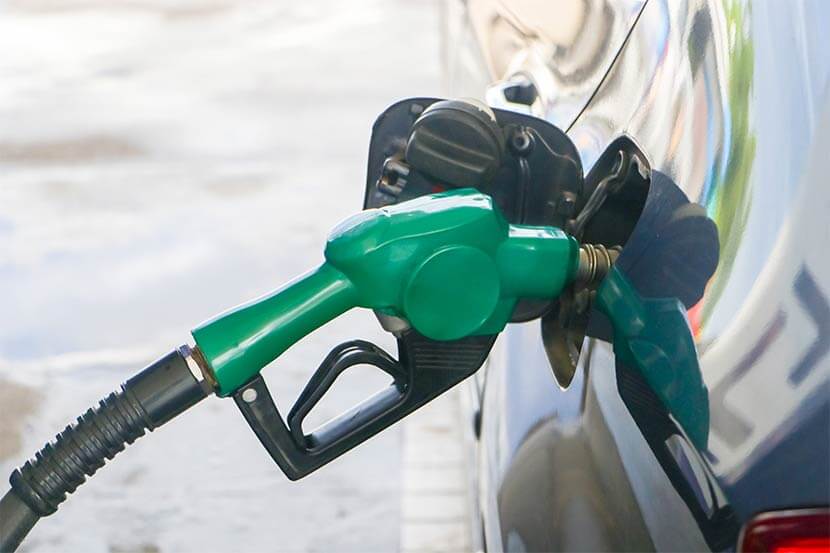
Key takeaways
- You can track your spending with our fuel cost calculator and find cheaper fuel using our petrol prices tool
- Driving at a steady speed and accelerating smoothly is the most effective way to improve fuel efficiency
- Speeding and harsh acceleration waste the most fuel
- A well-maintained car uses less fuel day-to-day
Why is fuel so expensive?
A large share of what you pay at the pump is tax.
- Fuel duty: 52.95p per litre
- VAT: 20% added on top of the full price
The rest of the price covers:
- wholesale fuel costs
- biofuel content like E10
- transport and storage
- retailer margins
Fuel prices also change often. That’s because oil prices, exchange rates and demand all shift regularly.
What makes up the total cost of fuel?
| Petrol | Diesel | |
|---|---|---|
|
Fuel duty
|
38%
|
33%
|
|
Wholesale cost
|
33%
|
40%
|
|
VAT
|
17%
|
17%
|
|
Bio content
|
5%
|
8%
|
Source: RAC Fuel Watch
When is fuel consumption at its highest?
Fuel consumption is highest when your engine is under strain.
That usually happens when you:
- accelerate quickly
- drive at higher speeds
- carry extra weight
- sit in stop-start traffic
Driving faster uses more fuel. At 80 mph, you could use up to 25% more fuel than at 70 mph.
Also, if you’re travelling at 80 mph, you’re breaking the law and could end up with a speeding fine. You’re also using 25% more fuel than you would by staying within the speed limit.
What will reduce my fuel consumption?
One thing to do is look into fuel efficient cars, as those with the highest MPG rating should be the most fuel efficient. Or you might think about switching to an electric car.
In the meantime, there are lots of other easier ways to reduce your fuel costs.
Not only could these tips save you money, but making the most of your fuel reduces your car’s carbon emissions.
How can you avoid wasting fuel?
Here are 14 practical ways to improve fuel efficiency and cut fuel consumption:
1. Maintain your car
Well-maintained vehicles generally use fuel more efficiently, so it’s worth keeping your vehicle in good condition.
Maintenance includes booking it for regular services and getting issues fixed quickly.
2. Remove excess weight
Your car uses more fuel if it’s heavy. One way to reduce its weight is to take anything out of the car that you’re not using.
Give your car boot a clear out and try not to travel with items in the car you don’t need.
3. Check your tyre pressure
If you don’t know whether you have the correct tyre pressure your fuel consumption should tip you off.
Under-inflated tyres increase drag. That makes your engine work harder and use more fuel.
4. Only fill up with what you need
Only topping up with what you need and avoiding having a full tank means the fuel you do have goes slightly further.
To make it easier to judge the correct amount of fuel, keep a notebook in the glove box, or keep a record on your phone.
When you fill up, write down how much fuel you put in to get from A to B. Note this in litres, not in pounds, as fuel prices are always changing.
Some fuel tanks can take up to 109 litres, so that’s a significant amount of extra weight to carry around. You wouldn’t leave 109 litres worth of bottled water in your boot, would you?
5. Drive smoothly
Your driving style might have a big impact on how much petrol or diesel you use.
Try to keep your driving smooth. Gentle acceleration and using the highest safe gear should use less fuel.
What’s more, when you approach traffic lights, ease off the accelerator early if the lights are red. Why hurry just to wait?
This is sometimes called 'defensive driving'. Not only should it help you use less fuel, but it tends to be safer too. And, if you’re driving with a black box device in the car, defensive driving could also help your car insurance costs.
6. Avoid idling
Idling wastes fuel and increases emissions. If you’re stopped, switch off your engine. Leaving your engine running unnecessarily could lead to penalties.
7. Use stop-start technology
If your car has a stop-start engine, use it. Keeping your foot on the clutch when you stop at traffic lights could waste fuel.
But if you take your foot off while the car is in neutral, the car's stop-start system should kick in, saving you fuel and money.
8. Don’t coast
Coasting - which is driving out of gear - isn't a safe driving technique. You have less control of your car and you're likely to travel faster as you go downhill. Some people coast to try to reduce their fuel consumption.
But coasting doesn't save fuel. While it probably won’t cost you extra in fuel, nowadays it won’t save you fuel either.
Modern cars have electronic control units (ECUs) so your car uses less fuel when going downhill.
9. Reduce your air con use
Every time you go to cool down your car with the air conditioning, you’re reducing your fuel. It’s the same for your heating.
So, only use both of these if you really need to. Both use engine power to work properly and therefore increase your fuel consumption.
10. Use cruise control
One way to save fuel is to drive at a constant speed. Cruise control can help with this.
If you’re on the motorway or on a long constant flat surface, try activating cruise control. You might find that using it reduces your fuel consumption
Don’t use cruise control on roads with a gradient though. As the system is designed to be used on flat roads at a constant speed, it requires more power to get up a hill.
This could increase your fuel consumption, rather than save it.
11. Combine journeys into one round trip
Instead of making several one-off trips, try to combine them into a single round trip for better fuel efficiency.
When your engine has been on and is warmed up, it should be most fuel efficient. But starting when it’s been off for a while might use up more energy and fuel.
12. Keep your windows closed
Air conditioning uses fuel. But having the windows down causes drag, which uses up fuel too.
At low speeds, open the window - the fuel used to compensate for drag is less than the fuel used to power your air con.
But when driving on the motorway, it’s the other way around. So, turn on the climate control and roll the windows up. The tipping point for this is around 30 mph.
13. Know how much you really spend on fuel
Knowing how much your car is costing you to run is the first step to shaving a few pounds off your bill.
Check out our fuel cost calculator to see just how much you're spending on petrol or diesel each week, month and year.
14. Find a cheaper place to get petrol
If you find your local petrol station is costing the earth, you might find that there’s one a few miles down the road that's a little cheaper.
Use our petrol prices tool to get up-to-date petrol prices within five, 10 or 20 miles from your location.
The new fuel finder scheme introduced in early 2026 now means UK petrol stations must share fuel price changes quickly, making it easier for drivers to find cheaper petrol.
 cookie usage