


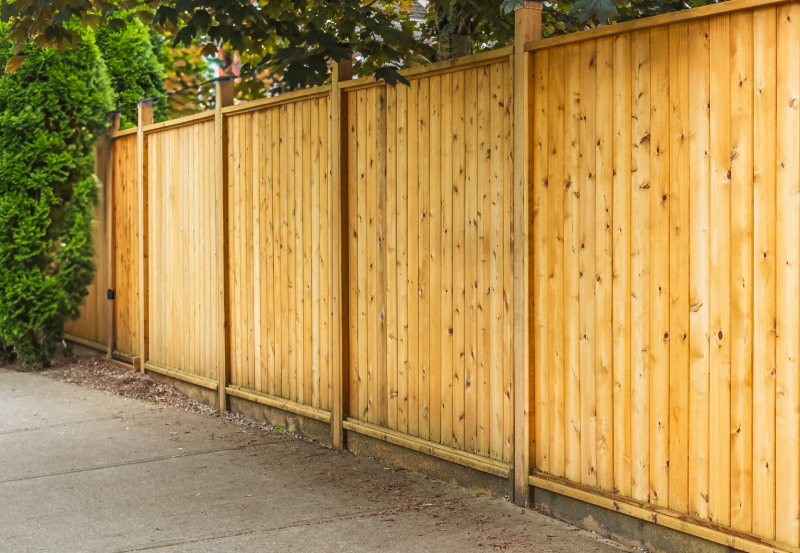
Key points about fences, ownership and insurance
- Check your title deed or title plan to see who owns and maintains each fence.
- If ownership is unclear, you can check Land Registry records or ask your conveyancer for guidance.
- You must maintain any fence you own, and jointly owned fences require shared repairs.
- Home insurance may cover storm or wind damage, but not wear and tear or poor maintenance.
- Neighbours are not obliged to replace an old or damaged fence unless it is unsafe.
- Back garden fences are usually limited to 2 metres in height, or 1 metre if facing a road or footpath, unless you get planning permission.
Which fence is mine?
The title deed or title plan for your property is the best place to start. These documents are usually provided when you buy your home, and they show your boundaries and what you are responsible for. Look for any T-shaped marks, as these indicate who is responsible for a particular fence.
If the mark appears only on your side of the boundary, then you are solely responsible for that fence. If the mark appears on both sides, you and your neighbour share responsibility.
If you cannot find your title deed, you can request a copy from the Land Registry online. You can also ask your neighbour whether they have their own copy, although a title plan does not always include details of fence ownership.
Your conveyancer, who carried out the property searches when you bought your home, may also be able to help. It is also worth checking the seller's property information form, as it sometimes includes details about boundary responsibilities.
Am I responsible for maintaining my garden fence?
This mainly depends on who is responsible for the fence. Whether the fence belongs to you, your neighbour or both of you, it is important that it is kept in good condition.
If the fence is yours and it becomes unsafe due to poor maintenance, your neighbour could take action if it poses a risk. Likewise, if your neighbour damages your fence, they should cover the cost of repairing it. If the fence is jointly owned, you will both need to share the cost of any maintenance or repairs.
Fences naturally suffer from wear and tear or bad weather over time. The key thing is to know which fences you are responsible for and to maintain them accordingly.
Who will have to pay for a damaged fence?
Keeping your fence well maintained is a good way to avoid paying for major repairs or replacement. However, unexpected damage can still occur, especially during storms or strong winds, which is why it is important to perform monthly home maintenance checks all-year round.
If your fence is damaged by a storm, you may be able to claim through your buildings insurance, depending on your policy. Before making a claim, compare the repair cost with your excess, as sometimes paying for repairs yourself is cheaper. Making a claim could also increase your future premiums.
Insurance may also cover damage you cause to a neighbour’s fence or damage they cause to yours. Understanding who is responsible helps avoid disputes and ensures repairs are handled appropriately.
What if my neighbour damaged my fence?
If your neighbour has damaged your fence, start by politely asking if they will pay for the repairs or replacement. If they refuse and the damage is their responsibility, you may need to consider making a claim through your home insurance or theirs.
If you caused the damage, you should cover the cost. Some policies include accidental damage or liability cover that may help with repair costs.
Does my home insurance cover fence damage and repairs?
A typical home insurance policy covers what is inside your property line, including fences. However, not all causes of damage are covered, so it is important to check your policy to see what you can and cannot claim for.
Fences naturally deteriorate over time, and poor maintenance can make this worse. Claims for damage caused by wear and tear or lack of upkeep are likely to be rejected.
Does home insurance cover fence damage from wind?
Most of the time, yes. Home insurance usually covers fence damage caused by wind. Fences are normally included under the part of your policy called "other structures," which also covers things like sheds, gates and detached garages.
So if strong wind blows your fence over, your insurer will typically help pay to fix or replace it.
However, there are a few things to keep in mind:
- You will usually need to pay your excess first. If the repair cost is lower than your excess, it might not be worth making a claim.
- Wear and tear is not covered. If the fence was already rotting, unstable or poorly maintained, your insurer may reject the claim because the wind was not the only cause.
- Some policies limit how much they will cover for fences. For example, they may only insure a certain percentage of the total amount set aside for "other structures."
What about storm damage?
Storm damage is often covered by some standard home insurance policies, but the level of cover can vary depending on your insurer and the circumstances. Policies typically protect against events such as strong wind, hail, or heavy rain.
For example, if a healthy tree falls on your fence during a storm, many insurers would cover the damage. However, if the tree was neglected, rotten, or unstable, the insurer may reject the claim.
Flooding is usually not covered under standard home insurance, and you would normally need separate flood insurance for this type of damage.
It is always important to check your policy documents to see exactly what is covered and under what conditions.
Is my neighbour obliged to fix their fence?
Even if a neighbour's fence has fallen apart or is rotting, they are not legally required to repair or replace it unless it presents a safety risk. If a neighbour's damaged fence falls onto your land, they must remove it, but they still do not have to put up a new fence.
Legalities aside, if a neighbour's fence is causing you distress, it is best to talk to them calmly about the issue and try to resolve it together.
What if we still can't work out who the fence belongs to?
The first place to check would be the title deed, this could outline the ownership of fences - but doesn't always do so. You should also speak to the conveyancing solicitor that conducted searches as part of the purchase of the property.
If this doesn't provide you with a clear indication, you should search through any land registry documents online. If you still can't determine boundaries, you could access the RICS Boundary Disputes help scheme for further advice.
What if my home is rented?
If you're a tenant, the responsibility of the fence would sit with your landlord. They'll need to ensure that the fence is fit for purpose and pay for repairs or replacement if necessary.
However, if you damage the fence by breaking a panel, for example, you'll be expected to foot the bill for repairs.
How high can a fence be?
As a general rule, fences in your back garden should be no more than 2 metres high. Fences that face a footpath or a road are usually limited to 1 metre in height. If you want to go above these limits, you will need planning permission.
Each local council sets its own rules and regulations, so it is important to check with your local planning department to ensure you are compliant. It is also a good idea to speak to your neighbours about any plans, as maintaining a positive relationship with those living next door can help prevent disputes.
What is the 7-year boundary rule?
The 7-year boundary rule relates to land ownership. In simple terms, if you have used a piece of land openly and without challenge for at least seven years, you may be able to claim legal ownership of it.
There are important exceptions. You cannot simply start using land and claim it as your own whenever you like. The process is more complex if the land is registered with the Land Registry, and the rule does not apply to public land.
Fences often bring this rule into question when they are put up in the wrong position. If part of your neighbour’s land ends up on your side of the fence and you have used it openly for seven years without dispute, you might be able to make a claim. However, this process is contentious, requires clear evidence, and can take a long time.






 cookie usage