


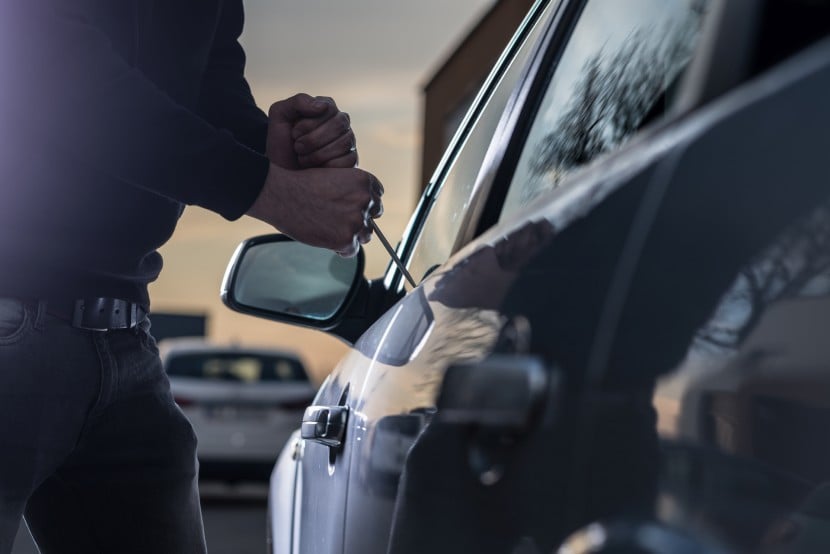
Car theft doesn't always look like how you'd expect. It might be an unlocked door, a cloned key, or a quick signal hack that tricks your car into unlocking itself. Read on to find out more about some of the most common tricks in the book.
Key takeaways:
- Some modern thieves operate by finding flaws in a car’s electrical system, rather than hotwiring or smashing windows.
- Relay theft is when a transmitter and amplifier are used to mimic your car key. But there are signal-blocking methods you can use to reduce the risk.
- Improving your home security can help you avoid a Hanoi burglary - where thieves get your car keys by breaking into your house.
- GPS jammers are sometimes used to stop stolen vehicles being tracked by police. Having a multi-layered car security system can help keep your car secure.
What are the main types of car theft?
Although some thieves may use other methods, these are the 8 common types of car theft:
- Keyless car theft
- Hanoi burglary
- Turbo decoder theft
- Transponder key cloning
- On-board diagnostics compromise
- Electronic control unit replacement
- Car key code grabbing
- GPS jamming device
If you're buying a used car, it's always worth doing a stolen car check before you make the final purchase.
Below, we'll take a closer look at each technique and share some tips on how to protect yourself from them.
1. Keyless car theft
Keyless entry car theft, or relay theft, usually involves 2 bits of smart tech - a relay transmitter and an amplifier.
Together, they trick your car into thinking your key is right next to it. That's all it takes for the vehicle to unlock, start, and be driven off.
Securing against keyless car theft
Keyless theft relies on signal detection, so blocking that signal is a good line of defence.
Here's how to do it:
- Check if your key has sleep mode. Some newer systems let you disable the signal when it's not in use. A simple press of a button could make a big difference.
- Use a metal container. It sounds basic, but storing your keys in something metal (like a biscuit tin) can help block the signal. But, it’s always good to test it works.
- Get a Faraday pouch. These signal-blocking pouches can make relay theft trickier for thieves - just make sure your key actually fits inside, as some are only made for cards.
2. Hanoi burglary
This type of theft starts at home. Thieves break into your house specifically to steal your car keys and then drive off with your vehicle. It gets its name from Operation Hanoi, a police initiative created to crack down on it.
Securing against Hanoi burglary
Lock all your doors and windows, especially at night or when you're out - stopping them from getting inside in the first place is key.
Keep car keys out of sight and out of reach, ideally locked in a drawer or cabinet.
3. Turbo decoder theft
Turbo decoders are specialist tools used by locksmiths, but they can also be exploited by car thieves.
They work by slipping into a manual door lock and mimicking the shape of your key, making it possible to unlock the car without force. Thieves often pair turbo decoders with other methods to steal vehicles quickly and quietly.
Securing against turbo decoder theft
Layered security is a good method of defence. Consider:
- Installing an alarm
- Using a steering wheel lock
- Installing an immobiliser or tracking system
Anything that slows them down or increases the risk of getting caught can help keep your car safe.
4. Transponder key cloning
This one's all about access.
Criminals copy the electronic signal from your car key and use it to clone the key. In some cases, this can be done after a vehicle’s been handled at a garage, valet, or car wash.
They'll then return the original key back to you, so you don't realise anything's wrong. But the cloned version can still unlock and start your car later.
Securing against transponder key cloning
Be cautious about who you hand your car keys to. Always check the reputation of garages and car services in advance.
Adding visible deterrents like steering wheel locks or gearstick locks can also make your car a far less appealing target.
5. On-board diagnostics (OBD) compromise
The OBD port sits under your dashboard and helps mechanics check your car's systems. But in the wrong hands, it can be used to steal your car.
Thieves can break in using tools like turbo decoders, then plug a device into the port to access key data and program a new key, giving them full control of your vehicle.
Securing against OBD compromise
The trick here? Multi-layered security. Even if they get inside, visible deterrents like a steering wheel lock or handbrake lock can make the job harder and not worth the risk.
6. Electronic control unit (ECU) replacement
The ECU is your car's onboard computer - it controls the engine and other systems. And like most tech, it can be hacked.
This method isn’t quick, so it’s more likely to be tried on vehicles left parked and unattended for long periods, such as commercial vans left overnight. Thieves may break in using tools like turbo decoders, then swap out the ECU with a blank one. In some cases, this means they can start the vehicle and drive away without setting off alarms.
Securing against ECU replacement
Because this type of theft takes time, visible security can be a good solution. Think steering wheel locks, wheel clamps, or even a GPS tracker - anything that makes the job slower, riskier, or not worth the effort.
7. Car key code grabbing
This one’s easy to miss.
Thieves can target busy places like supermarket car parks, using devices that pick up the signal from electronic key fobs. In some cases, they block the signal as you lock your car, so it doesn’t actually lock. They may also capture the code your key sends, which could then be used to unlock the car later. Not all cars or key systems are affected, so it’s worth checking with your manufacturer.
Securing against car key code grabbing
Get into the habit of checking your car is locked before you walk away. Listen for the locking sound, watch for the indicator lights, or try the door handle.
If someone nearby seems a bit too interested in what you’re doing, trust your instincts and stay alert. But, remember: even if you sense something suspicious, do not confront anyone. If a crime is happening or you feel in danger, call 999. For non-emergencies, call 101.
8. GPS jamming device
This one targets your security system, not the car itself.
Some drivers fit GPS trackers so their car can be found if it's stolen. But thieves can use jamming devices to block the tracker's signal, making the car harder to trace.
Securing against GPS jamming
If you've got a tracker, check what tech it uses.
Some systems use very high frequency (VHF) instead of GPS. These are less likely to be affected by jammers, so your car might still be found even if someone tries to block the signal.
 cookie usage