


We've all seen the good, bad and ugly captured by dash cams. They can make it easier to claim on your insurance, since footage clearly shows who was at fault.
Dash cams are popular among UK drivers, with 5.2 million* motorists telling us they had one fitted when getting a quote.
Key takeaways
- Some insurers offer a discount for having a dashcam, but it's not universal and not guaranteed
- Even without a discount, dashcam footage can be invaluable for proving fault in a claim
- "Insurance-approved" isn't a formal standard, but insurers typically look for footage quality, GPS timestamping, and tamper-resistant recordings
- You should tell your insurer about your dashcam, even though it won't always affect your premium
- Dashcams are usually covered under the personal belongings section of a comprehensive policy, not the main vehicle cover.
Can I use dash cam footage to support my insurance claim?
Yes, absolutely. If you have dash cam footage from an accident, send it to your car insurer. Many even insist on it.
This footage gives clear details of what happened, like:
- Weather and road conditions
- The other vehicle's make, model, colour, condition, and reg plate
- Any passengers or witnesses at the scene
- Vehicle speed and location
Dash cam footage can make a big difference to your claim's success, helping you sort things faster.
Case study
Mark** supplied dashcam footage as a witness to a 'hit and run' collision between a delivery van and a neighbour's parked car. The footage identified the vehicle that caused the damage as it clearly showed its reg plate.
Without this footage the neighbour would have had no idea who caused the damage and would have had to claim on their own insurance policy.
How do I send dash cam footage to the police?
Sending dash cam footage to the police might feel like a big job, but it's actually straightforward.
If you have footage of a traffic accident or incident, you can submit it through the National Dash Cam Safety Portal.
This portal is run by Nextbase, a dash cam manufacturer, to help you send footage directly to your local police force.
Here’s how to submit your footage:
- Go to the National Dash Cam Safety Portal.
- Select your local police force on the map.
- You'll then go directly to their specific page for submitting incident details, often called 'Operation SNAP'.
What if my police force doesn't have a page?
If your local police force doesn't have a dedicated page on the portal, you have two options:
- Fill in Nextbase's form, and they will submit the footage on your behalf.
- Follow Nextbase's alternative instructions, which might include contacting the police force directly.
Does my car insurance cover dash cams?
Yes, usually. But it depends on your policy.
If you have comprehensive car insurance, your policy typically covers your dash cam if it's stolen or damaged in an accident. This is often called 'personal belongings' cover.
Most standard policies cover up to £150. Dash cams can be pricey, so you can ask your insurer to increase this limit.
You'll likely need to show proof of ownership, like a receipt. Check your policy documents to see what your insurer needs.
Can I get an insurance-approved dash cam?
It would be useful, but unfortunately, there's no universal list of insurance-approved dash cams, or a single official approval standard. "Insurance-approved" is really a marketing term rather than a formal certification.
That said, insurers commonly look for a few things when assessing dash cam footage:
-
Wide field of view - typically 140° or above, to capture more of the road
-
GPS and timestamp data embedded in the footage, which helps verify when and where it was recorded
-
Tamper-resistant or locked recordings that can't be easily edited after the fact
Video quality still matters too. When buying a dash cam, look for at least 1080p resolution, with 4K available at a higher price point.
Do I need to have my dash cam professionally fitted?
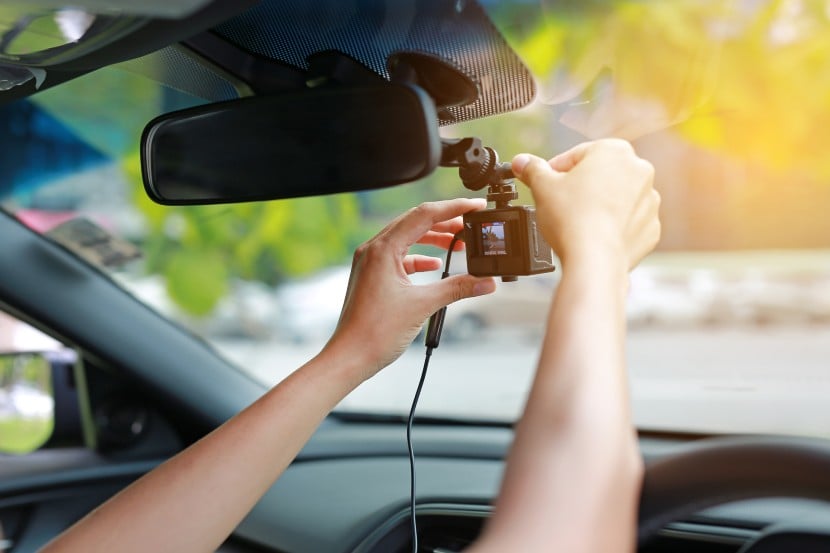
Not at all! You can easily plug your dash cam into your car's USB port yourself.
But if you prefer to hardwire it directly into your car, a professional can do that for you.
Either way, your footage can still support a claim, as long as it clearly shows the road ahead.
There are some benefits to having your dash cam installed by a professional, including:
-
Always on. Hardwiring means your dash cam powers up with your car, so you never miss a thing.
-
Parking mode. If your dash cam has parking mode, hardwiring lets you use it.
-
No messy wires. They're tucked away, so no dangling cables to distract you or get in the way.
A professional fitting usually costs £55-80 at places like Halfords.
Do I get a discount on my car insurance if I have a dash cam?
It definitely won't hurt your chances!
Having a dash cam doesn't guarantee a dash cam insurance discount, but some of the insurers we compare do offer one if you've got one fitted. So it's always worth mentioning when you get a quote with us.
When you compare car insurance with us, we'll simply ask: "Do you have a dashcam fitted to your car? (optional)." Tick yes, and any insurer offering a dash cam discount can factor that in when working out your price.
Around 2.1 million* of our customers said yes to this in the last 12 months.
One thing to keep in mind: most insurers will expect you to hand over your dash cam footage if you make a car insurance claim.
If you've said you have a dash cam but can't provide footage, you might have to pay back any discount you got.
Fibbing to get a cheaper price isn't worth it either. Your insurer could invalidate your policy altogether, so always be straight with them.
"A dash cam can save you a lot of hassle if you need to make a claim. It won't always get you a discount, but it shows insurers you're willing to have your driving scrutinised, and that can work in your favour. Without one, your insurer has to rely on word of mouth. With one, you've got a clear record of what actually happened, which can help prove you weren't at fault and keep your future prices down. Good footage can help: Just make sure it's installed properly with a clear view of the road ahead." What our motor insurance expert says


How much do dash cams cost?
Dash cams tend to cost £40-£500. The price depends on the features you choose.
To find the right one for you, think about what you actually need. This helps you get the best value without paying for extras you won't use.
- Picture quality - the higher the resolution, the clearer the footage for your insurance company
- Number of cameras - additional rear and cabin cameras cost more, but give you more coverage
- Storage - footage that uploads to the cloud is more secure than an SD card, but is likely to cost more
- Parking mode - this protects your car even when you're not using it, but usually needs to be hardwired to your car
*Confused.com data, 17 August 2025 to 16 August 2026
**Name has been changed


 cookie usage