


More than 9 million motorists admit to driving over the limit the morning after Christmas drinks1 - so it’s especially important to know the facts about drinking and driving this time of year.
Key takeaways
- Don’t drink and drive - ever. Even small festive drinks can impair you.
- Limits vary across the UK, but you can be unsafe long before you reach them.
- It takes less than you think. A few seasonal drinks can push you over the limit fast.
- Penalties are tough: bans, fines, higher insurance, even prison.
- Insurance may not cover you if you drive over the limit.
- You can still be over the limit next morning; alcohol leaves the body slowly - use a breathalyser or plan a safe ride.
What's the UK drink-drive limit?
In England, Wales and Northern Ireland, you’re over the drink-drive limit if you have over:
- 80mg of alcohol per 100ml of blood
- 35 micrograms of alcohol per 100ml of breath
- 107mg of alcohol per 100ml of urine
In Scotland, these limits are lower and more in line with other European countries:
- 50mg of alcohol per 100ml of blood
- 22 micrograms of alcohol per 100ml of breath
- 67mg of alcohol per 100ml of urine
How many drinks does it take to be over the drink-driving limit?
We can’t make this clearer, don’t drink and drive.
According to research by Confused.com, over 4 in 10 drivers would feel comfortable to drive after drinking wine, while over a fifth would drive after drinking a lager1.
You might think you’re ok to drive after a few drinks, but so many different factors can affect your capacity to drive after drinking. For example:
- Your weight
- Your age
- Your assigned sex at birth
- Your metabolism
- Any medications you've taken
- How much you’ve eaten
- You stress levels
- The strength and type of alcohol you're drinking
We’ve estimated just how few drinks it takes to push you over the drink driving limit. We’ve done this by using the drink-drive limit for England, Wales and Northern Ireland and the average UK weight for men and women2:
- Men: 85kg
- Women: 72kg
Source: NHS data
Pints
Assuming it's a medium-strength lager or cider of 4.5%2:
- Men: if you have more than 2 pints you could be over drink-drive limit
- Women: If you have more than 1 pint you could be over drink-drive limit
Glasses of wine
Assuming an average strength of 13%2:
- Men: If you have more than 2 standard glasses of wine (175ml) you could be over the drink-drive limit
- Women: If you have more than 1 standard glass of wine you could be over the drink-drive limit
Shots
Assuming an average strength of 40%2:
- Men: If you have over 4 single shots (35ml) you could be over the drink-drive limit
- Women: If you have over 3 single shots (35ml) you could be over the drink-drive limit
Please remember that these are estimates, it might take less than these amounts to put you over the drink-driving limit.
What are the penalties for drink-driving?
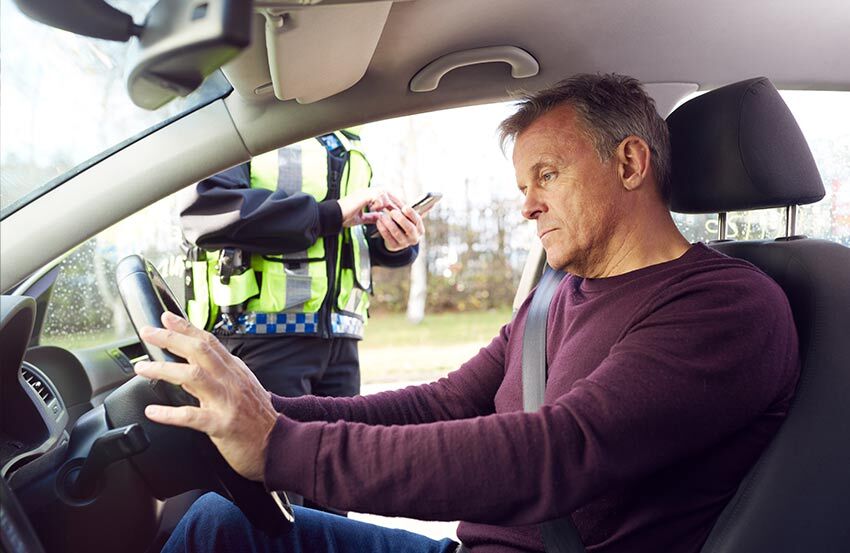
The punishments for driving under the influence are severe. Despite this, 7 in 10 drivers have said they have driven after consuming alcohol the same day1.
You could be banned from driving for a minimum of 12 months. And if you’re convicted twice in 10 years, this goes up to 3 years.
You could also go to prison for up to 6 months, and have to pay a fine of at least £2,500.
If you're stopped by the police and refuse to provide a specimen for them, you could get:
- A 6-month prison sentence
- An unlimited fine
- A driving ban
If you get a drink-driving conviction, it should be noted on your driving licence with a code starting with DR. This penalty stays on your licence for 11 years.
For more information, check out our guide on driving conviction offence codes.
How does drink driving affect my car insurance?
If you’re in an accident while driving over the limit or unfit to drive through drink or drugs, your cover might be invalid. Most car insurance companies have a clause stating this.
This means that you aren't entitled to any payout from your insurer. And any other costs involved - for example, a damage claim from another driver - would likely be your responsibility.
Having a drink-driving conviction might also mean you’re likely to see a sizable increase in the price of your car insurance quotes. Some insurers even refuse to cover convicted drivers.
Our data shows that the average policy cost with a DR40 conviction (in charge of a vehicle while alcohol level above limit) is £1,8043.
You could also face a punishment if you get in a car with someone you know has been drinking. If you're involved in an accident, any compensation you might be entitled to could be reduced.
This counts as 'contributory negligence'. By getting in the car with someone who’s unfit to drive, you’ve contributed to your own injuries in a similar way to being in the car without a seatbelt.
What our car insurance expert says
What our motor insurance expert says
"Let's keep this simple. If you're drinking, don't drive. And if you're driving, don't drink. Make sure you arrange another way to get home, either by insuring a sober friend to drive your car or using public transport. And if you're not certain that you're sober, don't risk it.
"If you've had a few drinks, don't just assume that you can sleep it off and be okay to drive the next morning. You could still have alcohol in your system, which puts you and others at risk. And if the police pull you over, you face points on your licence and expensive car insurance costs for the next few years."


Is it safe to drive in the morning after drinking?
This depends on how fast your body breaks down alcohol, which is based on your weight and assigned sex at birth.
For absolute clarity, buy a breathalyser. These aren’t a legal requirement in the UK, but keeping a breathalyser kit in your car is a great idea. They’re easy to use, and take less than a minute to check if you’re over the limit.
This is especially important over the Christmas period, as over 29% of those celebrating at festive events plan to drive the next morning1.
Here’s an example of how drinking can push you over the limit the morning after:
Using our drink driving calculator we estimate that if a man who weighs 85kg has 3 pints of 4% strength lager at 11pm, it would take roughly 8 hours for it to leave their system.
Therefore, they might be okay to drive by by 7am the following morning. However, if they were to have just one extra pint, it could take a further around two and half hours for them to potentially be within the UK drink-drive limits.
How long does alcohol stay in your system?
According to the NHS, it takes around an hour for your liver to process 1 unit of alcohol. That's the equivalent of 1 shot. Standard measures of beer and wine are around 2-2.5 units, so it can take your body more than twice as long to remove these drinks from your system.
Even though you might feel fine, alcohol stays in your system for a long time. Alcohol can stay in your blood for up to 6 hours after your last drink, and on your breath for up to 24 hours.
And with more Christmas socials and back-to-back nights out, that means you could still be over the limit the morning after a celebration.
Alternatives to driving after having a drink
During the festive season, when social plans stack up, having a safe way home becomes even more important.
There are plenty of ways for you to get home after a few drinks:
- Public transport and taxis
- Designated drivers
- Get a temporary car insurance policy for a sober friend
- Scooterman (London only)
Temporary car insurance is one option. You can insure a sober friend or family member to drive you and your car home. You can get cover instantly and can set it to cover someone from 1 hour to 28 days.
The temporary policy cancels when the cover ends, so you’re not committing to a long-term policy either.
If you live in London, there are services like Scooterman who drive you and your car home safely.
The chauffeur arrives in a foldable scooter that’s stored in your boot while they’re driving you home. They’re also insured to drive your car so you don't have to worry about adding a named driver your car insurance policy.
1Research carried out by OnePoll on behalf of Confused.com of 2,000 UK drivers between 6th and 13th November 2025.
2Source: Drinkaware.
3Confused.com data, Q2, 2024.

 cookie usage