


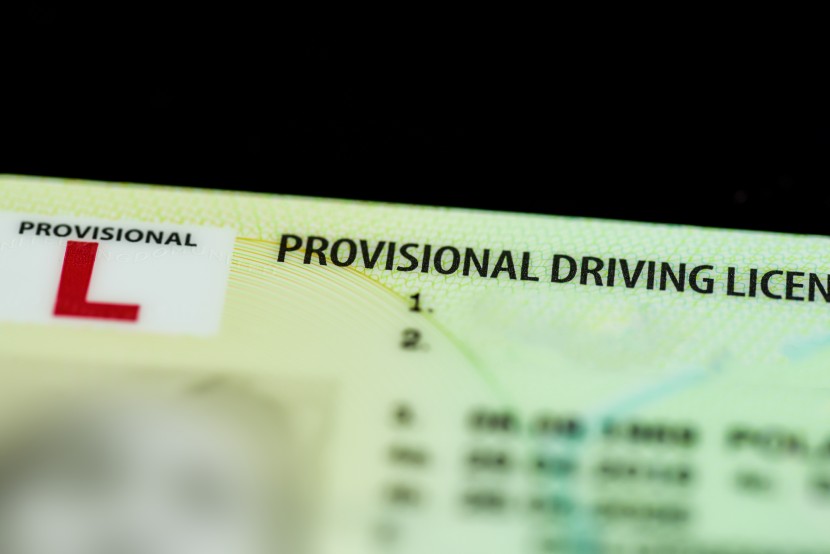
It's the green driving licence photocard that permits you to learn to drive in the UK, but what else do you need to know? We'll look at every aspect of a provisional driving licence in this guide.
Key takeaways
- Driving gives you a new-found sense of freedom, but it's a legal requirement to have a provisional licence to learn
- You can apply for a provisional driving licence online or by post
- You'll have to be at least 15 years and 9 months old to apply, but you won't be able to get behind the wheel until you're 17 in most cases
What is a provisional licence?
It's essentially your passport for learning to drive. Applying and having a provisional driving licence permits you to learn to drive with a qualified driving instructor, providing you have car insurance in place!
You can also learn with a friend or family member next to you if they meet certain criteria, such as:
- They must be over the age of 21
- They are qualified to drive the type of vehicle you're learning to drive in
- They have held a full driving licence for 3 years (from the UK, the EU, Switzerland, Norway, Iceland or Liechtenstein)
A provisional driving licence is necessary in order to take your theory test, hazard perception and practical driving tests. You’ll also need it before your first driving lesson.
How to apply for a provisional licence in 2026
Applying for a provisional driving licence is pretty straightforward, you can apply online or by post. Before you start, it's worth having a few documents at hand to help with your application.
Here's what you'll need:
- A form of ID such as a valid UK passport or a birth, adoption or naturalisation certificate. If you don't have any of these available, there are other alternative documents you can provide
- To list the addresses you've lived at over the past 3 years
- Your national insurance number
If you plan on applying by post, you'll need to download, print and complete the D1 'application for a driving licence' form. You can find this form at participating Post Office branches or by contacting the DVLA.
What is the provisional licence cost in 2026?
Applying by post costs £43. However, it's quicker, easier and cheaper (£34) to apply online!
Lost your provisional licence? You can apply for a replacement online, this costs £20. It's not uncommon for people to end up finding their old provisional licence down the side of the sofa! If this happens after you've applied for or received a new photocard, you'll need to contact the DVLA explaining your situation.
If you believe that your provisional licence has been stolen, you must contact the police and apply for a replacement through the DVLA.
When you pass your practical driving test, the examiner should take your provisional licence and issue you a pass certificate. In turn the DVLA should issue you with a full UK driving licence by post for free.
Eligibility: When can I apply for my UK provisional licence?
You can apply for a provisional driving licence when you are 15 years and 9 months old. It's also a requirement to:
- Be able to read a number plate from 20 metres away
- Have been given permission to live in Great Britain (England, Scotland and Wales) for at least 185 days
But there is a catch.
Your licence won't become valid until you turn 16. At this age you're only permitted to drive a moped. However, if you have a disability or long-term health condition, you may be able to begin learning to drive a car.
At 17, you can legally begin learning to drive! Just make sure you have car insurance in place before you hit the road.
How long does a provisional licence last?
It lasts exactly 10 years from the issue date.
If you don't take or pass a practical driving test in this timeframe, you'll need to apply to renew your provisional licence.
Not sure of your licence expiry date? You can find it under point 4b on your plastic driving licence card.
Despite the 10-year validity of your provisional licence, you have two years from the date you pass your theory test to pass your practical test. If you don't, you'll need to retake your theory test.
2026 Rule Update: Minimum Learning Periods & GDL
Driving laws change routinely to improve safety on UK roads, and there's a big rule change to be aware of in 2026:
Graduated Driver Licensing (GDL) is a system designed to prolong the period between when you get a provisional driving licence and taking a practical driving test. The idea is to ensure learner drivers have ample driving experience before becoming fully qualified.
The rule is set to come into effect from October 2026 in Northern Ireland, while the rest of the UK could follow suit soon after.
In Northern Ireland, the implementation of the GDL law will include:
-
A mandatory minimum learning period of six months before a learner driver can undertake their practical driving test
-
A programme of training that details the learning required to become a safe driver, and which must be completed and recorded in a logbook before a learner driver can undertake their practical driving test
-
An increase in the restriction period from the current 12 months to 24 months requiring new drivers to display a distinguishing mark (plate) on the vehicle for two years after receiving a full licence
-
A period of six months with nighttime driving restrictions for new drivers under 24
-
Age-related nighttime passenger restrictions for newly qualified drivers, with exemption for immediate family members.
-
GDL permits ‘L’ drivers to drive on a motorway as long as they are accompanied by an approved driving instructor. Once the learner passes their test, they will be issued with the new ‘R’ plate, which also allows them to drive on a motorway, where they can drive up to the posted speed limit.
A version of the GDL scheme already exists in other countries such as Ireland, the USA, Australia and New Zealand.


 cookie usage