


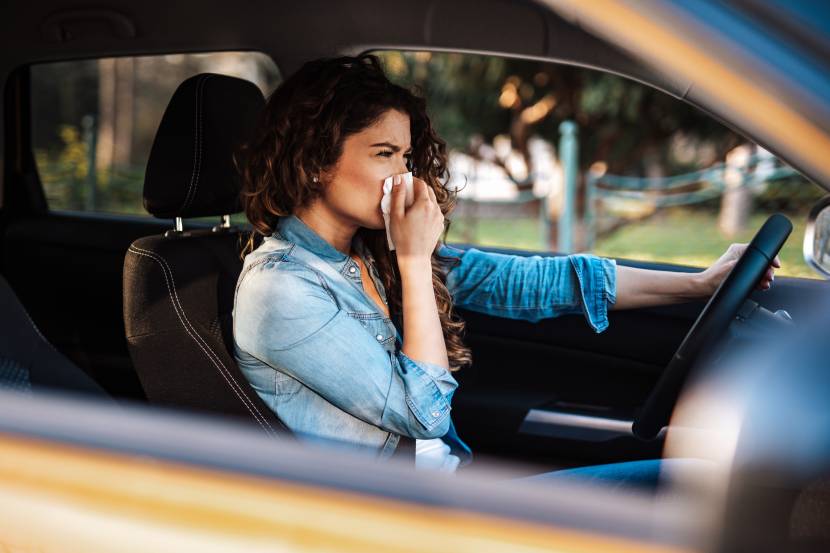
Hay fever can make driving harder than you might think. With 68%* of drivers saying their symptoms affected them behind the wheel, and 31% of hay fever sufferers admitting they briefly closed their eyes while driving in a recent Volvo Car UK study¹, it’s important to know how to stay safe.
Key takeaways
- You can drive with hay fever, but only if your symptoms aren’t affecting your vision, focus, or reaction time.
- Symptoms like sneezing, watery eyes, congestion and drowsiness can make driving unsafe, especially during high pollen periods.
- Some hay fever medicines can cause drowsiness, so always check the label before driving.
- Simple changes, like keeping windows closed and using air recirculation, can help reduce pollen exposure.
- If your symptoms worsen while driving, pull over safely and only continue when you feel alert.
What are the symptoms of hay fever?
If you’re a long-term hay fever sufferer, you’ll probably know the signs already. But if you’re experiencing it for the first time, it can be easy to mistake the symptoms for a cold or other allergy.
The most common symptoms of hay fever include:
- Sneezing
- Itchy, red or watery eyes
- A runny or blocked nose
- An itchy throat, mouth or ears
- Coughing or a tickly throat
- Feeling tired or struggling to concentrate
Can you drive with hay fever?
Yes, you can drive with hay fever - but only if your symptoms aren’t affecting your ability to stay safe on the road. Sneezing fits, itchy or watery eyes, a blocked nose, and tiredness can all make it harder to concentrate, slow your reactions, and stay in full control of your vehicle.
Hay fever can affect driving more than many people realise. Our research* found that more than two-thirds (68%) of drivers said their symptoms had a negative impact on their driving. Sneezing or coughing fits affected the vision of 23% of drivers, while 21% struggled to concentrate and 17% felt dizzy or light-headed.
For some drivers, the consequences have been more serious. Nearly one in five (17%) said they’d experienced a near miss or accident because of their hay fever. Of those, 37% said they lost control of their vehicle during a coughing or sneezing fit, while 25% blamed reduced visibility.
Research from Volvo Car UK also highlights the challenges hay fever can cause behind the wheel, with 79% of hay fever sufferers saying their symptoms affected their driving, while 13% admitted taking both hands off the wheel during a sneezing fit.¹
How to keep pollen out of your car
Keeping pollen out of your car can make a big difference to your comfort and safety if you suffer from hay fever - especially on high pollen days.
The most effective approach is simple: reduce how much outside air and pollen gets into the cabin in the first place. You can do this by following a few key habits every time you drive:
- Keep windows closed, particularly when pollen counts are high. It stops pollen entering the cabin and circulating while you drive.
- Use air conditioning on recirculation mode rather than drawing in fresh outside air. This helps keep allergens outside the vehicle.
- Check your pollen (cabin) filter regularly and replace it when needed. A clean filter helps trap pollen, dust and other airborne particles before they reach the cabin.
Together, these steps create a simple routine that helps keep the air inside your car cleaner, reduces irritation while driving, and makes longer journeys far more manageable during hay fever season.
Keep your car interior clean
Here’s how to keep your car’s interior cleaner and reduce pollen exposure:
- Vacuum carpets and seats regularly. Pollen builds up quickly here, particularly during high pollen days.
- Wipe down your dashboard, steering wheel and other hard surfaces. This helps stop settled pollen from getting stirred back into the air while you drive.
- Be extra thorough after rural journeys or high pollen days. Grass, trees and crops all increase how much pollen ends up inside your car.
A clean cabin won’t remove pollen completely, but it will help keep symptoms under control and make driving far more comfortable when hay fever is at its worst.
Can I drive if I take hay fever medication?
Yes, you can drive while taking some hay fever medications, but it’s important to understand how they may affect you before getting behind the wheel.
Some hay fever medications contain ingredients that can cause drowsiness or slower reactions, which could affect your ability to drive safely. Chlorphenamine, found in Piriton, is one example of an ingredient that can cause drowsiness in some people. Always check the medication label and speak to your GP or pharmacist if you’re unsure whether your medicine could affect your driving.
It’s worth noting that Piriton is a popular choice among allergy sufferers, with 39% taking this medication before driving.*
If you’re taking hay fever medication and feel drowsy, dizzy, or unable to concentrate properly, don’t drive.
What happens if I have a car accident because of hay fever?
If your reaction to hay fever medication has caused you to have a crash, you could be convicted of drug driving. Our research* found that nearly a third (32%) of drivers said their insurance costs increased because of an accident. One in three (30%) had points on their licence, while 23% received a fine.
If you’re convicted of drug driving, you could face:
- A driving ban
- An unlimited fine
- Up to 6 months in prison
- A criminal record
You can read more about drug driving laws and penalties on GOV.UK.
What should I do if I start suffering from hay fever while I’m driving
If you find your symptoms are too severe while you’re driving, you should pull over in a safe place until they pass. This could help avoid a dangerous situation.
You should take measures to keep your hay fever symptoms at bay. This includes taking non-drowsy hay fever medication or checking the pollen count before you drive.
What our motor insurance expert says
“Hay fever can be uncomfortable at the best of times, but for some people it can also affect their ability to drive safely. Symptoms like sneezing, coughing, and difficulty concentrating can make it harder to stay fully focused behind the wheel.
“Sneezing or coughing while driving can cause you to lose concentration, swerve, or struggle to stay in control of your vehicle. If you feel a sneeze or cough coming on, try to slow down and stay aware of any traffic or hazards around you.
“Another risk is taking certain hay fever medications before driving. Some can have a sedating effect, which may affect your ability to drive safely and could put you at risk of breaking the law. Always read the label or speak to a doctor or pharmacist if you’re unsure whether your medication could affect your driving.
“Hay fever can’t always be avoided, but taking the right steps before and during your journey can help you stay safe on the road.”


Compare car insurance quotes
*Unless otherwise stated, all research figures taken from omnibus research carried out by One Poll on behalf of Confused.com. This was an online poll of 1,500 UK drivers who suffer from hay fever. The research was conducted between 18 and 24 May 2023.
1Volvo Car UK’s 2026 research into hay fever and driving safety
 cookie usage