


Drug-driving laws in the UK set strict limits for illegal and prescription drugs, with serious penalties for anyone caught over the legal threshold or driving while impaired.
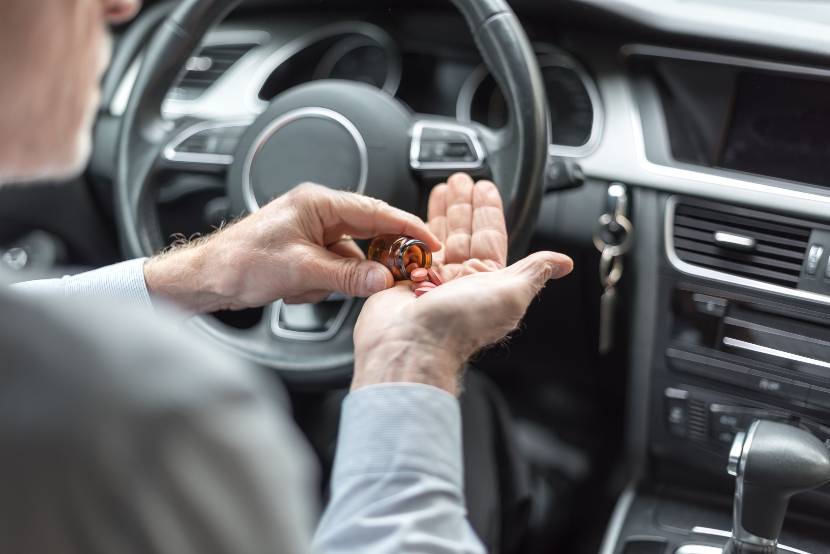
Key takeaways
- The UK drug-driving limit for cannabis is just 2µg/L - even residual levels from recent use may put a driver over the legal limit
- There are separate legal limits for 8 illegal drugs and 8 prescription medicines
- Penalties can include a minimum 12-month driving ban, an unlimited fine, a criminal record, and an 11-year licence endorsement
- Causing death by dangerous driving can result in a maximum sentence of life imprisonment, along with a mandatory driving disqualification and an extended retest requirement
- Explore our drug-driving limits calculator to learn the legal limits for common prescription medicines, over-the-counter medications and legal stimulants.
What are the UK drug-driving limits?
If you're wondering whether it's safe to drive after taking drugs or medication, the rules can seem complicated.
The UK sets legal limits for drugs in your blood. These limits change depending on whether the drug is illegal or prescribed by a doctor.
Illegal drugs
For illegal drugs, the law has zero tolerance. This means the limits are super low. The aim is to stop drug driving and keep roads safe.
Take cannabis as an example. The legal limit is 2 micrograms per litre of blood (2µg/L), which is an extremely small amount.
In practical terms, this means cannabis can stay in your system long after the effects have worn off. Even if you used it hours earlier, or in some cases the previous day, you may still be over the legal limit.
Here are the drug-driving limits for the 8 most common illegal drugs:
| 'Illegal' drugs | Threshold limit in microgrammes per litre of blood (UG/L) |
|---|---|
|
Benzoylecgonine (a substance associated with cocaine use)
|
50µg/L
|
|
Cocaine
|
10µg/L
|
|
Cannabis
|
2µg/L
|
|
Ketamine
|
20µg/L
|
|
Lysergic acid diethylamide (LSD)
|
1µg/L
|
|
Methylamphetamine (meth)
|
10µg/L
|
|
Methylenedioxymethamphetamine (MDMA)
|
10µg/L
|
|
6-monoacetylmorphine (heroin)
|
5µg/L
|
Prescription drugs
Legal limits for some prescription medicines are different. This is because many people rely on these medicines for their health and can still drive safely when taking them as prescribed.
The thresholds are designed to balance road safety with the need for people to drive:
| Drug | Threshold limit (µg/L) |
|---|---|
|
Clonazepam
|
50
|
|
Diazepam
|
550
|
|
Flunitrazepam
|
300
|
|
Lorazepam
|
100
|
|
Methadone
|
500
|
|
Morphine
|
80
|
|
Oxazepam
|
300
|
|
Amphetamine
|
250*
|
*Note: The threshold limit for amphetamine is higher to reflect its legitimate medicinal use.
Let's take a closer look at prescription drugs and driving in closer detail in the next section.
Prescription drugs and driving law
If you've been prescribed any of the drugs in the medicinal section of the table, speak to your doctor. You can usually still drive if you've been given advice by a healthcare professional, our guide on medical conditions and driving has more on what you need to report to the DVLA. For more information, visit GOV.UK.
Some hay fever medications, such as chlorphenamine, hydroxyzine and promethazine, are known to cause drowsiness as a side effect.
Therefore, you shouldn’t take this sort of medication, or any other that says ‘may cause drowsiness’, if you’re planning on driving.
Solicitor Advocate David Barton says to be mindful that any prescription medication should be taken as instructed, especially if you plan on driving:
"Driving with illegal drugs or when your driving is impaired by drugs of any kind is viewed seriously by police and courts. Drug-driving convictions bring an almost automatic disqualification for a minimum of 12 months.
"The same applies if you fail to take medication that you should - for example, insulin if you're diabetic."
If you feel any symptoms occurring, or your driving is impaired in any way - even when taking the correct amount, you shouldn't drive.
Can I drive if I've taken codeine?
According to the NHS you should not drive a car or ride a bike if codeine makes you sleepy. It can affect your vision and ability to concentrate and make decisions.
Remember its an offence to drive a car if your ability to drive safely is affected. If in doubt, don't drive.
How do different drugs affect my driving?
There are 3 main types of drugs that can have a significant impact on your ability to drive: hallucinogens, stimulants and depressants.
Each type affects the brain and body in different ways, but all of them can impair driving performance.
- Hallucinogens can distort your perception of reality. They may affect what you see, hear, and feel, making it difficult to judge distance, speed, and risk accurately.
- Stimulants can make you feel more alert or confident than you actually are. This can lead to overconfidence, increased risk-taking, and poor judgement on the road.
- Depressants slow down the central nervous system. They can cause drowsiness, slower reaction times, poor concentration, and reduced coordination.
Drugs can also affect drivers in other ways, including slower reactions, poor concentration, reduced coordination, reduced inhibition, and overconfidence behind the wheel.
These effects can make it harder to respond to hazards, judge speed and distance, and make safe decisions while driving.
In some cases, the effects may last for hours or even days after taking the drug.
Can the police stop and drug test you for no reason?
Police can stop you and test for drugs if they have a good reason to suspect drug-driving. They can also stop you during routine traffic checks.
A good reason might be:
- How you're driving
- Signs you're impaired
- A traffic offence
- Other clues that you're unfit to drive
The field impairment assessment
If police stop you because they suspect drug-driving, they might ask you to do a "field impairment assessment." These are simple tests that help officers check if you're impaired.
Tests include walking a straight line or standing on one leg while counting. Officers also check your pupils and watch your behaviour for signs of impairment.
Roadside saliva test
Police often use roadside drug screening kits to test for drugs like cannabis and cocaine. These tests use a saliva sample and give results in minutes.
Not all drugs show up in roadside tests. So, even a negative result doesn't rule out drug use if officers still suspect you're impaired.
Blood test at the police station
If police suspect drug-driving, they can arrest you and take you to a police station for more tests. This usually includes a blood sample and sometimes a urine test, depending on the situation.
A blood test will:
- Confirm if specific drugs are in your system.
- Show if you're over the legal drug-driving limit (under Section 5A of the Road Traffic Act 1988).
- Provide evidence if they're considering impairment charges (under Section 4).
Results take time. How long depends on the police force and lab processing.
What are the penalties for drug-driving?
If you’re convicted of drug-driving in the UK then you could get:
- A driving ban for up to 1 year
- An unlimited fine
- Up to 6 months in prison
- A criminal record
- An endorsement on your driving licence for 11 years (for drug-driving offences such as DG10)
These penalties apply even for a first offence. A conviction will appear on your driving conviction record, which may affect your job if you drive for a living. It can also lead to higher car insurance premiums, and some insurers may refuse to offer cover.
A drug-driving conviction can also have wider consequences. In some cases, it may affect where you can travel with a criminal record, as some countries restrict entry for people with criminal convictions.
In more serious cases, penalties are significantly higher. For example, causing death by careless driving while under the influence of drugs can result in up to 14 years in prison, a mandatory driving disqualification, and an extended retest requirement.
“Drug-driving convictions carry consequences that go well beyond the driving ban. The 11-year endorsement on your licence can mean years of higher insurance premiums, and it may also create difficulties when applying for roles that require a clean driving record.”What our motor insurance expert says


Will drug-driving affect my car insurance?
Yes, a drug-driving conviction can have a big impact on your car insurance.
Our data shows drivers with one conviction pay £795 on average for yearly car insurance, compared with £598 for drivers with no convictions¹. Insurers see a conviction as a sign you’re more likely to claim, which usually pushes prices up.
Some insurers may not offer you cover at all, which can make it harder to renew or find a new policy.
But that doesn't mean it's impossible to find cover. If you do have a conviction, it's important to declare it. Be honest, otherwise your policy could be invalidated if you ever need to make a claim.
You can read more about how convictions affect insurance on our convicted driver insurance page.
Where to get help if you're worried about drug use
Your GP can provide confidential advice and, where appropriate, refer you to local drug and alcohol services.
You can also self-refer directly to your local drug and alcohol service without needing to speak to a GP first.
The FRANK helpline is available on 0300 123 6600, 24 hours a day. It is confidential. FRANK also provides information and a service finder to help you find local support.
Narcotics Anonymous UK (UKNA) offers both online and in-person meetings across the UK. There are no waiting lists. Iif you want to attend, you can simply turn up. You can find a meeting on their website, along with information about what to expect at your first meeting and other support resources.
Local drug services may also provide harm reduction support, including health checks, infection screening (such as hepatitis and HIV), and advice to reduce health risks associated with drug use.
1The median annual premium for drivers with one conviction compared with those with no convictions. Confused.com data, January–May 2026.




 cookie usage