


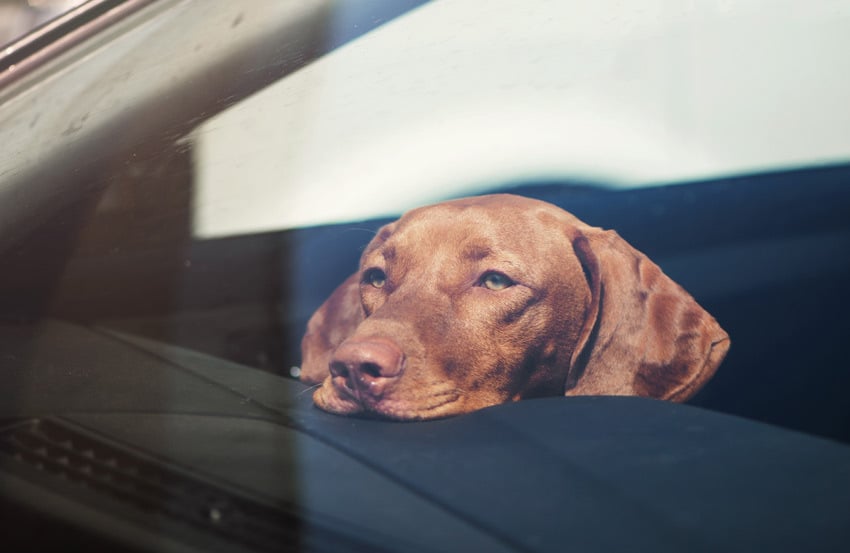
Dogs and hot cars can be a dangerous combination - here's what every owner should know, and what to do if you ever spot a dog in distress.
Key takeaways
- Never leave your dog alone in a warm car. On a mild 21°C day, the temperature inside can hit a fatal 40°C in just half an hour.
- Know the signs of heatstroke - heavy panting, drooling, vomiting, and disorientation. If you spot any of these, call 999 immediately.
- If you see a dog trapped in a hot car, act. Find the owner, alert nearby staff, or call 999. Doing nothing isn't an option.
- Keep your dog secured when you drive. Under Rule 57 of the Highway Code, it's not just good practice - it's a legal requirement.
- Before you set off, make sure your dog has water, is comfortable, and everything they need is packed.
This video is also available as a text transcript.
How hot can stationary cars get?
Our research shows that 37%* of dog owners don’t fully realise the dangers of leaving a pet in a hot, parked car.
| Outside Temperature | After 10 minutes | After 30 minutes | After 60 minutes |
|---|---|---|---|
|
21°C
|
32°C
|
40°C
|
45°C
|
|
24°C
|
34°C
|
43°C
|
48°C
|
|
27°C
|
37°C
|
46°C
|
51°C
|
|
29°C
|
40°C
|
48°C
|
53°C
|
|
32°C
|
43°C
|
51°C
|
56°C
|
It's also worth bearing in mind that many of the situations where dogs are left in hot cars are ones we don't think twice about - paying for fuel (28%),* popping in to see family (19%),* or simply not wanting to disturb a sleeping dog (25%).*
Because these split-second decisions account for most cases, building a strict "never leave them" habit is the best way to keep your dog safe.
What to do if you see a dog locked in a hot car
Here's what to do if you see a dog in a locked hot car:
If the pet is showing signs of heatstroke
Spotting a dog in distress on a hot day is a heartbreaker.
Here are the signs of heatstroke to look out for:
- Heavy panting
- Excessive drooling
- Weakness or collapse
- Vomiting
- Disorientation or stumbling
- Gums that are red or very pale
If a dog is showing any of these signs, you should ring 999 right away.
If the dog's condition looks serious, and you're still waiting for the police, you may feel like you should break the car window yourself. Seeing a dog suffer in the heat is distressing, but this can count as criminal damage, so only do so as a last resort.
The RSPCA states that: 'legally, you can commit damage if you believe the car owner would consent to it if they knew the dog was in danger.'
So, if you're certain that you need to take action yourself, take photos and videos of the dog, and tell the police what you intend to do. You may need to defend yourself in court, so if there are other witnesses, take their names and phone numbers.
If the pet isn't showing signs of heatstroke
If the dog isn't showing signs of heatstroke, you should try to assess how long they've been left in the car. This matters more than you might think - owners admit to leaving dogs in cars over 24°C for an average of 10 minutes,* and more than 1 in 5 have done so for longer than 16 minutes.*
As the table above shows, that's more than enough time for temperatures to reach dangerous levels.
To work out how long they've been left, you can:
- Check for a pay-and-display ticket that can help you work out how long the dog has been in the vehicle.
- Note down the car's make and registration.
- If you are in a public place like a shop or an event venue, ask staff to make a PA announcement.
- Make sure that you or someone else stays with the dog. If they start to show any signs of heatstroke, call 999 straight away.
If you're unsure whether to step in, you're not alone - over 2 in 5 (44%)* people who've seen a dog left in a hot car didn't intervene. But acting quickly could save a dog's life.
Of those who did step in, most looked for the owner, waited with the dog, or alerted nearby staff - all of which are good first steps.
The RSPCA has a cruelty line for advice on 0300 1234 999. But if the situation is an emergency, calling 999 should be your immediate response.
What to do once the dog is free
When the dog is out of the car, the next steps depend on whether they have heatstroke or not.
If you suspect heatstroke, the first thing you should do is move them to a cooler area. This might be in the shade or in a well-ventillated building nearby.
Offer the dog water to drink, and use cool water to dampen their body. It's important not to use freezing cold water to cool the dog down too quickly, as this can make them go into shock. Using a wet towel for short periods can also help.
Even if you don't suspect heatstroke or the dog seems better, you should still seek veterinary attention.
Heatstroke causes unseen damage to organs and tissues, so it's always best to get the dog checked for any underlying issues.
Travelling with pets in cars during the summer
Here are a few things you can do when driving with pets in the heat this summer:
-
Fresh air is great, but keep their head inside. No one wants a vet trip for flying debris or injuries.
-
Hydration is key! A spill-proof travel bowl makes it simple.
-
Pack their essentials: food, water bowl, poop bags, and meds. Regular traveller? Keep a dog kit in the car.
-
Stop for breaks. Most service stations have green spots for a leg stretch.
-
Strap them in safely. A secure harness or a comfy, well-ventilated crate (big enough to stand and turn) are top choices.
-
Got a co-pilot? Ask them to keep an eye on your furry friend. Solo trip? Check on them at every stop.
-
Ease them in. Short practice trips before a long journey make car travel much happier.
Even on a seemingly mild 21°C day, the inside of a stationary car can climb to a fatal 40°C within half an hour.*
Don't risk it. Even if you think the temperature isn't high, it's easy for a dog to overheat in a car.
What our motor insurance expert says:
“You should never leave your dog unattended in your vehicle, even on days which you may think are more bearable. Even if you have a view of your car from further afield, doing so is irresponsible and can put your dog in great danger. The same goes for any pet which you may travel with over the summer. If you’re caught risking your pet’s life, you could face unlimited fines and be prosecuted by the police."


What are the dangers of driving with a pet?
Driving with a pet can be risky if you don’t take precautions. Here’s what to watch out for.
A proper restraint is a must! Without it, your pet could be seriously injured if you have to brake suddenly. An unrestrained pet can be thrown forward, harming themselves and possibly other passengers.
Keep distractions at bay. If your pet isn't secured they might move around and take your attention away from the road. Investing in pet restraints for your car helps ensure that everyone is safe.
The Highway Code states that animals must be restrained to stop you losing focus when driving.
What are the laws on driving with a pet?
Rule 57 of the Highway Code states that:
"When in a vehicle make sure dogs or other animals are suitably restrained so they cannot distract you while you are driving or injure you, or themselves, if you stop quickly. A seatbelt harness, pet carrier, dog cage or dog guard are ways of restraining animals in cars."
You should always make sure your pet is suitably restrained so they don't injure themselves or anyone else.
The law states that pets can travel in the front seat of your car, as long as they're restrained with a seatbelt or harness. You should always make sure that the seat is pushed right back, and that the passenger airbags are turned off.
If possible, it's always better to put your dog in the backseat of your car, as this is the safest option for you and your pet.
What pet restraints can be used?
There are many different safe ways to restrain your pets while driving, including:
- A harness. These attach to the seatbelt buckle and keep your dog from moving around in the car.
- Crates. These can be a good option for dogs that are more nervous when travelling. They're a good way of stopping your dog from distracting you while driving.
- Carriers. They are made of softer materials than a crate and are primarily used for transportation. They aren't as big as crates, so they can be a better choice if your pet is a bit smaller.
The Center for Pet Safety is a non-profit organisation that crash tests and certifies several types of pet restraints. It's always a good idea to research the best type of restraint for your pet. That way you can make sure you're choosing the right one for you and your furry friend.
Checklist for driving with a pet
When travelling with your pet it's always best to be prepared. Whether it's a long or short journey, it's good to make sure you have planned ahead. Here are a few things you'll want to consider before setting off with your pet:
-
Make sure they've had plenty to drink and had time to go to the toilet.
-
Pack your car with food, water, and any medicine they may need. A pet first aid kit is a good thing to keep with you.
-
Plan where you are going to stop on your journey, researching service stations and rest stops before you start driving.
-
Make sure you have the right pet restraints or crate, and that they are clean and in good working condition.
-
A collar, lead, and/or harness so your dog can stretch their legs at rest stops. Your dog may be excitable or nervous in new and unfamiliar places, so it's best to keep them on a lead so they don't run away.
-
Make sure their vaccinations are up to date. When travelling to any country in the EU, as well as Northern Ireland, your pet needs: a valid rabies vaccination, an animal health certificate, and a microchip.
Does driving with a pet affect your car insurance?
Driving with an unrestrained pet can affect your car insurance if you're involved in an accident.
You could face legal action if you get into a crash and your pet is found to be unrestrained. It could count as dangerous driving if your dog was found to have distracted you.
If this is the case your insurance provider is unlikely to pay out for any damage caused.
Injuries to your pet while driving won't be covered by car insurance, you'll need pet insurance for that. We offer a variety of different pet insurance plans, so you can put your mind at ease.
*Research carried out by OnePoll on behalf of Confused.com of 2,000 UK adults between 28th April to 1st May 2026.
 cookie usage