


Driving in the dark can be unnerving for anyone on the road regardless of experience.
Despite this, there are lots of useful tips and actions you can take to minimise the dangers of driving in the dark can help to keep both you and other drivers safe.

Key takeaways
- Fatigue is one of the biggest night-driving risks — if you're tired, stop
- Always adjust your mirrors and let your eyes adapt before driving - especially in winter months
- If you're dazzled by oncoming headlights, slow down and focus on the left-hand road edge rather than the oncoming lights
- Some telematics car insurance policies contain curfew clauses and may restrict often much you drive at night
- As of 14 October 2026, UK drivers are permitted to replace existing halogen headlight bulbs with ECE-approved LED bulbs. Doing so does not result in an automatic MOT fail, but the rule change only applies to class 3, 4, 5 and 7 vehicles.
What makes driving at night tougher?
There are a set of challenges you can experience driving a car at night that you're unlikely to face in the daytime.
It can be more dangerous because of factors such as:
-
Limited visibility
-
Headlight and street lighting glare
-
Increased fatigue
Common challenges when driving at night
-
Glare In the dark your pupils dilate to allow more light, so headlights, streetlights and reflections can be disorientating.
-
Fatigue Most of us are tired late at night, or in the early hours of the morning. Fatigue affects everyone, so if you're tired when driving, make sure you take regular breaks to stay alert.
-
Reduced visibility Road lighting and headlights can only do so much, the low light reduces your visibility and reaction time compared to daytime.
-
Greater presence of dangerous drivers Drivers under the influence of drugs and alcohol are more likely to be present on the roads at night.
-
Conditions such as Astigmatism It's a common cause of blurry vision at any distance. So glare caused by headlights and road lighting can be even more intense.
-
If your car breaks down You're less visible when driving at night, so make sure to turn your hazard lights on and stand clear if your car breaks down on the road.
MOT rule change for LED headlights
From 14 October 2026, UK drivers can swap out traditional halogen headlight bulbs for replacement ECE-approved LED bulbs without facing an automatic MOT fail.
Previously, MOT testers used to automatically fail vehicles if retrofitted LED bulbs were fitted into headlamp units originally designed for traditional halogen bulbs.
However, the rule change means UK MOT testers must accept certain ECE-approved LED replacement bulbs if they're fitted to compatible halogen headlight units.
Be mindful, though, there are a few conditions of the new rule:
- The replacement LED bulbs must be ‘ECE approved'. This is to ensure the bulbs meet the European vehicle lighting standards.
- Completely replacing the headlamp unit is not permitted, the new rule only covers the bulbs.
- Any halogen headlamp units that have been converted to be used with high-intensity discharge (HID) bulbs are also not permitted.
- The new ruling does not cover class 1 and class 2 motorcycles
Get your car ready for night driving
Check your lights
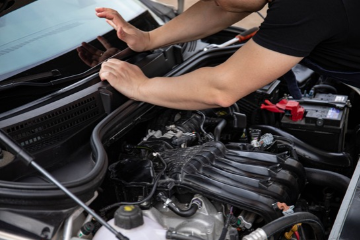
Make sure all your lights – headlights, rear lights, fog lights – are working properly. You should consider investing in brighter bulbs if you're not completely satisfied with your visibility at night. Clear lights make a world of difference!
Clean your windscreen and mirrors
You'd be surprised just how impactful cleaning your windows inside and out can be. A dirty windscreen can amplify glare, making it harder to see. You might not notice it during the daytime, but keeping everything squeaky clean can really make a difference.
Know when to use your lights
As sun begins to set, you should begin using your low-beam headlights. Full-beam headlights can enhance your visibility, but you should be vigilant when switching. You should only adjust to full-beam when there are no oncoming cars as far as you can see. If there are, you should switch to low-beam until any oncoming traffic passes you.
Top tips for safer night time driving
Despite the challenges posed by driving in the dark, there's plenty you can do to make car journeys a little more straightforward while staying safe:
Slow it down
Your reaction time decreases at night with less visibility. You should take it easy on the accelerator, even if you're in a rush. Maintaining a sensible distance between yourself and the car in front of you should give you plenty of time to slow down if necessary.
Avoid distractions
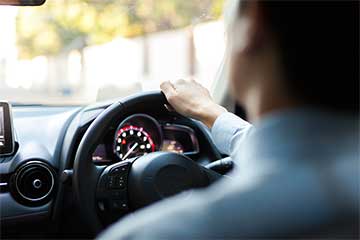
The chances of you spotting a hazard in your peripheral vision, as you could in the daytime, is less likely when the sun sets. It's important to keep your eyes on the road and your hands on the wheel. Never touch your phone until you've pulled over and stopped in a safe place. Read our guide on mobile phones, driving and the law.
How to navigate dazzling bright lights
It's easy to be drawn to the headlights of oncoming cars heading the opposite direction, especially when driving on the motorway or dual carriageways. An RAC study surveying drivers in February 2026 found a quarter of respondents (25%) find headlights too bright are either driving less at night or have given up altogether.
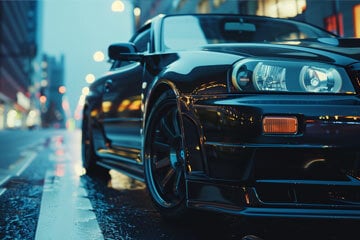
Glare and bright lights can impair your vision temporarily and leave you dazed. It explains why some motorists can't drive at night because of dazzling lights. A useful tip is to look slightly to the left of the road to avoid glare and focus on the road markings to stay on track.
"Prior to the turn of the millennium, halogen bulbs were the industry standard for car headlights. However, since the mid-2000's, LED headlights have become increasingly popular. "These headlights are generally far brighter than their halogen counterparts and are a real, current source of driver anxiety, not an outdated concern. Practical adjustments such as shifting your gaze and equipping your car with anti-glare mirrors can help you alleviate the effects of glare and dazzling lights." What our motor insurance expert says


Take an advanced driving course
You might be able to do an intensive driving course that focuses on nighttime driving. This could help prepare you for driving in the dark as well as bad weather conditions.
What else to watch out for while driving in the dark
Rural driving at night
Roads in rural areas can be narrow and may not be well lit with street lighting. If you're on a road with no street lights, use your high-beam headlights – but don’t forget to dip them when other cars approach.
Bad weather
Rain, fog, and ice are no joke - especially when they affect how you drive. Bad weather conditions slow your stopping speed, impair your visibility and, in extreme cases, can cause you to lose control of your vehicle.
Animals on the road
In rural areas, it's not uncommon for livestock to wander onto roads and stay put. It's likely many of these areas signpost the potential of these occurrences, so be prepared to alter how you drive. If you're passing by animals, drive slowly, allow plenty of room and be prepared to stop. Animals aren't humans, so refrain from sounding your horn!
Keep your eyes sharp
Glasses for night driving
If you need glasses, consider asking your optician about a pair with anti-glare lenses - these are also known as polarised lenses. Wearing these glasses while driving can stop you from experiencing glare, allowing you a more comfortable adventure on the road in the dark.
Regular eye tests
You may think that squinting your eyes is part and parcel of driving at night. But it may actually be a sign that you suffer with Astigmatism. Always speak to an optician if you notice any issues with your vision while driving in the dark. It's also worth considering having an eye test every two years - an optician could suggest specific glasses to help.
Does driving in the dark affect your car insurance?
Generally, a standard car insurance policy should permit you to drive at night without affecting what you pay. However, if your occupation involves driving in the dark often, or you have a telematics policy, it could have an impact. Some telematics policies could insert a night-time curfew, others might negatively score your driving if you're behind the wheel at night often.

 cookie usage