


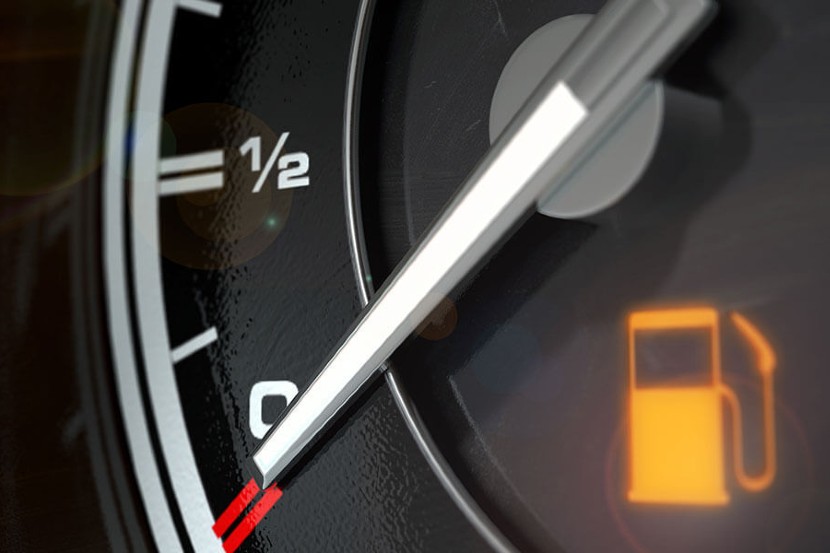
When the fuel warning light pops up, it’s natural to wonder 'how far can I actually go?' While it varies depending on the car, there are ways to avoid running out of fuel.
Key takeaways
- The fuel warning light typically comes on when around 10-15% of the tank's capacity remains, but what that means in miles varies significantly by model
- The table below uses real-world MPG and tank capacity data to give model-specific estimates. Treat them as a guide, not a guarantee
- Driving style, terrain, speed, and vehicle condition can all affect how far your reserve will actually take you
- Running a car repeatedly on near-empty can damage the fuel pump over time
- If you run out of fuel on a motorway, move to the hard shoulder, switch on your hazard lights, and call breakdown cover
How many miles can I drive with the fuel light on?
The miles you can drive once your fuel light comes on depend on your car, your driving, and the road. Don't risk it. Fill up before you're in the red.
Most cars manage 30-45 miles after the fuel light appears. For exact details, check your owner's manual or dashboard - many cars show an estimated range.
Fuel tank sizes vary, but most hold 40-90 litres of petrol depending on the make and model. To give you an idea, here's how far some top UK cars can go once the fuel light is on:
| Car model* | Remaining mileage** |
|---|---|
|
Ford Focus
|
56 miles
|
|
VW Polo
|
42 miles
|
|
VW Golf
|
55 miles
|
|
Ford Fiesta
|
42 miles
|
|
Audi R8
|
32 miles
|
|
Land Rover Discovery
|
55 miles
|
|
Audi A6
|
65 miles
|
|
BMW 3 Series
|
58 miles
|
|
Audi A3
|
53 miles
|
|
BMW X1
|
48 miles
|
*Most popular models taken from a 2026 YouGov Ratings survey
**Remaining mileage calculated using 10% of the fuel capacity and real-world MPG data, with fuel tank capacity sourced from manufacturer and Parkers specifications. This is an estimate. The remaining mileage to empty will depend on how you drive, the driving conditions, your car's age, and a variety of other factors
Will my car run out of fuel at 0 miles?
Not necessarily. If your fuel light starts flashing rather than staying on steadily, it usually means you're getting closer to true empty, often with less than 10 miles left.
Some cars may have a small buffer even after hitting '0' miles on the dashboard, which might give you an extra 10-15 miles, but it's not guaranteed.
Treat '0 miles' as a final warning, not something to push past.
Should I keep driving if my tank says 0 miles left?
No. Staring at '0 miles left' is stressful enough, but pushing it further is a gamble that rarely pays off. Running out of fuel can seriously damage your car's fuel pump and injectors, leading to expensive repairs. Plus, no one wants to be stranded on the roadside.
It's much smarter to fill up as soon as your fuel light comes on. Don't risk a costly breakdown call out.
If you're looking for a place to fill up, you can use our app to find a petrol station near you. If you have enough fuel in the tank, you might even be able to venture to the cheapest one.
Find cheaper fuel prices with our app
Fuel has reached a record high but our app can help! It can also help you manage your car dates, running costs and insurance.


How to conserve fuel when the light is on or at 0 miles
Is the fuel light on? Don't panic. Here's how to stretch those last drops of fuel:
- Slow down. Keep it under 50 mph for better fuel efficiency.
- Stop idling. If you're stopped for more than a minute, switch off the engine.
- Lighten up. Less weight means less fuel used.
- Ditch the AC. It guzzles fuel. Open a window instead (unless it's a gale).
- Plan your escape. Find the quickest route to a petrol station, avoiding traffic.
When the fuel light's on, your only destination should be the petrol station. Don't risk running dry.
Staying safe and following the highway code
Running out of fuel can land you and others in dangerous situations. In some cases, it can be illegal.
In places like Germany, running out of fuel on a motorway is seen as a preventable breakdown, which could result in a fine.
In the UK, running out of fuel isn’t illegal, but if it causes an obstruction, you could face fines or penalty points. Rule 97 of the Highway Code reminds drivers to check their fuel before setting off, especially for motorway journeys!
Suddenly losing power on a busy road or motorway can be dangerous to you and others. especially if you’re unable to pull over safely. If this does happen, some roadside assistance services will charge an additional fee if they have to come out just to provide emergency fuel.
What to do if you run out of fuel:
-
Stay calm and get to safety: If possible, pull over onto the hard shoulder or somewhere safe.
-
Turn on hazard lights: Let other drivers know you’re stuck.
-
Call for assistance: Whether it’s your breakdown cover provider or someone who can bring you some fuel to help get you on your way.
-
Don’t walk on motorways: It’s not safe to walk to a petrol station on high-speed roads - always wait for help in a safe location.
At the end of the day, your fuel warning light isn’t just a suggestion it’s a reminder to act fast. Running on empty is a risk not worth taking. Keeping at least a quarter of a tank can help prevent accidents. potential fines, and costly repairs. So, next time that light pops on, don’t push your luck, fill up as soon as possible.
 cookie usage