


More than half (59%) of drivers admit to using their mobile phone while driving, despite the risks and penalties involved.* This guide explains what you can and can’t do when using your phone behind the wheel.
Key takeaways
- Mobile phone use is one of the UK’s most common driving offences, with over 70,000 fines issued in the last 3 years*
- Even hands-free use isn’t risk-free, with reaction times around 30% slower than the drink-driving limit
- Using a handheld phone includes more than calls - texting, scrolling, music control and sat nav changes all count
- AI cameras are increasingly used to detect offences, with over a quarter (26%) identified this way*
- Phones can only be used legally when fully parked, with the engine off, and you are not in control of the vehicle
How many drivers have been fined for using phones while driving?
Mobile phone use remains one of the most common driving offences in the UK. Over 70,000 drivers have been fined for using a mobile phone while driving in the last 3 years.*
Despite the risks, many drivers still use their phones for everyday tasks such as calls, messages, navigation and music while driving. This is why distraction remains a common issue on UK roads, even with strict penalties in place.
What counts as using a mobile phone while driving?
You are considered to be using your phone if you:
- Touch the screen for any reason
- Send or read messages
- Scroll apps or notifications
- Change music or playlists
- Make sat nav changes while driving
- Take photos or videos
- Hold and interact with the device
Even brief interaction can be enough to count as an offence.
Can AI cameras catch drivers using mobile phones?
Yes. AI-enabled cameras are increasingly used to detect mobile phone offences.
They use high-definition imaging and AI software to scan through windscreens and identify potential phone use.
With the rise of AI speed cameras, it’s becoming harder for drivers to go undetected. According to our own research, over a quarter (26%) of those caught using their phone were identified by AI cameras.*
They can detect:
- Phones held in the driver’s hand
- Texting or scrolling
- Phones held near the face or lap
If an offence is flagged, it is reviewed by a human officer before any penalty is issued. Fines are not automatic.
Can I use a hands-free device in my car?
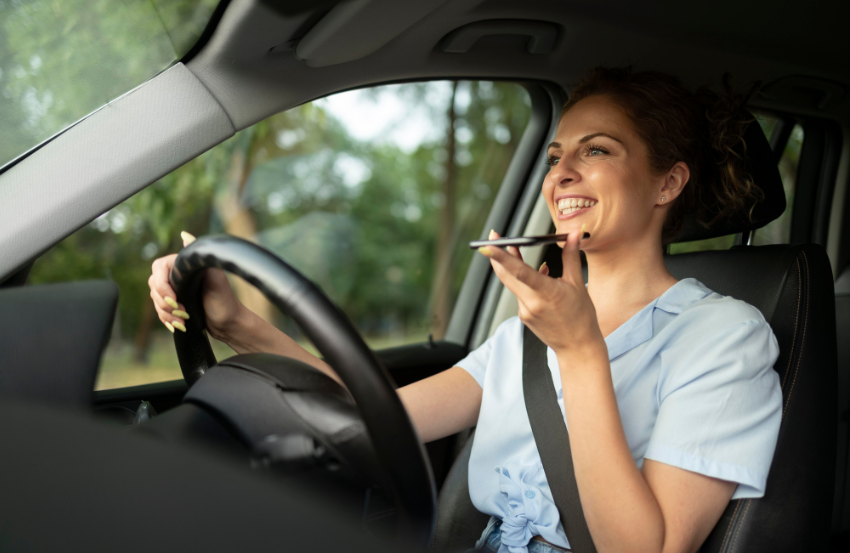
Yes - you can use hands-free kits in your car. However, it’s important to understand that 'legal' doesn’t always mean 'risk-free'.
In 2019, the House of Commons Transport Select Committee said that hands-free devices carried the same risk of an accident as using a phone at the wheel.
In fact, your reaction times when using a hands-free device are around 30% slower than your reaction times at the drink-drive limit1.
Because of this, the committee urged the government to extend the ban on mobile phones to include hands-free devices.
Rob Gwynne-Thomas of the South Wales Police Road Policing Unit responds:
“The whole essence of the legislation is that while you’re driving, you should be concentrating on the road."
“Any actions that cause you to be distracted while driving are potentially dangerous and should be avoided.”
A government announcement in 2021 said that drivers can still use ‘hands-free’ devices if their phones are secured in a cradle.
What is the fine for using your phone while driving?
Using a handheld phone while driving can result in:
- £200 fine
- 6 penalty points on your licence
- Court fines of up to £1,000
- Possible driving disqualification in serious cases
If you’re a new driver (passed within the last 2 years), getting 6 penalty points means you automatically lose your licence.
These offences are recorded on your driving record and can also affect your car insurance costs in the future.
Can I use my phone at traffic lights?
No. Even if you’re stopped at traffic lights, in traffic jams, or in stop-start traffic, you are still legally considered to be driving if the engine is running.
A common misconception is that being stationary makes it safe to use your phone. However, our research shows that 48% of drivers* believe it is acceptable to use a phone at traffic lights - even though it is still illegal.
The only time it is allowed is when you are safely parked with the engine switched off.
Can I use my phone as a sat nav while driving?
Yes, you can use your phone as a sat nav. But if you need to make any adjustments, or touch the screen, you should pull over somewhere safe and legal first.
Officer Rob Gwynne-Thomas says:
“Set the sat nav before you start your journey. If you want to change details or make any adjustments then find a safe place to stop first.”
Touching your phone for any reason while you're driving counts as 'using' it, which is against the law.
He goes on to say:
“Any physical interaction with it will be ‘using it’. Officers will also consider the alternative offences of not having proper control over a vehicle and driving without due care and consideration.”
Can I use my phone to play music while I'm driving?
Yes, you can use your phone to play music while driving, but you must not touch it once you are on the move.
You can:
- Connect your phone to Bluetooth before you set off
- Use steering wheel or dashboard controls
- Use voice assistants to change songs
Touching your phone to skip tracks or change playlists counts as illegal phone use.
Can I use my phone in the car if it's not moving but the engine is running?
No - you can't use your phone if your car is stationary and the engine is running, for example, at a red light.
You can’t use it if you’re parked safely with the engine running either - unless you’re making a contactless payment at a drive-through restaurant or toll road.
But if you need to use your phone for anything else, you should pull over safely and turn off your engine.
Can I use my phone if I'm teaching someone to drive?
No. If you're caught on your phone while you're supervising a learner, you could be fined £200 and get 6 penalty points on your licence.
If you're supervising a learner, you should always put your phone away and be free from distraction while they're driving.
Driving instructors might use their phones or tablets to show visual aids to learners. If they're doing this, they should be parked in a safe space with the engine off.
Can I use my phone if I'm in the driver's seat but the engine is switched off?
Yes. If you're safely pulled over and the car's engine is off, then you can use your phone.
Officer Gwynne-Thomas says:
“There has to be a degree of common sense applied to the legislation. If you’re pulled over at the side of the road in a safe location with the engine off, then yes, of course it’s fine.
“The whole essence of the legislation is to ensure that while you’re ‘driving’ a vehicle you’re concentrating on the road.”
Is it illegal to use Siri or some other assistant app when driving?
Officer Gwynne-Thomas says that if you need to pick up the device and physically interact with it, then yes, it's illegal.
He goes on to say:
“If you can access it purely by voice commands, then no. However, always be mindful that you should always be in proper control of your vehicle.
“If you’re distracted by interacting with Siri, then you could be committing other offences such as driving without due care and attention.
“Common sense and the circumstances will dictate this.”
How to avoid mobile phone driving fines
Most mobile phone offences happen out of habit or convenience, but a few simple changes can help you stay focused and avoid breaking the law.
Before you set off:
- Turn on Driving Mode or Do Not Disturb to reduce distractions
- Set your sat nav, music, and any calls before you start driving
While driving:
- Keep your phone out of reach, such as in a glovebox or bag, to avoid temptation
If you need your phone:
- Pull over safely, switch off your engine, and only then use your device
These small habits before and during your journey can help reduce distraction, avoid penalties, and keep you safer on the road.
*Research for this guide was conducted by OnePoll for Confused.com. The study surveyed a nationally representative sample of 2,000 UK drivers between 24 and 27 March 2026.
1https://www.arval.co.uk/sites/default/files/153/2020/04/driver-distractions.pdf
 cookie usage