

New driver nerves? It might be worth investing in some P plates. Check out what the rules are and how they can help you build confidence on the road.
Key takeaways
- In England, Scotland and Wales, P plates are completely optional. But having them can prompt other drivers to give you extra space on the road.
- There’s no limit for how long you can keep P plates on your car - it’s down to your own discretion and when you feel comfortable.
- Choosing to have P plates won’t affect the price of your insurance. Although they can help you avoid minor ‘nerves-related’ mishaps.
What are P plates?
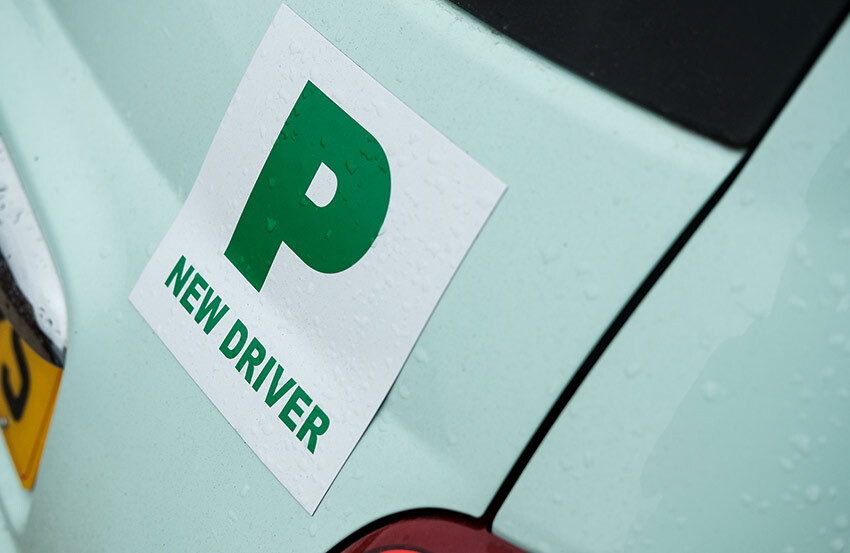
P plates are signs for new drivers who are fresh off passing their driving test. They’re really called probationary plates, and they’re used to show you’re fully qualified but still sharpening your driving skills.
Putting a P sign on your car is completely optional. But, if you’re still building confidence behind the wheel, having green P plates could help ease the pressure.
Are P-plates mandatory in the UK?
If you live in England, Scotland or Wales, P plates are not mandatory.
It’s up to you whether you want to use them at all. Equally, if you want to keep them stuck to your bumper for years after you’ve passed - have at it. The choice is yours.
In Northern Ireland, things work a bit differently. Instead of P plates, you’ll need R, or ‘restricted’, plates. And the rule is that new drivers have to have them for a year after passing their test.
P-plate rules UK: How to display them correctly
There are no official rules about the size of P plates or where to put them on your car. But, let’s face it, sticking them on the roof isn’t going to do much good.
Want to ensure the P plates do their job? Here are 3 things to think about:
- Placement: One at the front, one at the back. Don’t sweat the specifics, just make sure your P plates are clearly visible to others on the road.
- Visibility: Sticking them on your windscreen is a no-go. You’ll also want to check they’re not obstructing your lights or vehicle registration.
- Security: Nobody wants a P-plate to the face. Opt for strong magnetic or self-adhesive plates that won’t fly off when you hit the gas.
How long should you keep P-plates on your car?
It’s up to you how long you keep the P plates on your car. If you’re just using them as a stopgap while you get a feel for driving on different types of roads, a few weeks will probably do the trick.
Some people also find it helpful to use P plates if they’re returning to driving after a bit of a break. In which case, you can ditch them as soon as you feel fully re-acclimatised.
But, if you find that having P plates on helps with driving-related nerves, there’s no rush to take them off. There’s no legal limit in the UK, so you can do whatever you see fit.
Can you drive on the motorway with P plates?
Yes, you absolutely can.
If you’ve passed your test and have your full licence, congratulations! You can now drive on all UK roads - including motorways.
There’s no pressure to put on your P plates while you familiarise yourself with motorway driving. But, having them can encourage other drivers to give you a little extra space, particularly when you're merging or changing lanes.
Do P plates affect your car insurance?
Nope, using P plates won’t make a difference to your car insurance premium.
While having them might demonstrate a ‘safety first’ attitude, it’s not something insurers typically take into account.
But there is still a money-saving argument for P plates. If you’re an anxious driver, putting a green sign on your car can calm your nerves. This helps prevent panic-induced bumps and mishaps, ultimately protecting your no-claims bonus.



 cookie usage