

Car collisions can happen, but if you're involved in one, what should you do? And in what ways can it impact you and your insurance?
Key takeaways
- Document and gather as much evidence from the accident as possible – it can help you during the claim process
- Always tell your insurer if you've been involved in a collision, no matter how insignificant
- Most claims, no matter who was at fault, can increase car insurance premiums for all parties involved
- However, if you're at fault for a car collision, your car insurance costs may rise more compared to a non-fault claim
What to do immediately after a car collision
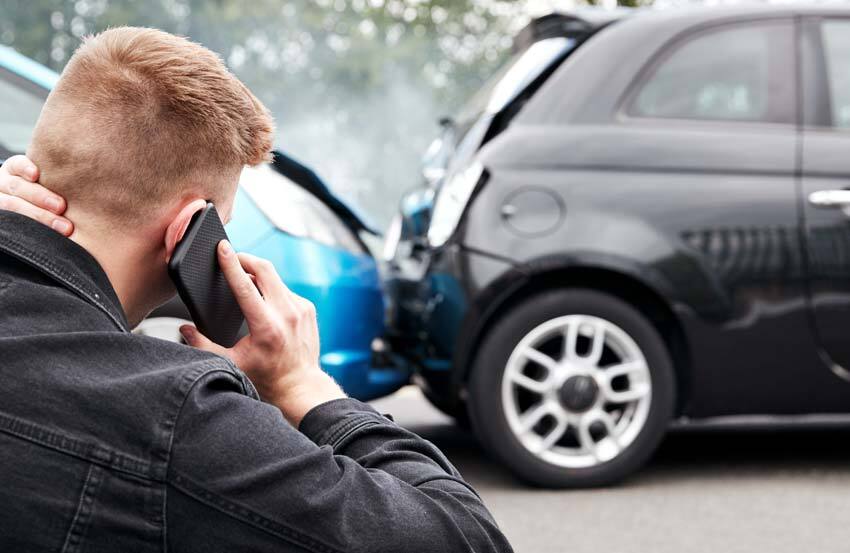
Immediately following an accident, you need to stop your vehicle. Not doing so is a driving offence under the Road Traffic Act 1988. If you can, turn off the engine and put your hazard lights on before checking for any injuries to you or any passengers.
If anyone is hurt, you should call for an ambulance as soon as possible. If the collision has blocked the road, or the other driver involved has left without exchanging details, call the police.
No matter the scale of the collision, it's completely normal to be shaken and overwhelmed, but it's also important to breathe and steady your focus. You'll need to exchange information such as your names, addresses, contact and registration numbers and insurance details.
When speaking to the other driver(s) or passengers, do not apologise or admit responsibility until you're satisfied with what led to the collision and how it occurred. This prevents you from accepting blame immediately. Responsibility is usually determined by insurers or the police.
You should also take as many pictures and even videos of the damage and the scene for reference. Doing this can make the process of claiming a lot easier too!
When to call the police after a crash
If a car collision you're involved in results in any injuries, you must contact the police. You should also do this if:
- You believe someone is in danger
- The collision causes an obstruction in the road
- An offence has been committed (such as another driver leaving the scene without exchanging information)
There's also the potential for you to be involved in a pre-arranged fraudulent insurance claim. This is known as a 'crash-for-cash' scam whereby a collision is induced or staged as a means to claim for an insurance payout. It can occur if someone brakes suddenly in front of you to cause a collision.
If you believe you have been a target of this type of scam, you must report it to the police within 24 hours. This can ensure your account has been recorded for investigation and can help protect any car insurance claim you make. To reduce the possibility of being caught in a crash-for-cash scam, always leave plenty of space between you and the driver in front of you.
Honesty is the best policy, especially when you describe and explain an accident to an insurer or the policy. In the digital world we live in, CCTV and dash camera footage is widespread and can confirm or disprove your account of a road collision.
How a car collision claim affects your premium
Unfortunately, any type of road collision is more than likely to increase your car insurance premium if you make a claim. Claiming on your car insurance policy raises your risk profile in the eyes of insurers, regardless of whether the collision was your fault or not.
The increase of your premium following a claim may be determined through various factors, including:
- Your claim history
- The degree of sustained damage (the cost of the claim)
- If you have no-claims bonus (NCB)
A non-fault claim shouldn't increase the cost of your car insurance as much as a collision you were at fault for. It doesn't make for pleasant reading in any case, but you may be able to protect yourself from this happening!
Insurers do offer additional cover in the form of no-claims bonus protection and cosmetic car insurance. The latter covers the cost of minor damage repairs without the need to claim on your main car insurance policy.
The former helps you keep the years of NCB discount you've built if you need to make a claim (up to a limit). There's another variation of NCB protection known as 'step back', which partially reduces your no-claims bonus if you make a claim instead of wiping it out entirely.
Generally, the more years of NCB you build, the cheaper your car insurance premiums are likely to be.
| Years of NCB | Average car insurance premium* |
|---|---|
|
0
|
£1,722
|
|
1
|
£1,022
|
|
2
|
£790
|
|
3
|
£684
|
|
4
|
£634
|
|
5
|
£601
|
The longer you keep your NCB intact, the less of a risk you are in the eyes of insurers! For reference, the average car insurance premium for drivers with 10 years of NCB is £424*.
Will a non-fault accident affect my insurance?
It seems pretty unfair, but yes, it can. Essentially, a non-fault car collision is when another driver is responsible for a collision you're involved in. An example of this would be if you're stopped at traffic lights and someone rear-ends you because they couldn't slow down in time.
Even if you were hit by someone else, your car insurance premium can still rise because insurers statistically view any involved party as a higher risk. If your insurance provider manages to recover the costs required to repair your car, your claim is recorded as non-fault in your claims history. So while your premium may rise, it doesn't tend to increase as much compared to a claim you were at fault for.
How long do claims stay on car insurance?
Claims are never removed from your driving 'record'. All incidents, collisions and claims relating to car insurance are recorded in the Claims and Underwriting Exchange (CUE). It's a database that stores data over the past 6 years, aiding the crackdown on insurance fraud. Insurers access CUE to mitigate risk, but can also cross-reference information you provide to ensure it's both honest and accurate.
It's nothing to be worried about, insurers generally only ask you about any claims you've made on your car insurance policy over the past 3-5 years. If you have, you'll usually have to provide some information in relation to the claim(s).
Claiming for injuries: Time limits and rules
As far as reporting a car collision to your car insurance provider, your policy should outline a set time limit following the incident. If you don't report anything within the stated time limit, you risk your policy becoming invalid. However, this is different from reporting any injuries sustained in a collision.
If you or anyone is injured in a car collision you're involved in, you must report it to the police within 24 hours. Not doing so is illegal and can result in fines, penalty points on your licence and potential criminal prosecution.
Sustaining an injury in a car collision can be a traumatic experience, so it's important you ensure you're safe to seek medical attention. Where possible, you should document any evidence of your injuries.
According to UK law, you have up to 3 years to file a claim for personal injuries sustained in the incident. Personal injury cover is commonly offered with car insurance policies, so you may already have a form of insurance in place! If not, you can still find legal cover following the collision to claim for personal injury.
What if my car is declared a 'write-off'?
In simple terms, your car is 'written off' if your car insurance provider decides that the cost of repairing your vehicle is more expensive than its market value. Your car can also be written off if the sustained damage is so significant that it's no longer roadworthy or safe to drive.
A loss adjuster will work on behalf of your insurer to inspect damage and determine whether the car can be repaired against its market value or written off.
If your insurer decides your car is a write-off, your car insurance policy is usually cancelled, and you'll lose the benefits it provides, such as a courtesy car. The insurer will keep the vehicle and you'll be issued a settlement amount (typically the market value of the car prior to the collision).
By accepting the settlement amount, you'll need to send the V5C logbook to your insurance company and inform the DVLA that your car has been written off. If you reject the car insurance settlement, you can dispute the case and negotiate with your insurer by providing evidence. If you can't reach a compromise, you should contact the Financial Ombudsman Service (FOS) to lodge a complaint.
Depending on the categorised condition of your car following the collision, you may be able to buy the vehicle back from your insurer.
Tips for managing an insurance increase after a claim
It's safe to anticipate your car insurance premiums rising if you claim on your policy. So, is there a way to keep the costs down? Fortunately, there are a number of ways, such as:
Shopping around and comparing quotes: Even if your renewal quote doesn't increase as much as expected following a claim, it's always worth shopping around. If you're struggling to find affordable car insurance, you can also try contacting specialist car insurance brokers.
Considering a telematics car insurance policy: If a claim has pushed your car insurance premiums through the roof, a telematics car insurance policy might be a solution. This type of policy tracks your driving habits and awards you a score based on how well you drive. If you build up a good score, your insurer offers you a discount at renewal or at intervals throughout your policy.
Increasing your voluntary excess: Your voluntary excess is the amount you're willing to contribute towards a claim. You can choose this amount when buying a car insurance policy. Opting to contribute a higher amount can decrease your premiums, but be aware, you'll need to afford this if you claim!
Lowering your annual mileage: Driving more increases your risk of making a claim. So, if you can limit the annual mileage you state in your car insurance application, it might reduce what you pay.
Paying for your car insurance annually: It sounds like a tactic to get you to pay for your car insurance upfront, but there is some truth in reducing costs by paying annually.
Insurers charge interest for spreading the cost of your cover over the year by paying monthly. Interest isn't charged if you pay up front, so it's something worth considering, if you can afford it.
*Confused.com data based on comprehensive car insurance policies between November 2025 and January 2026
 cookie usage