


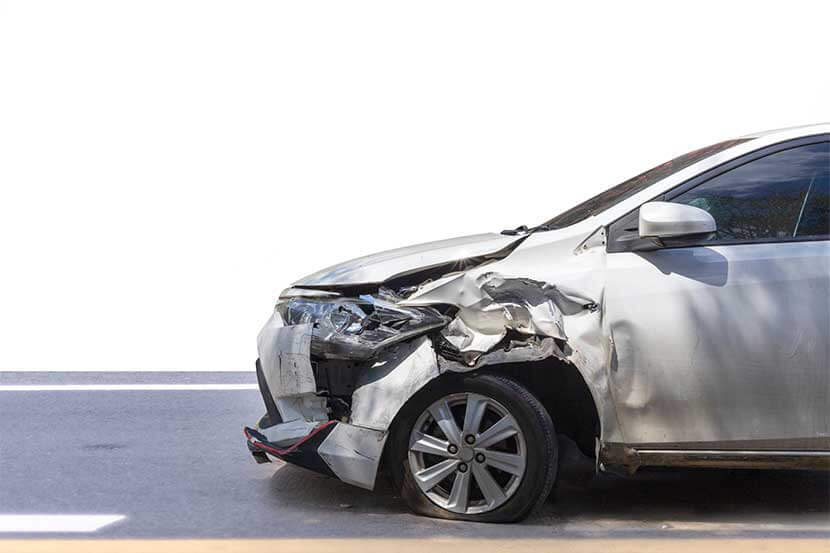
After your car has been in an accident, your car insurance company usually books it in for repairs. But sometimes it doesn’t make economic sense to repair the car. In this case, you might have a car write-off on your hands. And there are different kinds of write-off to be aware of.
Let's take a look at what happens to your car after it's been declared a write-off.
Key takeaways
- A car write-off, also known as a total loss, means an insurer has decided that the car isn't worth fixing. Either the repairs would cost more than what the car is actually worth, or the car can't be made roadworthy again
- Since 2017, write-offs have been sorted into 4 categories: A, B, S, and N. You might still see the old names Cat C and Cat D floating around in searches and older databases. These have now been replaced by Cat S and Cat N, so if you spot them, just know they mean the same thing
- The category makes a big difference to what happens next. Cat A and B cars must be crushed. Cat S and N cars can be repaired, registered, and legally driven again but must be declared
- If your car is written off, your insurer will typically offer you the pre-accident market value minus any excess
- You can buy back a Cat S or N write-off from your insurer, but the salvage value will be deducted from your settlement
What does it mean if my car's a write-off?
Your car can become a write-off after an accident in 2 ways:
- It’s damaged to the point that it’s no longer roadworthy
- The cost to repair the car is too great
Insurance companies call car write-offs a ‘total loss’ - this is what you might see on your car insurance policy documents. But we’re going to use the more common term ‘write-off’.
Depending on the value of your car, a write-off can happen even when there’s superficial damage like a dent or scratch.
How does my insurer decide if my car is a write-off after an accident?
Car insurance companies have their own set of criteria for what counts as a write-off.
When you make a car insurance claim, your car insurance company assesses the damage. They then work out how much it would cost to repair your car.
If the repairs cost more than the car’s market value, or a high percentage of it, they may choose to write it off. This is because it’s not economically viable to repair the car in its current state.
What do the write-off categories mean?
There are 4 categories of write-offs, depending on how repairable they are. Let's take a look at the meaning of each write-off category:
| Category | Definition |
|---|---|
|
Cat A
|
The car is beyond repair. You can’t drive a cat A write-off and it has to go to the crusher.
|
|
Cat B
|
The car is beyond repair, but not entirely without use. You can salvage parts from cat B write-offs, but the body shell has to go to the crusher.
|
|
Cat S
|
The car can be repaired but has suffered structural damage. This covers things like the suspension and chassis. Cat S cars can be bought and repaired, but you have to re-register them with the DVLA. This category was previously known as Cat C , but was renamed Cat S in 2017.
|
|
Cat N
|
The car can be repaired, and it only has non-structural damage. That covers things like lights and seats. You can still buy and sell cat N cars and repair them to be roadworthy. This category was previously known as a Cat D write-off and was renamed Cat N in 2017.
|
What happens if my car is written off and how much will I get?
If your insurance company says your car is a write-off:
- They cancel your insurance policy. You lose any entitlement to a courtesy car or driving other cars.
- The insurer keeps the car - it's now their property.
- They should pay you a settlement amount, which is usually the market value of the car, minus your car insurance excess. For example, if your car's worth £5,000, and your total excess is £250, your settlement would be £4,750.
In some circumstances - such as if the car is a Cat S or Cat N write-off - you can choose to buy it back from your insurer. We'll come back to this shortly.
If you accept the settlement and don’t want to buy the car back, you need to:
- Send your V5C logbook to your insurance company
- Keep the ‘sell, transfer part-exchange your vehicle to the motor trade’ section from the logbook
- Tell the DVLA that your car is a write-off
How can I find out the market value of my car?
You can use our free car write-off calculator tool to get an idea of what your car is worth. It's a great way to work out a potential write-off settlement or buy-back value. Just enter your car registration and select the 'selling' option.
The valuation calculator is free to use and lets you see roughly how much you could expect to get if you:
- Sold your car privately
- Part-exchanged it at a dealership
With a written-off car, what happens to my car insurance?
First, your existing policy is cancelled, as you no longer have a roadworthy car to insure.
Depending on who was at fault for the accident, you may lose some or all of your no-claims bonus.
You're likely to see your future car insurance costs go up too.
This is because your claims history is a factor insurance companies look into when calculating your car insurance costs.
If you’ve been in an accident – with or without a car write-off – you're likely to see your insurance costs rise. And expensive claims tend to drive the price up further.
If my car is a write-off, can I keep it?
Yes - depending on the condition of the car. Normally, when the insurance company writes your car off, they keep it.
If the car is a Cat A write-off, or total loss, it can't go back on the road by law. So you can't buy it back from the insurance company.
You can technically buy a Cat B back, but its body will need to be crushed, so you can only sell on the parts. If you decide you want to sell it for scrap, be sure to get a quote from a selection of scrap dealers to get the best price.
If your car is a Cat S or Cat N write-off, you can buy it back from them. But the disposal becomes your responsibility, and cars which have been written off will have lost a lot of their value. And if you decide you'd rather not keep it, selling a written-off car afterwards is possible too, as long as you declare its write-off status to any buyer.
If this is something you want to do, tell your insurer as soon as you can.
Insurers work with salvage companies to dispose of write-offs. So if you delay telling them, you risk being too late to get the car back.
But before you commit to buying the car back, it’s worth having an independent mechanic look at the car and give an estimate of repair costs.
Then you can decide if it’s worth having the car back to repair.
If you do, your insurer pays you a settlement, minus the car's salvage value. It's then up to you to repair the car and make it roadworthy.
But why do insurers deduct salvage value? Insurers deduct salvage value from a car because a written-off vehicle still has worth after a claim. Instead of scrapping it entirely, the insurer takes ownership of the wreck and sells it on. This is either for spare parts or scrap metal.
You're compensated for the car's value minus what the insurer expects to recoup from selling it on, rather than being paid the full pre-accident value while the insurer also keeps that recovery for itself.
Can I insure a written-off car?
Yes, you can insure a car that's been written off as Cat N or Cat S, but in some cases you have to tell your insurer about the write-off status.
The two categories differ in what kind of damage the car has suffered. A Cat N write-off has non-structural damage such as damage to the interior trim, cosmetic panels, electrics, or non-structural mechanical parts.
A Cat S write-off means the car has suffered structural damage and must be inspected and repaired by an engineer before being re-registered.
Can I insure a Cat S car?
Yes, you can. But insurers consider Cat S cars to be high risk. This is in part because the car has been involved in a significant accident.
Also, it's not easy to determine the market value or condition of a car once it's been written off. This means your car insurance policy is likely to cost more than usual.
[$article/expert-quote/expert-quote-car-write-offs-explained]
Is it safe to buy a Cat N or Cat S car?
It pays to be extra cautious when looking at buying a previous write-off. Dealers must declare cars that are Cat N or Cat S. They can often look like a bargain, but you should check them thoroughly before buying.
Category N cars have suffered non-structural damage. This could be just a door panel or headlight fitting that was considered uneconomical to repair by the insurance company.
It can also cover cars written off due to flood damage, for example. Or cars that have had damage to the steering or brakes.
If you're not sure how to check if a car has been written off, it's best to do a HPI check to find out exactly why. Then get a professional to make sure it's been repaired to a safe condition.
Category S cars have had structural damage to the chassis or frame - they must be repaired with professional equipment. Although there's no legal requirement for the work to be checked before the car goes back on the road.
Can I sell a Cat S car?
Yes, selling a Car S car is legal as long as you've officially declared its Cat S status.
Buyers might want reassurance that the car is properly repaired before parting with their money. So you may be required to pay for another car inspection by a third party.
All of these extras mean you could end up selling with a price lower than you originally had in mind.
Another option is to sell your Cat S car to salvage buyers. These buyers are only interested in selling the car for parts.
What happens if my car is on finance and it’s declared a write-off?
If you have a written-off car that's still on finance, things get a little more complicated.
The final payout that you get from the insurer could end up lower than your outstanding debt to the finance company.
This means you have to keep making payments on the loan - even though you don’t have the car anymore.
Or your lender might ask you to pay back the outstanding amount in full.
From here, you have a few options:
- Negotiate with your insurance company to give you a higher settlement. You need to provide evidence that the car’s market value is higher than what they’ve offered.
- Call your car finance lender and see if you can come to an arrangement with the outstanding amount.
Gap insurance is a separate policy to your car insurance. It’s designed to cover the gap between the car’s market value and what you originally paid for it.
This should help cover any outstanding cost from your car finance.
Do I need to tell the DVLA about the write-off?
Yes, if your car is a write-off, you must tell the DVLA. You can do this by visiting the GOV.UK website.
You need to provide the following information:
- Your insurance company’s name and postcode
- Your car’s registration number
- Your V5C logbook. Specifically, the 11-digit reference number in the ‘sell, transfer or part-exchange your vehicle to the motor trade’ section.
If you don’t tell the DVLA that your car is a write-off, you could face a £1,000 fine.
If your car is a Category S write-off, formerly known as Cat C, and you’re keeping it, you also need to re-apply to the DVLA.
 cookie usage