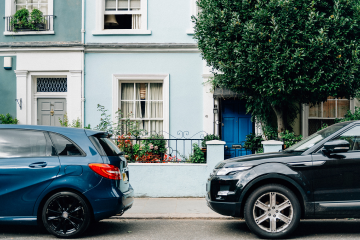
"Performance cars are extremely powerful so come with a higher risk, that makes them very expensive to insure. So it makes sense to do your research and make sure it's completely covered with the correct insurance."

Finding insurance for a performance car works the same way as any other, except that due to the increased insurance risks that come with performance cars, you may find you have fewer and more expensive quotes to choose from.
That doesn't mean finding a reasonably priced policy is impossible, and that's where we can help. Read on to find out about insuring your performance car, or if you're ready to get a quote, use the quote button to get started.

Collins dictionary defines a performance car as "a car that can go very fast and increase its speed very quickly" which is a pretty good way of describing them. Sports-cars and supercars such as Porsche can also come under the umbrella of performance cars.
These types of cars are usually fast, expensive and tend to have race-prepared engines, tuned exhausts and uprated suspensions. Allowing you to hit higher speeds with ease. They’re designed with power in mind, enabling it to handle higher-than-normal speeds or take tight corners.
An insurer usually classes a supercar as a 2-door, lightweight vehicle with a large, powerful engine. But it’s a pretty broad category as it covers prestige models, kit cars and imported cars.
It also covers modified cars. These are regular cars that have been modified for high performance by adding a larger engine or upgrading the fuel system, for example.
Other high-performance modifications might include:
It can be. Their ability to reach high speeds and huge value means insurers see performance cars as a higher risk.
As with any car, there are many factors that go into working out how much you should pay for your supercar insurance.
When covering supercars, insurers also need to consider:
Putting it simply, insurers think there’s more chance of a high-performance car being damaged or stolen, and it costs them more when that happens. The bottom line is that you’re dealing with valuable assets.
It’s always going to be more expensive to insure a performance car, but you could get cheaper car insurance if you're aware of your options.
Be organised and don't leave it late to get your insurance.
Our data shows the cheapest time to buy your policy is 20* days before the policy start date. The longer you leave it, the more the price can go up.

Is a legal requirement if you're driving in the UK. Find out more about choosing the right cover at the right price.
34% of UK households now have 2 or more cars. See the latest data on car ownership by household, plus how multi-car insurance could help you manage it all.
You'll need to pass a driving theory test before booking your practical exam. We'll give you the lowdown on what to expect, how to book and tips for passing.
More than 70,000 UK drivers have been fined for using a phone while driving since 2023. Learn the latest laws, penalties and how AI cameras detect offences.
Ever wondered how much is insurance for a new driver? Our guide breaks down the factors insurers use to calculate car insurance for young drivers.
What makes a high risk driver? And how can they cut the cost of their cover? Read on to find out.
Insurance for new drivers can be costly, but it doesn’t have to ruin the fun of hitting the road for the first time. Looking for the ultimate lowdown? Read on.
 cookie usage
We use cookies, some of which are essential to make our website work. For us to use our non-essential cookies, we need your consent. You can consent by accepting all or alternatively, manage your cookies at any time. For more information, read our cookie policy.