

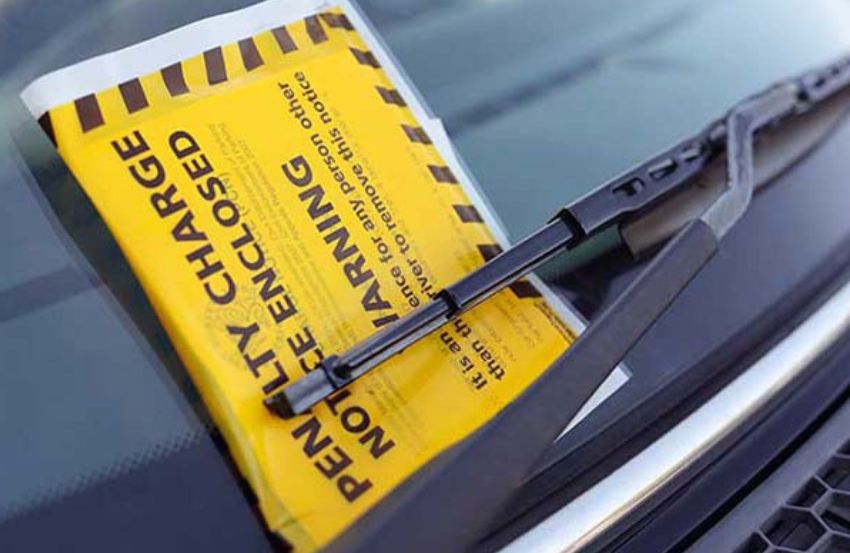
Penalty Charge Notices (or PCNs) are the dreaded yellow tickets issued to drivers.
Some streets in the UK are more prolific than others in terms of generating fines, so which locations are the worst offenders?
Key takeaways
- Over £42m of PCN fines were generated during the 2024/25 financial year on the UK’s worst-offending streets
- Corporation Street at Aston Road, Birmingham, recorded the highest number of driving fines in the UK, with 62,725 PCNs distributed
- Station Parade in Barking and Dagenham Borough Council generated the highest income of fines, raking in £2,030,242
- A new survey of 2,000 UK drivers found that nearly half (48%) of those issued with a PCN were penalised due to parking offences
Which UK streets see the highest number of driving fines?
PCNs are a thorn in the side of drivers all over the UK. Whether it's a notice for parking in a restricted area, a bus lane violation or not paying congestion charges, fines tally up pretty quickly.
In fact, the UK’s worst offending streets generated £42m in driving fines throughout the 2024/25 financial year.
The worst offending street in terms of total number of fines is Corporation Street at Aston Road, Birmingham, according to Confused.com data*. This street was responsible for 62,725 PCNs over a single year.
Station Parade in Barking and Dagenham Borough Council took top spot as far as fines totalling the most amount of money at £2,030,242 over the same period.
What types of offences lead to the most fines?
According to a survey of 2,000 UK drivers, parking offences were an overwhelming culprit for PCNs, with nearly half (48%) penalised for this type of offence.
A parking charge can be issued for various offences, including:
- Parking on yellow lines (single or double)
- Parking in a pedestrian zone
- Parked in a marked residents’ or permit-only space without clearly displaying a permit
- Parking in a loading bay without using the space for its intended use
- Parking in a designated disabled person’s parking place without clearly displaying a valid disabled person’s badge
A full list of parking contravention offences can be found here.
Parking charge notice vs. penalty charge notice: What's the difference?
There are differences between penalty charge notices and parking charge notices. It's not the easiest to tell the difference, not least because they share the same acronym!
So, what's the difference?
A penalty charge notice (PCN) is issued by the local authority or council and is a form of fixed penalty notice (FPN). A PCN typically covers civil offences but can be enforced with criminal prosecution. In short, not paying or appealing a PCN fine can become a court matter.
Parking charge notices can be issued by private parking companies contracted to manage private land. You can be issued a notice if you park on private land without the owner's permission or by breaching any stated parking conditions.
You have the right to appeal both types of notices. You can access GOV.uk to challenge a PCN, but for parking charge notices, you'll need to appeal to the parking contractor first.
Where are drivers most likely to be fined?
According to Confused.com data*, PCN fines are most often picked up in busy areas. Almost half (47%) of surveyed drivers received a PCN in a city centre, while another 2 in 5 (38%) were fined on a residential street.
Why are PCN fines common in busy areas?
Well, in areas with higher volumes of traffic, free parking tends to be limited. In addition, there are likely to be more parking conditions around parking in city centre locations.
Large residential areas surrounding cities can be subject to stricter parking regulations with designated permit-only spaces.
1 in 5 drivers (20%) also believe newly introduced government schemes, such as Clean Air Zones (CAZ) and Low Emission Zones (LEZ), make certain streets more likely to generate fines.
What do drivers say about road rules and signage?
The sight of a yellow ticket on a windscreen can make any driver's heart sink. Firstly, the cost. With PCN fines ranging from £50 to £130, a parking misstep can leave a dent in your bank account. It can be an unnecessary cost, especially with rising motoring costs in addition to car insurance.
So what do UK drivers make of PCNs?
- 35% of surveyed drivers said they paid between £50 and £100 in PCNs
- 2 in 5 (40%) drivers believe the current cost of parking fines is too expensive
- And over 2 in 5 (42%) believe a reasonable amount to pay for a PCN should be under £30
But how clear are parking regulations and road signs? Driving near home or in a familiar location can become second nature for most. But passing through a CAZ or LEZ unsuspectingly, for example, can land you with a PCN.
- More than half (57%) of drivers believe confusing or unclear signs and road markings make certain streets more likely to generate fines
- Over 2 in 5 (41%) also said a lack of parking spaces increases the likelihood of receiving a PCN
- 43% of drivers say clearer signage would significantly reduce the number of parking and traffic fines issued
- And 2 in 5 (40%) think councils should invest more in making road and parking signs clearer.
Rules around parking can be complex, so drivers can be at a greater risk of being fined simply for misunderstandings.
Understanding PCNs, and knowing how to avoid or challenge them, helps keep everyone on the roads safe. But if you're unsure of certain road signs, try our parking sign translator for guidance!
How much do PCNs typically cost?
PCN fines can range depending on where the parking offence was committed. In London, for instance, PCN fines can cost as much as £130. In many other areas around the UK, the same fines can reach £70.
A PCN ticket typically outlines the committed offence and the terms of the fine, but more information can usually be found online. Depending on the seriousness of the offence, a 50% discount may be applied if the fine is paid within a specified time.
You can always use our driving fines calculator to get a better idea of estimated fine costs.
How can I appeal a PCN as a driver?
If you have been issued a PCN, you have a right to challenge it with an appeal. Just make sure you don't pay the fine; doing so can be perceived as an admission of guilt!
PCN appeals are pretty common, with over 2 in 5 surveyed drivers (42%) admitting they appealed their PCN. The most common reasons for appealing?
- Feeling that the issuing of the ticket was unfair (20%)
- Believing the signage was unclear or confusing (15%)
You'll want to gather as much evidence as you can to support your appeal. Collecting evidence at the time you were issued a ticket (or when you returned to your vehicle) is important. This can help visibly prove your case one way or the other.
What can be used as evidence? Examples can include:
- Photographs of your vehicle in the exact location where you were issued a PCN (preferably as soon as the ticket was issued)
- Proof highlighting mitigating circumstances such as a medical emergency and a vehicle breakdown
- Any witnesses that can help verify your appeal and can prove they witnessed the issuing of a PCN
The allotted time you have to challenge a PCN can vary depending on the local authority that issued the ticket.
Typically you'll have 14 days to lodge an appeal in order to benefit from the discounted fine (if you're eligible). So, if your appeal is unsuccessful, you can still pay the discounted rate.
Otherwise, you have up to 28 days in total to challenge a PCN. After this, you won't have the opportunity to appeal.
To lodge your appeal, you should search online for the local authority that issued the PCN. They may be able to process your appeal on the website using a form; alternatively, the local authority should accept an appeal via post.
Tips to help avoid a PCN
Parking rules change fairly often, so keeping up with the latest regulations can be challenging. But there are a few things worth considering to help you avoid the dreaded yellow ticket:
- Brush up on your parking sign knowledge by quizzing yourself from time to time
- Pay attention to any road markings; this can help you avoid bus lanes and parking on yellow lines
- Unsure of parking in a marked space? Look for nearby signs that state the conditions of parking there
- Display any permits or tickets you require for parking clearly – if you can't see a permit from outside your car, can a parking enforcement officer?
Paying attention to your environment when parking can be the difference in whether you're issued a PCN. Over time these tips should help you avoid a yellow ticket and an unexpected fine!
Compare car insurance quotes
*Research was conducted by OnePoll on behalf of Confused.com, surveying 2,000 UK drivers between 30th January and 4th February 2026. In addition, further data is sourced from a Freedom of Information request issued by Confused.com in December 2025.
 cookie usage