1. Home
  2. Car insurance
  3. Car tax checker

Car tax checker

Check the tax status of your vehicle

Vehicle Excise Duty (VED) is commonly known as road tax or car tax. Use our free tool to check if your car is taxed.

Use our free tool to check if your car is taxed

What is car tax?

Vehicle Excise Duty (VED), commonly known as car tax or road tax, is a legal requirement for most vehicles used or kept on public roads in the UK. Most vehicle owners must pay VED and have valid car insurance.

The money collected from VED goes into general government funds and helps support public services, including road maintenance.

Some vehicles qualify for a £0 VED rate or an exemption from paying VED. However, even if no payment is due, the vehicle must usually still be officially taxed with the Driver and Vehicle Licensing Agency (DVLA).

Since 2014, paper tax discs are no longer issued or displayed on vehicles. You can check a vehicle's tax status online through the DVLA.

Are there any car tax exemptions?

Yes. Some vehicles and drivers are exempt from VED. Even if you’re exempt, you still need to tax your vehicle.

You may be exempt if:

  • You are a disabled driver or carry a disabled passenger (only one vehicle can use the exemption at a time)
  • You use a vehicle belonging to an organisation that transports disabled people
  • You use a mobility vehicle or powered wheelchair limited to 8 mph on the road and 4 mph on pavements
  • You own a classic or historic vehicle built before 1 January 1984
  • Your vehicle is declared off the road (SORN) and is not used or parked on public roads
  • You use an agricultural or forestry vehicle, such as a tractor, mowing machine, agricultural engine, or limited-use farm vehicle

Keep in mind hybrid vehicles are not exempt from VED.

If you’re unsure whether your vehicle is exempt, you can check the latest rules on GOV.UK.

How do I check my car tax?

Checking your tax is quick and easy with our car tax checker tool.

Start by entering your vehicle’s registration number.

Once submitted, the tool will instantly show your current tax status along with your MOT history.

You’ll also be able to:

  • View past MOT results
  • Check expiry dates
  • See any advisory notes

Why is checking car tax important?

It confirms whether the vehicle is taxed and legally allowed on the road.

It’s often checked alongside MOT history to get a fuller picture of the vehicle’s condition.

Together, this can help you:

  • Check the vehicle is legal to drive (tax and MOT are up-to-date)
  • Spot past MOT failures or advisories that may indicate issues
  • Identify mileage inconsistencies and reduce the risk of odometer fraud
  • Spot potential problems early before buying or driving
  • Avoid unexpected costs linked to repairs or compliance issues
  • Feel more confident about the vehicle’s condition and reliability

What our car insurance expert says

"Before buying a used car, checking its tax status takes seconds and can save you a lot of hassle. An untaxed vehicle can't legally be driven on public roads, so if you're picking up a car you've just bought, you need to make sure it's taxed in your name before you set off."

"It's also worth looking at the MOT history at the same time - together, they give you a much clearer picture of what you're actually buying."

Rhydian Jones - Confused.com Commercial Director
Commercial Director & Motoring Expert Confused.com logo

Documents you need to tax your car

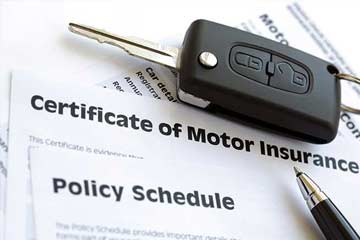
To tax your vehicle, you’ll need a reference number from one of the following:

  • Your V5C log book (it must be in your name)
  • A tax reminder from the DVLA (letter or email)
  • The green ‘new keeper’ slip you received when you bought the vehicle

If you don’t have any of these, you’ll need to apply for a new log book. You can usually tax your vehicle at the same time.

You can apply for or renew VED online, by phone, or at a Post Office.

You can’t pay by Direct Debit over the phone. If you apply at a Post Office, only specific branches offer vehicle tax services.

When you're applying, you must have one of these documents to hand.

Car tax rates and tax bands explained

Car tax rates depend on your vehicle’s age, fuel type and, in some cases, CO₂ emissions or engine size.

New cars are taxed differently in the first year, with rates based on CO₂ emissions. After that, most vehicles move to a standard annual rate.

Car tax for electric vehicles (EVs) was introduced from 1 April 2025. An additional pay-per-mile tax for EVs is expected to be introduced in 2028. Our EV pay-per-mile tax calculator can help you estimate what the proposed charges might cost you.

Rates vary depending on when your vehicle was registered. They are based on factors such as fuel type, CO₂ emissions and engine capacity.

For a full breakdown of current rates and bands for the 2026/27 tax year, see our car tax bands guide.

VED tax rates for tax year 2025/26

These are the first year and standard rate (for second payment onwards) VED rates for cars registered on or after 1 April 2017:

CO2 emissions (g/Km) Petrol, clean diesel (RDE2 standard) & EV first year rate All other diesel (those not meeting RDE2 standard) Standard rate for second payment onwards*
0
£10
£10
£200
1-50
£115
£135
£200
51-75
£135
£280
£200
76-90
£280
£365
£200
91-100
£365
£405
£200
101-110
£405
£455
£200
111-130
£455
£560
£200
131-150
£560
£1,410
£200
151-170
£1,410
£2,270
£200
171-190
£2,270
£3,420
£200
191-225
£3,420
£4,850
£200
226-255
£4,850
£5,690
£200
Over 255
£5,690
£5,690
£200

*Cars and motorhomes with a list price of more than £40,000 (£50,000 for electric cars) must pay an extra £440. This rate is payable for 5 years, calculated from the second time the vehicle is taxed 

VED tax cost for cars registered before April 2017

For petrol, diesel, alternative fuel and zero emission cars registered between 1 March 2001 and 31 March 2017, the car tax scale splits into 13 bands (A to M). Here are the tax rates for these vehicles based on a single 12 month payment:

Band CO2 emissions (g/Km) Cost
A
Up to 100
£20
B
101-110
£20
C
111-120
£35
D
121-130
£170
E
131-140
£200
F
141-150
£225
G
151-165
£275
H
166-175
£325
I
176-185
£360
J
186-200
£410
K*
201-225
£445
L
226-255
£760
M
Over 255
£790

* This includes cars with a CO2 figure over 225g/km but were registered before 23 March 2006

How do I tax my car?

You can tax your car online, by phone, or at a Post Office.

You’ll need a reference number from one of the following:

  • Your vehicle logbook (V5C)
  • A green ‘new keeper’ slip if you’ve just bought the car
  • A DVLA tax reminder letter or email

If you’ve just bought a vehicle, you must register it for tax before driving it on public roads. Vehicle tax usually lasts for 12 months and must be renewed each year.

How much you pay depends on factors such as your vehicle’s age and fuel type.

You can typically pay in a few different ways:

  • A single annual payment
  • A green ‘new keeper’ slip if you’ve just bought the car
  • Every 6 months by direct debit

How do I cancel my car tax?

You’ll need to let the DVLA know if you want to cancel your car tax.

The only exception is if you register your vehicle as off the road (SORN), as your tax will be cancelled automatically.

You’ll need to contact the DVLA if your car is:

  • Written off by your insurance company
  • Sold or transferred to a new owner
  • Scrapped at a scrapyard
  • Stolen
  • Taken abroad

If any of these apply, you may be entitled to a refund for any full months of tax you’ve already paid. The DVLA usually sends this as a cheque.

You can cancel your car tax online through the DVLA vehicle tax service or by contacting the DVLA directly. You’ll just need your vehicle details or reference number to hand.

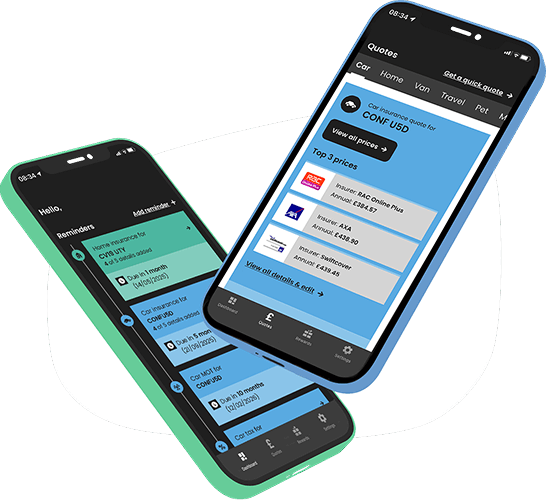
    Get MOT & Tax reminders plus much more in our app

  • App reminders icon  Insurance, MOT and tax reminders
  • Quick quote icon Get a quick car insurance quote
  • calendar icon  Monthly car running costs
  • Apple app store logo
  • Google app store logo
Two phones with the Confused.com app being displayed

FAQs

My car isn't taxed - what do I do?

You need to tax your vehicle before legally driving it on public roads. You can do this online, by phone, or at a Post Office using your V5C logbook, DVLA reminder, or new keeper slip.

How does car tax impact my insurance?

Car tax and insurance are separate, although you must have valid insurance before you can tax your car. Remember, both are required to legally drive on UK roads.

What happens if I don’t pay my car tax?

If you fail to pay your car tax, you’re likely to receive a fine.

Depending on the status of your car at the time of the offence, this could be as much as £2,500!

Here’s a breakdown of the fines you can expect if you’re caught without car tax:

If you’re the registered keeper of an untaxed car

Here, you’ll be issued with an £80 fine, which is reduced to £40 if you pay with 33 days. Failure to pay the fine within the stated time limit could see your penalty being passed on to a debt collection agency, which could incur additional costs.

If you use an untaxed vehicle on a public road without a SORN

In this case, you’ll be issued with an out of court settlement notice (OCS) for £30, plus 1.5x the outstanding tax amount you owe. If this isn’t paid, you could be taken to court, where the maximum penalty you can be issued is £1000, or 5 x the total amount to tax your car - whichever is greater.

If you use an untaxed vehicle on a public road with a SORN

If you’ve SORNed your car, but drive it anyway, the penalties can be even more severe. Like with driving an untaxed car without a SORN, you’ll first be issued with a £30 OCS. If this goes unpaid, you could be taken to court and fined £2,500 - or 5 x your car’s tax, whatever is greater.

Keeping an untaxed vehicle

This works in the same way as using an untaxed, unSORNed vehicle. You’ll receive a £30 OCS, which if unpaid could land you in court where the maximum penalty is £1000 or 5 x your car tax.

Learn more about penalties for failing to pay your car tax on the government's website.

Is there a grace period on car tax?

No, there’s no grace period. You need to tax your car as soon as it’s due.

Failure to do so could see you hit with a penalty of more than £2,500!

Can you tax a car without insurance?

No, a valid car insurance policy is needed when applying for VED. A valid MOT is also required, but you don't usually need these documents to hand as they're automatically checked when applying online.

Can you MOT a car without tax?

Yes, you'll be able to get an MOT if your car doesn't have tax. It's an exemption to drive your car to have its MOT before applying for tax.

This is because you need a valid MOT certificate to tax your car.

Get more help with motoring costs, tax and insurance

Explore more motoring tools