

Has your car seen better days? You may want to scrap it. We'll walk you through what you'll need to bring with you and how your car insurance may be affected.
Key takeaways
- You must use an authorised treatment facility (ATF) - scrapping a car anywhere else is illegal
- Once the car is scrapped, tell the DVLA yourself - failure to do so can result in a fine of up to £1,000
- If your car is written off, you're still responsible for telling the DVLA - don't assume your insurer will do it for you
- You can keep your private number plate if you apply to the DVLA to retain it before the car goes to the ATF
- If you're stripping the car for parts, you must declare it SORN and keep it off public roads
- You'll need photo ID and proof of address to scrap your car
How do I scrap my car?
Wondering how you scrap a car in the UK? Here's how to sort it, avoid fines, and maybe even get some money back.
-
Find an approved scrap yard (ATF). You need an authorised treatment facility (ATF) to scrap your car. These are government-approved scrap yards that dismantle cars safely and legally. Don't use anyone else - it's against the law. Most ATFs will collect your car for free, or you can drop it off.
-
Get your Certificate of Destruction (CoD). When your car's scrapped, the ATF gives you a Certificate of Destruction. This proves your car is off the road for good. Without it, you could still be liable for road tax (Vehicle Excise Duty or VED) and any fines if the car gets into trouble.
-
Tell the DVLA (Driver and Vehicle Licensing Agency). Remember to tell the DVLA! If you don't, you could be fined up to £1,000. Give the ATF your V5C (the vehicle's registration document, also called the log book), but make sure you keep the yellow 'sell, transfer or part-exchange' section. If you have lost your logbook and need a replacement, you can apply online.
-
Get your money back (tax and insurance). Once you have your CoD and have told the DVLA, they'll automatically refund any road tax (VED) left on your car. For insurance, give your provider a call. You might get a car tax refund for the remaining time, or even credit towards a new policy if you're buying another car.
-
Need a SORN? If you're taking your car off the road - whether you're breaking it for parts before scrapping or you've simply stopped using and taxing it - you'll need a Statutory Off Road Notification (SORN).
Tip: If you're unsure where your nearest ATF is, GOV.UK has a tool to help you find one.
"Handing your car to an ATF doesn't end your legal responsibility - DVLA confirmation does. Until that notification comes through, the £1,000 fine risk stays with the registered keeper, no matter who's filing the paperwork."What our motor insurance expert says


Can I keep my number plate if I'm scrapping my car?
Yes, you absolutely can! Scrapping your car doesn't mean you have to lose your private or personalised number plate.
Here's the deal: you need to remove the registration from your vehicle and have it confirmed as retained before the car goes to an ATF for scrapping. Once a vehicle is scrapped, the DVLA has no way to recover a plate still attached to it, so this step can't be done retrospectively.
Follow these steps to keep your plate:
- Apply to the DVLA to take the registration number off your vehicle. You can usually do this online or by post using form V317, along with your V5C logbook.
- Pay the £80 retention fee.
- Wait to receive both your V778 retention certificate and a replacement V5C for the car - this can take a few days online, or a few weeks by post.
- Once you have these documents in hand, take your vehicle to an ATF for scrapping.
- Complete the usual scrapping process, including telling the DVLA and getting a CoD.
Don't leave it too late! You must have your V778 and new V5C before the car is scrapped - once it's gone, there's no way to reclaim the plate.
A couple of things worth knowing before you start:
- Your car needs a valid MOT - or to have had one when it was SORN'd - and needs to be capable of moving under its own power, since the DVLA may want to inspect it.
- Plates starting with 'Q' or 'NIQ' can't be retained.
You can read more on GOV.UK.
Can I strip my car for parts before scrapping it?
Yes, but you need to follow some rules.
If you're taking parts off your car to use on another vehicle you own, you can strip them before scrapping the car. While you do this, you must declare the vehicle as SORN and keep it off public roads. Think of places like your driveway, a garage, or other private land.
When you remove parts, you must also avoid causing pollution. For example, drain engine oil, coolant, and other fluids into suitable containers. Dispose of them through authorised recycling or waste facilities. Don't let them soak into the ground or enter drains.
Here's an important distinction that catches many people out: if you're stripping and reselling parts as a trade or business - for example, buying up old cars specifically to break for resale parts - that activity generally needs to happen at a licensed ATF. This is because there are strict rules for handling waste and protecting the environment. The rules are different if you're just taking parts from your own car to fix another one you own; you can do this on your own property.
Once you've finished removing the parts you want to keep, you must still take the remaining vehicle to an ATF to scrap it.
Scrapping a car that's registered abroad
Scrapping a foreign-registered vehicle in the UK is possible, but you'll need to do a few extra checks first.
If your vehicle was already declared "seriously damaged" in its home country, you usually can't register or tax it in the UK. The DVLA looks for terms like "statutory write-off", "scrapped", or "non-repairable" on overseas registration documents to decide if a vehicle is seriously damaged.
But what if your car gets damaged while it's here - say, in an accident? Then it follows the UK's insurance write-off process. We'll use our own Category A, B, S, or N system to assess the damage, not its original country's classification.
Keeping a foreign-registered car in the UK long-term? Make sure you have the right imported car insurance. Standard UK policies often don't cover foreign-plated vehicles.
Before you arrange scrapping, contact the registration authority in the vehicle's home country. Ask them to confirm its damage status. If it's not classed as seriously damaged, get written proof.
Once you're ready to get rid of it, take your vehicle to an ATF - just like any other end-of-life vehicle. You'll get a CoD if one applies.
After your vehicle is scrapped, it's up to you to tell the driving or vehicle registration authority in its home country that it's been destroyed. This helps them update their records.
How much will I get to scrap my car?
The price you get for scrapping your car depends on the make, age and model of your car.
Weight is also a factor. You'll be paid for your car's worth of recycled metals and the value of its parts. The price can change year to year, depending on the current market for scrap metal.
The scrap dealer might also reduce the final payment if they have to travel and pick up your car. If possible, choose a local ATF so you can avoid being out of pocket.
It's illegal to pay cash for scrap cars in England and Wales under the Scrap Metal Dealers Act. Payment must be made via bank transfer or cheque.
What documents will I need to scrap a car?
To scrap a car in the UK, you'll need:
-
V5C: This is your vehicle's registration document, also called the logbook.
-
Photo ID: This could be a valid driving licence or passport.
-
Proof of address: A utility bill, bank statement, or council tax statement.
You might also need to provide:
- Part or full service history
- Permission to scrap the car if you're scrapping it on behalf of someone else
The Scrap Metal Dealers Act requires scrap metal dealers to verify the identity of sellers. This is to stop thieves from stealing cars and selling them for scrap.
Once you've scrapped your car, the ATF should issue you a CoD within 7 days. At this point you should notify the DVLA that you've scrapped the vehicle. Failing to tell the DVLA that your car's been scrapped could result in a fine of up to £1,000.
If my car is a write-off, does that make a difference?
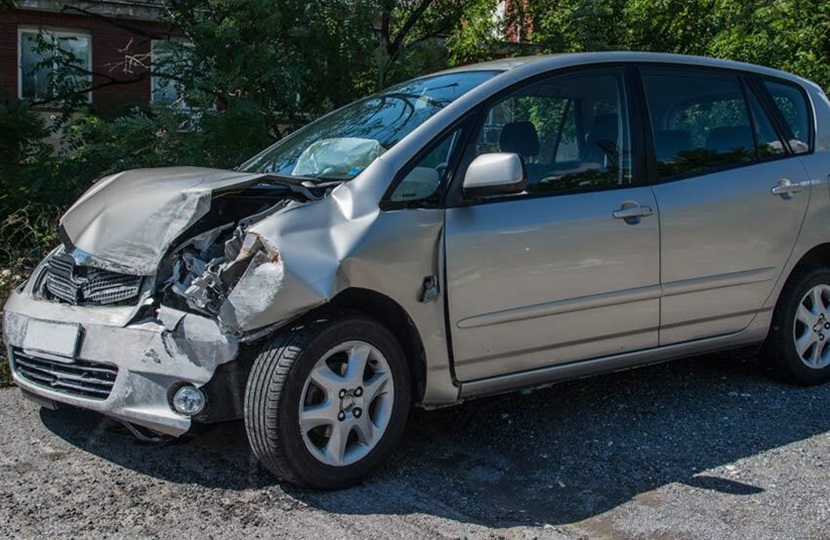
If your car is a write-off, the process for scrapping it is slightly different. What happens next depends on the write-off category your insurer gives it.
For Category A or B write-offs, the car can't return to the road, and your insurance provider will usually deal with getting it scrapped. If your car is Category S or N instead, it's repairable, and you may be able to keep it or buy it back from your insurer rather than having it scrapped at all.
If your car is being scrapped, you'll need to send your V5C logbook to your insurer. Remember to keep the yellow 'sell, transfer or part-exchange your vehicle to the motor trade' section. You also need to notify the DVLA yourself, even though your insurer is arranging the scrapping.
You can find more on this on GOV.UK.
What happens to my car insurance if I get rid of my car?
When you get rid of your car, you should notify your insurance company and cancel your car insurance. You might be able to get a refund for any time remaining on your policy.
If your car is written off
If your car is written off, you may still be liable for the remaining premium, depending on your policy - some insurers will let you cancel with a partial refund once the claim is settled, so it's worth checking rather than assuming you're locked in.
You may also pay more for your car insurance when you get a new policy.
If you sell your car
If you decide to sell your car, you should notify your insurance company and cancel your policy. You might be able to get a refund for any time remaining on it.
It's worth noting that you can still be liable for claims made on your policy until the day it's cancelled.
If you scrap your car
You can cancel your car insurance once your car has been scrapped and you've returned the V5C logbook slip to the DVLA.
Check with your insurer if you're entitled to a refund or if you can transfer your cover to a new car.
You might also want to consider gap insurance. This protects you from financial loss if your car is stolen or written off. We don't offer this type of insurance, but it's worth looking into.
 cookie usage