


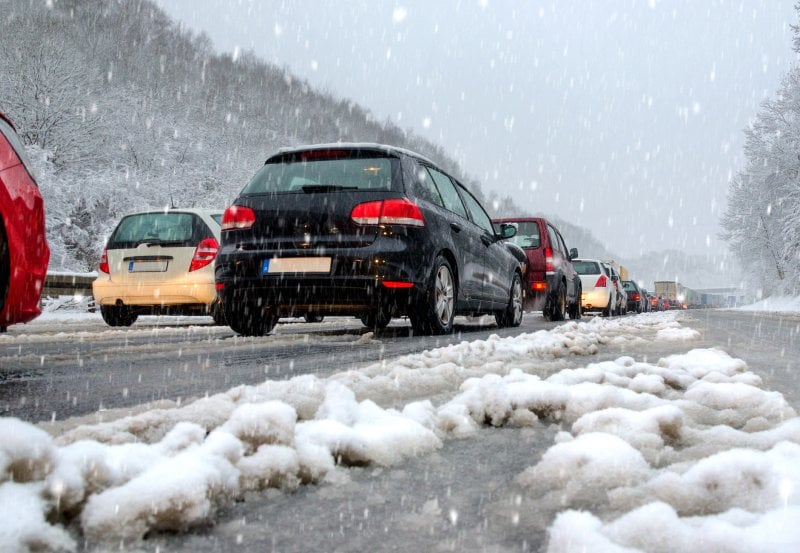
When the weather gets extreme, knowing how to navigate the roads is key. We’re giving you the roadmap for driving in the snow, so that you can feel safer behind the wheel.
Key takeaways
- When driving in the snow, you should reduce your speed, increase your stopping distance, and avoid any harsh braking or sudden acceleration.
- Your car’s drivetrain can make a difference to how well it performs in the snow. But, the best way to improve your vehicle’s traction is by switching to winter tyres.
- Preparing an emergency breakdown kit can help you stay safe if you get stranded in the snow. Having breakdown cover can be helpful, too.
- In extreme weather, it’s important to stick to the Highway Code and only travel if necessary.
How to drive in the snow
Driving in the snow requires some extra care and caution compared to driving in normal conditions. But, you can help keep yourself and others safe on the road by remembering these 3 key factors:
-
Speed and spacing: Reducing your speed is crucial. Take it slow and make sure you allow a bigger stopping distance (10x your usual distance is recommended). You can still overtake other cars, but overtaking snowploughs is a no-go.
-
Acceleration and gear use: Ensure a smooth drive by starting in 2nd gear where possible. Then, if your car has winter or snow mode already set up, you’re in luck. If not, simply opt for the highest gear while keeping your speed low.
-
Steering and braking: Sudden stops and harsh braking are best avoided. If you’re approaching a bend, start braking early and don’t wait until you’re mid-manoeuvre. And if you skid, ease off the accelerator and gently steer in the direction your car’s moving.
Our extra top tip? In heavy snow, opt for dipped headlights rather than full beam. This way, you’ll have extra visibility without dazzling other drivers.
Does your drivetrain make a difference in the snow?
Yes, your drivetrain can make a difference in the snow.
Essentially, a drivetrain is the part of your car that sends power from the engine to the wheels. It affects things like traction, braking, and acceleration. And, crucially, it can determine how well your car recovers from sliding on ice.
There are four main drivetrain types: Front-wheel drive, rear-wheel drive, all-wheel drive, and four-wheel drive. Let’s take a closer look:
Front-wheel drive
Most common in family cars and everyday hatchbacks.
Engine power is only sent to the front wheels of your car, which tends to mean better grip and traction. It’s one of the best drivetrain types for driving in the snow. But, it can struggle with steep hills or if the snow gets too deep.
Rear-wheel drive
Most common in larger saloons, sports cars, and some older vehicles.
The front wheels take care of steering, while the back wheels get the power. Cars with this drivetrain type can be prone to skidding on icy or wet roads. So, accelerating smoothly and keeping your speed low is key.
All-wheel drive
Most common in SUVs and crossover cars.
It uses an automatic system to distribute power to all four wheels. This drivetrain is known for its seamless traction control, but it’s still a good idea to switch to winter tyres for extra grip in snowy and icy conditions.
Four-wheel drive
Most common in larger SUVs and pick-up trucks.
All wheels are powered, but it’s on the driver to manually switch between two-wheel and four-wheel drive where needed. Typically performs well in deep snow and can handle steep inclines and off-road conditions.
Remember: No matter what drivetrain type you’re working with, driving with caution is key. Going slow, staying alert, and switching to winter tyres is your best bet when it comes to keeping safe.
How to prepare your car before driving in the snow
Heading out in the snow? Get prepared for driving in ice and snow by following these tips:
- Plan your route so that you use major roads where possible, as they’re likely to be gritted.
- Have a back-up route in mind in case there are any accidents or you have to divert.
- Make sure your windscreen, windows, mirrors, lights and roof are all clear of snow and ice. You might need to demist your car’s windscreen too.
- Check your tyres to make sure they have enough tread to grip in the ice and snow. If you switch to winter tyres, it’s worth checking your policy documents to see whether your insurer needs to be notified.
- Use screen wash that protects to -35°C to stop it freezing.
- Make sure your phone is fully charged and you have the number of your breakdown cover provider.
- Wear warm, appropriate and comfortable footwear.
What our motor insurance expert says
“When defrosting your car, leaving your vehicle unattended with the engine running might seem like the easiest option. But this comes with a risk and gives insurers grounds to reject a future theft claim. Help keep your policy valid by avoiding leaving the car, or opting for a manual clearing method instead.”


Is it illegal to drive with snow on your car?
No, technically it’s not illegal to drive with snow on your car. But, being able to see clearly out of all your windows before you start driving is a legal requirement under the Road Traffic Act 1988.
If you set out without clearing your windscreen, there could be a minimum £60 fine and 3 penalty points coming your way. And, in some serious cases, fines can reach up to £2,500.
Making sure your lights, mirrors and number plate can be seen clearly is also important. If you’re caught driving with a snow-covered number plate, you could be faced with a £100 on-the-spot fine.
Ensuring you have good visibility isn't just about saving your wallet - it’s about keeping yourself and others safe, too. And, in severe weather, it’s crucial you stick to Highway Code Rule 228 and only drive if your journey is essential.
Does driving in the snow affect your car insurance?
In most cases, your car insurance will remain valid when you’re driving in the snow. As long as you’re driving safely and appropriately, your policy should have you covered.
However, it’s crucial you take steps to prepare your vehicle before hitting the road. If you skip clearing your windscreen, or you set out with the wrong tyre tread, it could give your insurer grounds to reject a claim.
Switching to winter tyres? Typically, it’s not necessary to tell your insurer. But, it’s always worth checking your policy documents in case it needs to be declared.
And, if you’re leaving your car running to let it defrost, it’s good to be aware of the risk. Leaving your car unattended and with the keys in the ignition can be an invitation for thieves. And, if your vehicle’s stolen, claiming on your insurance might be tricky.
What should be in your winter breakdown kit?
If you end up getting stuck mid-journey, being prepared can make a big difference. Here’s what to keep in your breakdown kit in case of an emergency:
- Shovel
- Torch
- Ice scraper and de-icer
- Warm clothes and blankets for you and any passengers
- First-aid kit
- Jump-start cables
- Snacks and a warm drink in a thermos
- Power bank and mobile phone charger
- Reflective warning sign
- Snow grips for your footwear in case you need to walk to safety
- Warning triangle and reflective vest
For more information, read our guide on what to do if you break down.
Driving on ice tips
When there’s a risk of ice on the roads, it’s a good idea to keep your time behind the wheel to a minimum. But, for the times when driving is necessary, here are our top 4 tips:
-
Take your time accelerating and keep your speed low..
-
Avoid stamping on the brakes and aggressive steering.
-
Leave a longer stopping distance between you and the car ahead.
-
Stick to main roads where possible, as they're more likely to be gritted.
Black ice driving tips
It’s easy to panic when you hit black ice. But, the best thing you can do is stay calm. Instead of hitting the brakes, simply take your foot off the accelerator and steer straight until you pass over the ice.
The earlier you can spot black ice, the better. However, it’s famously hard to notice, so knowing when to expect it is key.
For starters, it’s most common either early in the morning or if you're driving at night, when temperatures are at their lowest. And, it’s likely to be found in places where there’s not much sun. Think tunnels, bridges, shaded roads and north-facing slopes.
If the road ahead of you looks unusually dark and dull, that’s usually a warning sign. And, if your tyres stop making noise, or your steering suddenly feels lighter, suspect ice.
When should you avoid driving in snow altogether?
This is where the Highway Code comes into play. According to Rule 228, drivers should avoid all non-essential journeys if the weather is extreme. That includes severe rain, fog and wind, as well as ice and snow.
Whether you decide to head out is mainly down to your own judgement. But, if the Met Office issues a Red weather warning for snow, that’s your sign to stay inside.
The same goes for if you can’t safely de-ice your car, or if the roads around you are untreated. And, it’s always a good idea to think ahead. So, checking the weather forecast and traffic updates can help you make a decision.




 cookie usage