


The precious metals in catalytic converters make them a goldmine for thieves. And, if stolen, they can be pretty costly to replace. Here’s how to protect your vehicle and what to do if you fall victim.
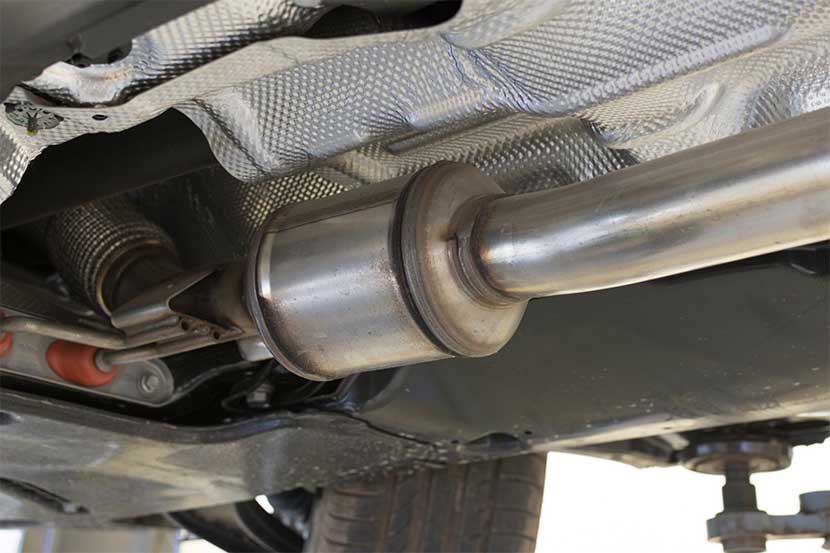
Key takeaways:
- Catalytic converters contain high-value precious metals, making them a profitable target for thieves.
- Hybrid cars like the Toyota Prius are a prime target - their catalytic converters are less corroded and richer in precious metals.
- Comprehensive insurance should cover a stolen catalytic converter. Third-party only will not.
- Replacement can cost up to £1,000, plus the cost of any damage caused during the theft.
- A physical deterrent like a Catloc device can significantly cut your risk - opportunistic thieves will move on to easier targets.
What should I do if my catalytic converter is stolen?
If your catalytic converter is stolen, you should phone the police on the non-emergency number - 101. If you can see someone stealing your catalytic converter, phone 999.
Make a note of any details that you think could be relevant, for example the time and place and any suspicious individuals.
Next, contact your insurer and report the theft to them. They might be able to pay for a replacement or reimburse you. But it depends on what your car insurance policy covers.
Get your catalytic converter replaced as soon as you can. While it's technically possible to drive a car without a catalytic converter, it's illegal in the UK as it won’t meet emission standards. This means you could face a fine for not complying with emissions standards – £1,000 for a car or £2,500 for a van. It might also invalidate your car insurance policy.
You're also likely to face other problems, such as:
- Fuel efficiency
- Your car could making a loud noise
- Not being able to accelerate
“Even though catalytic converters are expensive to replace, you should never drive without one. It’s illegal and you could get points on your licence if you’re caught.
“It might be reassuring to know that your insurer could replace or reimburse you for the cost of your catalytic converter if it gets stolen.
“Although claiming could increase your costs in future, this might be less expensive than paying for a new catalytic converter outright.”
What our motor insurance expert says


Catalytic converter theft prevention
It could take thieves between 5 and 10 minutes to steal a catalytic converter. Though some catalytic converters can be removed in less than 2 minutes.
So any theft prevention measures to slow thieves down or deter them can help reduce the chances of it being stolen. Here are 4 ways to stop someone stealing your catalytic converter:
1. Change where you park
Parking your car inside a private garage is an obvious way to prevent catalytic converter theft.
When you’re away from home, parking your car in a more visible place might help deter thieves.
If you park on the street at night, you should also try to choose a spot that’s well lit.
Thieves need to get under the car to steal the catalytic converter. So, parking close to walls or fences is a simple catalytic converter theft prevention technique to consider.
2. Cameras and alarms
Install CCTV at home or a dashcam in your car to monitor your car when it’s parked in your driveway. A catalytic converter thief might equally be deterred if they see a dashboard camera in your car.
You could also get an alarm installed in your car and add a car alarm sticker to your window to put thieves off.
Some alarms have a tilt sensor that sounds when it senses a car that’s being broken into. Buying one of these could be essential if you have a model that’s a common target.
3. Anti-theft devices
Given the rise in catalytic converter theft, there are several devices on the market that make it more physically difficult for thieves to remove catalytic converters.
Toyota has developed an anti-theft device to protect catalytic converters called a Catloc.
If your catalytic converter is bolted on then you could also consider asking a garage to weld the bolts. This makes it more difficult to remove. Some mechanics also use ‘cat cages’ to add extra protection.
Thieves might steal your car for other parts too, not just your catalytic converter. Although a tracking device doesn't stop your car from being stolen, it could help you recover it before your vehicle gets stripped for parts.
4. Etching or watermarking
Get a garage to etch a serial number onto your catalytic converter, so it’s easily traceable if it's stolen.
Toyota has also been running a catalytic converter theft prevention programme offering invisible watermarking to help catch thieves.
What cars are targeted for stealing catalytic converters?
Hybrid cars are one of the main targets for catalytic converter theft. Some of the most common cars for this type of theft are:
- Toyota Prius
- Toyota Auris
- Honda Jazz
- Honda CR-V
Some Lexus models can also be a target for theft.
Cars and commercial vehicles that are higher off the road are often targeted because it’s easy for thieves to get under the car. This includes all SUVs and crossovers.
Older vehicles might also be a target. Their catalytic converters might not be as secure and could contain a higher amount of precious metals.
In response to this growing crime, manufacturers have changed designs to put thieves off, so the newest models don’t tend to be the obvious targets.
For example, for the Toyota Auris, the second generation models manufactured up to 2018 face the highest risk. For Prius models, thieves target pre-2016 models.
Along with the fuel efficiency factor and the ease of access, thieves often keep targeting the same model. This is because they build up experience in removing that particular catalytic converter.
A familiar model means they’ve got a better chance of stealing the catalytic converter quickly and undetected.
How much does a catalytic converter cost to replace?
The cost of a catalytic converter varies depending on the exact make and model of your car.
There's also the cost of labour to factor in if you need to have a new catalytic converter installed.
For example, a catalytic converter for a Toyota Prius C Hatchback starts from around £300 for the part. Labour costs range around £35 to £100 depending on your location.
However, victims of catalytic converter theft often find the price totals a much higher figure after the cost of any damage is factored in as well.
Some vehicles have even been written off as a result of catalytic converter theft and the destruction this causes.
Due to the precious metal content of catalytic converters, thieves might be able to sell catalytic converters for hundreds of pounds even as scrap. Rhodium is worth more than gold, at £208 per gram*. Palladium trades at around £32 per gram* and platinum at over £44 per gram*. You can check current precious metal prices on Bullion by Post.
*Price correct as of August 2026
Catalytic converter theft and car insurance
If your UK car insurance policy covers theft, then you should be insured if someone steals your catalytic converter. So, if you have a third party, fire and theft policy or fully comprehensive car insurance, then you should be covered.
It’s always worth checking your policy to be absolutely sure.
Making a claim on your policy means you could sacrifice your no-claims bonus and face higher car insurance costs. But the full cost of getting your car fixed properly following a catalytic converter theft could easily be £1000 or even more.
This is because thieves often damage the car in their hasty extraction of a catalytic converter.
 cookie usage