


Here's what every category and code on your driving licence means - and what you're actually allowed to drive.
Key takeaways
- Categories and codes: Your licence has categories for what you can drive and codes for any restrictions.
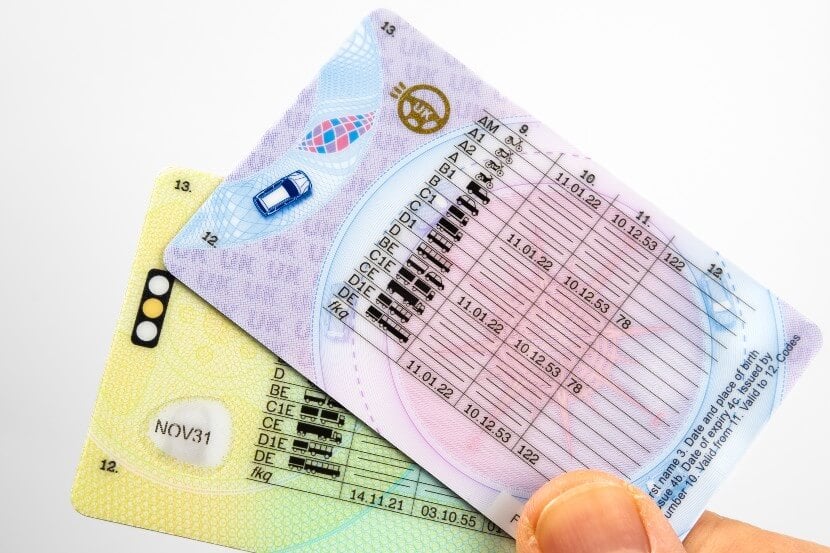
- Licence layout: Flip your licence over. The back shows what you're allowed to drive, key dates, and any conditions.
- Category B: This is your standard car licence. It's the most common and usually covers cars up to 3,500kg Maximum Authorised Mass (MAM).
- Other categories: Beyond cars, you'll find categories for everything from mopeds (AM) to Heavy Goods Vehicles (HGVs like C/CE) and buses (D/DE).
- Test date rules: When you passed your test matters. Rules for towing and what you can drive changed before and after 1997.
- Licence codes: Codes like '01' or '78' put limits on how you drive. Always stick to these rules along with your category.
What's on the back of your driving licence?
Ever wondered what all those letters and numbers on the back of your driving licence mean? It's a table that shows what you're allowed to drive and any rules you need to follow - these are your licence categories and codes.
Your licence shows a table with four main columns: 9, 10, 11 and 12. Each one tells you something different about what you can drive.
Column 9 - Categories: This column lists the types of vehicles you can legally drive, like cars, motorbikes, vans, and lorries. You'll see letters and numbers here, such as AM, B, A1, and C1.
Column 10 - Valid from: This is the date you were allowed to start driving that vehicle type. It's usually when you passed your test or got the entitlement.
Column 11 - Valid to: This shows when your entitlement for that vehicle type runs out. For most drivers, car entitlements are valid until age 70, but some categories have different renewal rules.
Column 12 - Codes: This column lists any driving licence codes linked to your entitlement. These codes tell you about conditions or restrictions you need to follow when driving, like wearing corrective lenses (01) or only driving automatic vehicles (78).
If you're also trying to track down the separate 16-character number on the front of your licence, here's what your driving licence number means and where to find it.
What's the difference between categories and codes?
Categories show the types of vehicles you can drive - like cars, motorbikes, or lorries. Codes tell you about any conditions linked to those entitlements, such as medical needs or vehicle restrictions.
For example, Category B means you can drive a car. A code like 01 means you need to wear glasses or contact lenses when you drive. You have to follow any codes on your licence every time you drive, so it's important to know both.
What can I drive on a normal car licence?
Your standard UK car licence is a Category B. Most drivers have this, but what you can drive depends on the categories on your licence and when you passed your test.
Many drivers don't realise the rules changed on 1 January 1997:
-
If you passed before 1 January 1997, you can usually tow heavier trailers and drive larger vehicles.
-
If you passed after 1 January 1997, your licence is more restricted, mainly covering standard Category B rules.
Here's what the most common categories on a UK driving licence mean:
| Category | Vehicle type | Additional driving test needed? | Definition |
|---|---|---|---|
|
A1
|
Motorbike
|
Yes
|
You can ride a light motorcycle up to 125cc with a maximum power output of 11kW
|
|
AM
|
Mopeds and light quadricycles
|
Yes
|
You can ride a moped with a maximum design speed of up to 28mph (45km/h) or a light quadricycle with an unladen mass of up to 350kg (excluding batteries for electric vehicles)
|
|
B
|
Cars
|
No
|
You can drive cars with up to 8 passenger seats and a maximum MAM of 3500kg
|
|
B auto
|
Automatic cars
|
No
|
You can only drive cars with automatic transmission
|
|
BE
|
Cars and trailers
|
Yes (if not automatically entitled)
|
You can drive a Category B vehicle with a trailer. Entitlements depend on when your licence was issued and whether BE was gained automatically or via test
|
|
B1
|
Light 3- or 4-wheeled vehicles
|
No
|
You can drive light motor vehicles such as quadricycles and tricycles with an unladen mass up to 550kg (or 400kg for passenger-carrying vehicles)
|
|
F
|
Agricultural tractor
|
No
|
You can drive an agricultural tractor
|
|
K
|
Mowing machine or pedestrian-controlled vehicle
|
No
|
You can drive a pedestrian-controlled vehicle or a mowing machine
|
|
Q
|
Low-speed motor vehicles
|
No
|
You can drive certain 2- or 3-wheeled motor vehicles with a maximum design speed of 15.5mph
|
For most drivers, Category B is the one that matters. The rest only come into play in specific situations.
Category B - cars (what most drivers rely on)
Category B is your standard car licence. With it, you can drive cars up to 3,500kg MAM and carry up to 8 passengers.
If you passed after 1 January 1997, you can tow a trailer up to 750kg - or a heavier trailer, as long as the car and trailer combined stay under 3,500kg.
There's an exception for newer zero-emission and hydrogen vehicles. These can go up to 4,250kg MAM if the extra weight comes from the battery or fuel system, which mainly applies to electric and hydrogen vans.
If you passed before 1 January 1997, you may have broader driving rights. This could include larger vehicles up to 7,500kg MAM, more flexible towing, and extra categories like C1 or D1 if they appear on your licence.
What does AM mean on your driving licence?
Category AM covers mopeds and light quadricycles, usually from age 16. This means mopeds up to 28mph (45km/h) and light quadricycles up to 350kg.
To ride on the road as a learner, you'll need Compulsory Basic Training (CBT). This lets you ride with L-plates, but it's not a full licence. For full AM entitlement, you need to pass both theory and practical motorcycle tests.
What does BE mean on your driving licence?
Category BE is all about towing heavier trailers with your Category B vehicle. What you can tow depends on your test date and what your licence already covers. Some drivers get BE automatically, while others need to take an extra test. Even with BE, the manufacturer's towing limits for your specific vehicle and trailer always apply.
What does B1 mean on your driving licence?
Category B1 covers light three- and four-wheeled vehicles, like quadricycles and tricycles. It's only for small vehicles with specific weight limits: up to 550kg for goods vehicles and up to 400kg for passenger vehicles. It doesn't include standard cars or vans - those are covered by Category B.
Most drivers can get B1 from age 17. Some can qualify from age 16 if they receive the higher-rate mobility component of Disability Living Allowance (DLA) or Personal Independence Payment (PIP) and meet the DVLA's criteria.
What do F, K, L, N, P and Q mean on your driving licence?
These are specialist or older categories. They usually appear on your licence automatically but aren't relevant for most everyday drivers.
- F – Agricultural tractors
- K – Mowing machines and pedestrian-controlled vehicles
- L – Electrically propelled vehicles
- N – Trolley vehicles
- P – Older moped entitlement
- Q – Low-speed vehicles up to 15.5mph
Think of them as being for niche or historical vehicle types, not normal road use. You can find official information on GOV.UK.
Three and four-wheeled light vehicles: B1, tricycles and quadricycles
Small 3- or 4-wheeled vehicles sit across several categories depending on their weight, speed, and design. Here's how they fit together:
- B1: For light 3- and 4-wheeled vehicles like quadricycles and small tricycles.
- AM: For mopeds and light quadricycles, typically used at lower speeds.
- A1: For light motorcycles, including some tricycles depending on their design and power.
The key differences usually come down to weight and use. Quadricycles are generally small and low-speed, with strict weight limits. Tricycles fall into different categories depending on their power and design. Standard cars are always Category B and aren't included here.
Think of B1 as sitting between mopeds and cars - it covers those small, lightweight vehicles that don't quite fit anywhere else. If you're unsure, the category letter on your licence is always the final word.
Moped and motorcycle licence categories
There are four main categories: AM, A1, A2, and A. Each has its own age limit and training requirements.
Motorcycle licence categories at a glance
| Category | What you can ride | Minimum age | Compulsory Basic Training (CBT) required? | Theory + practical test? |
|---|---|---|---|---|
|
AM
|
Mopeds and light quadricycles
|
16
|
Yes (for learners)
|
Yes
|
|
A1
|
Light motorcycles (up to 125cc) and small tricycles
|
17
|
Yes (for learners)
|
Yes
|
|
A2
|
Medium motorcycles (up to 35kW)
|
19
|
Yes (for the learner's stage)
|
Yes (Mod 1 + Mod 2)
|
|
A
|
Any size motorcycle or power
|
24 (direct) / 21 (progressive)
|
Yes (for the learner's stage)
|
Yes (Mod 1 + Mod 2)
|
CBT is your first step to riding as a learner. It lets you get on the road before your full test, but it's not a licence itself. After CBT, you'll need to pass a theory test, then two practical modules: Module 1 (off-road riding) and Module 2 (on-road riding).
AM - mopeds (your first wheels)
Category AM is where it all begins for mopeds and light quadricycles. You can ride a moped up to 28mph (45km/h) or a light quadricycle within specific weight limits. Complete CBT to ride as a learner with L-plates, then pass a theory test and practical moped test to get your full AM licence.
A1 - light motorcycles (up to 125cc)
With Category A1, you can ride light motorcycles up to 125cc (max 11kW power). It also covers small tricycles up to 15kW. Complete your CBT to ride as a learner, then pass a theory test and both practical tests (Module 1 and Module 2) for your full A1 licence.
A2 - medium motorcycles (up to 35kW)
Category A2 lets you ride motorcycles up to 35kW. You'll need to pass the full motorcycle test process - theory test, Module 1 (off-road riding), and Module 2 (on-road riding). You can go for your A2 from age 19.
A - unrestricted motorcycles (the big one)
Category A is the ultimate motorcycle licence, covering any size or power of motorcycle, including motor tricycles over 15kW. You can get your Category A in two ways:
- Direct access (from age 24)
- Progressive access (from age 21), if you've held an A2 licence for at least 2 years
You'll need to pass the theory, Module 1, and Module 2 tests either way.
Van, lorry and HGV licence categories
Your licence category depends on the vehicle's size and whether you're driving for work. The main ones are C1, C, CE, and C1+E for larger trailers.
Category C1 -3.5 to 7.5 tonne vehicles
Category C1 lets you drive rigid vehicles between 3,500kg and 7,500kg MAM. This is often where ambulance drivers, delivery drivers, and some light HGV work starts. You can also tow a trailer up to 750kg.
- Minimum age: 18
- Driver CPC required: Yes, if driving professionally
- Test required: Yes (theory + practical + Driver CPC modules)
Category C1+E - medium lorries with trailers
C1+E builds on C1, letting you tow heavier trailers up to a combined maximum of 12,000kg MAM. This is used when a medium lorry needs extra trailer space.
- Minimum age: 18 (with Driver CPC initial qualification)
- Test required: Yes
Category C - large rigid lorries
Category C lets you drive rigid lorries over 3.5 tonnes with no upper weight limit - this is what most people think of as a "lorry licence". Vehicles include refuse trucks, tippers, and large delivery lorries.
- Minimum age: 21 (or 18 with Driver CPC initial qualification or approved training route)
- Driver CPC required: Yes, for professional driving
- Test required: Yes (theory + practical + Driver CPC modules)
Category CE - articulated lorries (HGV Class 1)
Category CE is the full HGV licence, letting you drive Category C vehicles with a trailer over 750kg. This is the licence you need for articulated lorries.
- Minimum age: 21 (or 18 with Driver CPC initial qualification or approved route)
- Driver CPC required: Yes, for professional driving
- Test required: Yes (theory + practical + Driver CPC modules)
Driver CPC (Certificate of Professional Competence)
If you drive a lorry professionally, you'll need a Driver CPC. This consists of an initial qualification (theory and practical modules) plus 35 hours of periodic training every 5 years to keep it valid. If you're driving for personal use rather than work, you generally don't need a CPC.
Bus and minibus licence categories
D1 - minibuses
Category D1 lets you drive minibuses with up to 16 passenger seats (plus the driver), vehicles up to 8 metres in length, and tow a trailer up to 750kg MAM. It's commonly used for community transport, school transport, and smaller passenger services.
Note that D1 doesn't automatically allow you to charge passengers for transport. If you're being paid to drive, you'll need additional licences and operator requirements.
- Minimum age: 21
- Test required: Yes (Passenger Carrying Vehicle (PCV) licence + Driver CPC initial qualification)
D1E - minibuses with trailers
Category D1E lets you drive a D1 vehicle towing a trailer over 750kg, up to a combined maximum of 12,000kg MAM. This is used when a minibus needs extra luggage or equipment capacity.
- Minimum age: 21
- Test required: Yes (PCV + Driver CPC initial qualification)
D - buses
Category D lets you drive any bus with more than 8 passenger seats and is required for most professional bus and coach driving roles. You can also tow a trailer up to 750kg.
- Minimum age: 24 (standard route), or 18 with Driver CPC initial qualification or an approved vocational training route
- Test required: Yes (PCV + Driver CPC initial qualification)
DE - buses with trailers
Category DE lets you drive a Category D bus towing a trailer over 750kg - essentially the bus equivalent of CE for HGVs.
- Minimum age: Same as Category D
- Test required: Yes (PCV + Driver CPC initial qualification)
Eligibility overview for bus and minibus licences
To drive buses or minibuses professionally, you'll generally need a PCV licence (D, D1, D1E, or DE), a Driver CPC initial qualification, and 35 hours of periodic CPC training every 5 years.
Eligibility and exceptions for higher-category licences
Standard age requirements
| Category | Minimum age |
|---|---|
|
C1 / C1+E (small lorries)
|
18
|
|
C / CE (HGVs)
|
21 (or 18 with Driver CPC initial qualification or approved training)
|
|
D1 / D1E (minibuses)
|
21
|
|
D / DE (buses)
|
24 (or 18 with approved CPC training)
|
Other eligibility exceptions
In some circumstances, you can access higher categories earlier:
- Approved training courses can allow access to C or D categories from age 18.
- Armed forces training may give you experience with larger vehicles, but your civilian licence still follows DVLA rules.
- DLA / PIP mobility component recipients may be able to access certain categories earlier, subject to DVLA assessment.
Older licences and 'grandfathered' entitlements
If you got your licence before 1 January 1997, or around September 2009 when CPC rules first came in, you may have entitlements under older rules. This could affect what you can tow, the size of vehicle you can drive, or whether you need a CPC for professional driving. It all depends on your specific licence history.
If you're unsure whether your licence history affects what you can drive or tow today, check the official GOV.UK guidance before applying.
Full list of driving licence codes - what do they mean?
Codes on your driving licence show any restrictions or conditions that apply to what you can drive - things like health requirements, vehicle type limitations, or necessary modifications.
Driving licence codes explained
| Code | Meaning |
|---|---|
|
01
|
Eyesight correction required (glasses or contact lenses)
|
|
02
|
Hearing or communication aid required
|
|
10–35
|
Vehicle modifications (controls pedals steering transmission)
|
|
40–44
|
Adapted steering seating brakes or motorcycle modifications
|
|
45
|
Motorbikes only with sidecar
|
|
46
|
Restricted to three-wheeled vehicles only (older entitlement under earlier motorcycle licensing rules)
|
|
70
|
Licence exchange from another country
|
|
71
|
Duplicate licence
|
|
78
|
Restricted to automatic vehicles only
|
|
79
|
Restricted to specific vehicle types shown on licence
|
|
96
|
Allows combined vehicle and trailer between 3500kg and 4250kg - introduced so drivers who passed after 1997 can tow in this weight band without needing a separate BE test
|
|
97
|
Not valid for certain tachograph-required C1 vehicles
|
|
101
|
Not for hire or reward (no paid driving)
|
|
102
|
Drawbar trailers only
|
|
103
|
Subject to certificate of competence
|
|
105–107
|
Vehicle size or weight restrictions
|
|
110–115
|
Passenger safety or accessibility restrictions
|
|
118
|
Earliest entitlement date applies
|
|
121
|
Subject to Secretary of State conditions
|
|
122
|
Valid after completing basic moped training
|
|
125
|
Restricted to mopeds and certain light vehicles only (legacy entitlement predating the current AM category)
|
What does code 79(3) mean on your driving licence?
Code 79(3) means you are restricted to driving tricycles only. This applies even if you hold a broader motorcycle entitlement, meaning you cannot ride standard motorcycles.
What does code 122 mean on your driving licence?
Code 122 means you can only ride a moped after completing a basic moped training course. It confirms you've done the training needed to ride on public roads.
What does code 118 mean on your driving licence?
Code 118 means the "valid from" date on your licence shows your earliest entitlement date. It's an administrative marker used by the DVLA, not a restriction on what you can drive.
What are the driving licence penalty codes?
If you get a driving offence, you could receive an endorsement or penalty points. These stay on your driving licence for 4 or 11 years. You must tell insurers about them when you compare car insurance, and this can push up your costs.
Here are some of the most common motoring conviction codes:
| Driving licence penalty code | Definition |
|---|---|
|
AC10
|
Failing to stop after an accident: 5 to 10 penalty points
|
|
BA10
|
Driving while disqualified by order of court: 6 penalty points
|
|
CD10
|
Driving without due care and attention: 3 to 9 penalty points
|
|
DD10
|
Causing serious injury by dangerous driving: 3 to 11 penalty points
|
For more on this, visit our guide on motoring conviction codes.
Are provisional driving licence codes different?
The codes on a provisional driving licence are the same, so make sure you know what they mean before you get behind the wheel.
If you’re learning to drive, it’s worth familiarising yourself with the restrictions. You might also need learner car insurance to stay covered while practising.
If you're unsure about what you can or can't do based on your licence, it's always worth double-checking with the DVLA first.

 cookie usage