


Deciding between a manual or automatic transmission? There's plenty of factors to consider, like driving experience and insurance premiums.
In this guide, we'll break down the pros and cons of both, so you can decide which transmission suits you best. Let's start!

Key takeaways
- Automatics are generally easier to drive in heavy traffic where there's a lot of stopping and starting. But manuals give the driver more control with gear changes and engine braking
- You can only drive automatic cars with an automatic driving licence. With a manual licence, though, you've got the option of both, which is worth considering if you plan to drive hired or borrowed vehicles
- Automatics are typically more expensive - both to buy and insure, though the gap has narrowed as they've become more common
- Most electric cars come as automatics by default, so these days, choosing manual or automatic often really comes down to choosing petrol or diesel versus electric
- Looking ahead, manuals are likely to become rarer. New pure petrol and diesel cars can’t be sold from 2030, and by 2035 all new cars and vans will need to be 100% zero emissions
What’s the difference between a manual and an automatic?
The biggest difference between a manual and an automatic transmission? It’s all about how the gears are controlled.
With a manual transmission - you’re in charge. You shift gears using a gear stick and a clutch pedal. The clutch is key because it disconnects the engine from the wheels, letting you change gears as you need. Mastering the clutch can be hard at first, but it’s a must for anyone that wants to drive a manual car.
Automatics, on the other hand, do all the hard work for you. You won’t need to worry about controlling the clutch, just the brake and accelerator. The car’s system handles the gear changes based on your speed and driving conditions. So, it should come as no surprise to hear that they’re generally easier to drive.
In short, manuals offer more control, while automatics are generally more convenient.
Manual vs automatic cars: Which are best?
The choice really depends on your driving style and personal preference!
Let’s break them both down below:
Automatic
Pros
-
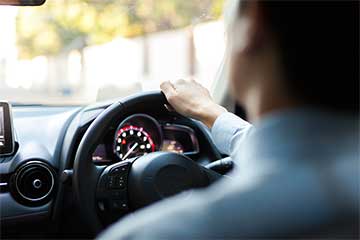
Easier to drive: Many drivers find automatics easier because there’s no clutch to manage. Choose ‘D’ to drive and after that, the only controls to manage will be the accelerator and the brake.
-
Good for traffic: It can be pretty frustrating to have to constantly stop and start a manual transmission car. Automatics are ideal for busy traffic situations, because you won’t have to worry about clutch control or gear changing.
-
Smoother: Automatic transmission cars can seamlessly switch between gears for you, which means you’re less likely to stall!
Cons
-
Usually more expensive to buy than manuals: Automatic cars tend to be more expensive than manual ones, both to finance and to buy outright.
-
Insurance premiums can be higher: Insuring automatics tends to be on the pricier side as they’re often in higher car insurance groups. For example, the typical (median) cheapest comprehensive premium is £661 for an automatic, compared with £495 for a manual, about a third more.*
*Based on the median cheapest car insurance premium from quotes run on Confused.com over the last 90 days (as of October 2026).
Manual
Pros
-
More control: With a manual, you can control which gear you use. Some drivers find this gives them more control in icy or snowy conditions.
-
Tend to last longer: Manuals have fewer moving parts than automatics, which means that they can last longer if properly maintained.
Cons
-
Gear changes: Changing gears requires taking one hand briefly off the wheel, which is worth being aware of in demanding driving situations, like busy junctions or motorway merging. Some drivers see this as a drawback compared to automatics, where you can keep both hands on the wheel throughout.
Should I learn to drive in a manual or an automatic?
It’s entirely up to you—but there are a few key things to consider:
Many learners find automatics easier, especially at first. With no clutch pedal and no manual gear changes, you have fewer things to do at once. You still need to concentrate fully on the road. But if you learn to drive in an automatic, your licence will only allow you to drive automatic cars. That’s something to think about, especially if you might want to drive a manual car in the future.
Learning to drive in a manual comes with its own perks. First, it’ll give you more versatility. Once you’ve passed your test, you’ll be able to drive both manuals and automatics. Plus, insuring a car with a manual licence may be cheaper.
If you value ease and convenience, an automatic might be the way to go. But, if flexibility and cost savings matter more to you, a manual could be the better choice.
Are automatics less fuel efficient?
Not necessarily!
There used to be a time when manual transmissions were the clear winners in fuel efficiency. But many modern automatics now match them. Modern automatic transmissions have come a long way with features like extra gears, improved torque converters and dual-clutch systems. These upgrades allow automatic cars to shift gears more efficiently, which can optimise engine performance and fuel consumption.
Many automatics today also feature eco-modes, which can adjust the car’s settings to prioritise fuel savings. For example, eco mode might reduce how much the car accelerates or change how the gears shift to keep the engine running at its most efficient speed. These systems can help reduce fuel use.
With these improvements, many modern automatics can match, or even beat, manual cars on fuel efficiency. Though this can depend on the car and how you drive.
Will manuals be phased out?
They may become much rarer. It all comes down to the rise of electric vehicles (EVs).
Here’s why: most EVs are automatics. Unlike petrol or diesel cars, they don’t need traditional gearboxes because their electric motors deliver instant torque—which is the force that gets your car moving. With no need for gear shifting, manual transmissions simply aren’t needed.
Plus, the 2030 ban on new pure petrol and diesel car sales is also likely to seal the deal for manuals. By 2035, all new cars, including hybrids, will need to be fully zero-emission. As manufacturers shift towards electric models, fewer manual cars may be made, though manuals will probably remain available second-hand for some time.


 cookie usage