

Exactly where you park your car at night may not seem like a big deal in the grand scheme of things. But where you decide park while at home can actually influence your car insurance premiums.
Other than the cost of your car insurance, parking in a secure space can help protect your vehicle from being broken into, or stolen.
Key takeaways
- Where you park overnight affects your car insurance premium — insurers price on risk, and location matters
- A garage isn't always the cheapest option — scrapes driving in and out, and security risks if the garage is attached to the house, are factored in by some insurers
- Declaring the wrong overnight parking location isn't just a technicality — it's treated as fraud and can void your policy or result in a rejected claim
- Insurers use specific terminology (driveway, locked compound, carport) — knowing what each means helps you answer the question correctly on your application
- A secure public car park requires camera surveillance, barriers, or warden patrols — not just any public car park qualifies
Where's the safest place to park your vehicle at night?
In an ideal world you'll have a secure space to leave your car overnight, but this isn't always possible. Whatever your circumstances, ensuring your vehicle is parked in a safe area close to your property with plenty of street lighting is worthwhile. Where possible, it's also worth considering the following parking arrangements:
Parking on a driveway
Parking on a driveway can reduce the risk of another car clipping your wing mirror, or worse yet, crash into your vehicle, for example. You also have a greater opportunity of keeping an eye on your car with motion sensors or security cameras. While parking on a driveway can be advantageous, the possibility of keyless car theft can present a risk.
Parking in a garage
Keeping your car secured in a garage is generally considered one of the safest places to store your vehicle overnight. Insurers may want to evaluate how much space you have to store your car safely without encountering any accidental damage. But generally, a garage can offer a greater level of security and keep your car safe from the unpredictable UK weather!
Parking in a secure public car park
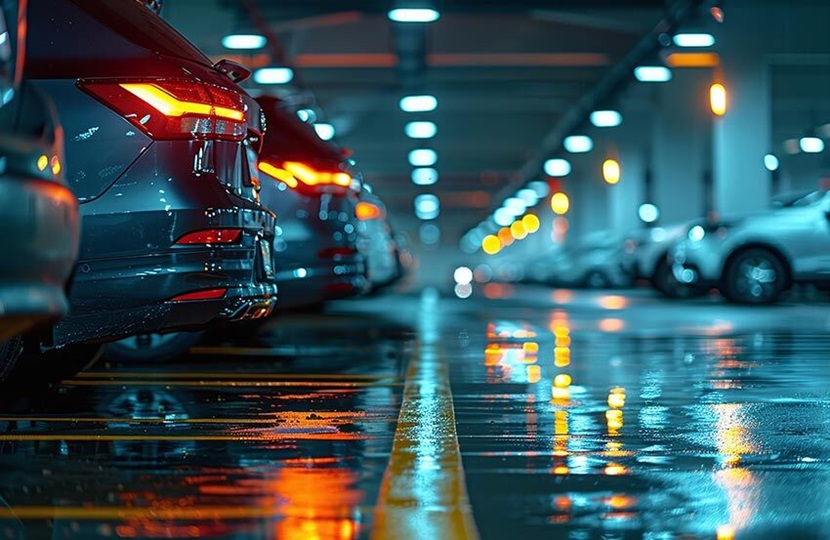
A secure public car park can offer numerous security measures such as camera surveillance, entry and exit barriers and warden patrols. It's a convenient short-term solution to park your car securely overnight, but can be costly if you're using it regularly.
Car insurance parking definitions
Insurers use the following standard terms on application forms:
- Driveway: A private space next to your home, not enclosed
- Garage: A fully enclosed, lockable space; insurers usually expect it to actually be locked when the car is inside
- Carport: Similar to a garage but open-sided; no door or full walls
- On-street / street parking: Parked on a public road at or near your registered address
- Residential car park: A car park provided by the council for local residents; distinct from on-street parking or a locked compound
- Locked compound: A fully fenced, secure site accessible only with a key or code
- Secure public car park: Requires camera surveillance, barriers, and/or warden patrols; not just any public car park qualifies (cross-reference to existing sub-section above)
Your insurer will use the information given to work out the cost of your premium. Read our guide for more information on how car insurance is calculated.
Where should I avoid parking my car at night?
In accordance with The Highway Code, some roads have signs and road markings that restrict or forbid you from parking. In line with new driving laws and rules, local authorities can issue penalty notices if you do not comply with stated parking restrictions, so it's best to look for somewhere else to park!
Every sign is different, parking on double yellow lines in some cases forbidden, as is stopping at any time, for example. But in a different area, a sign could indicate that you can load and unload on a set of double yellow lines. Parking on a pavement is actually against the law in Scotland and London, many other areas could follow suit with the restriction.
Generally speaking, you should look to park in a busy well-lit area to reduce the risk of theft. You should avoid parking somewhere that can result in your car becoming an obstruction to other drivers, such as on a junction. Another example of this is parking in front of a driveway, preventing the homeowner from entering or exiting the space.
Parking your car in a garage isn't always the cheapest option either. Some insurers weigh the risk of scrapes and bumps driving in and out, or the security risk of an attached garage giving thieves easy access to the house, against the security benefit.
Deliberately declaring the wrong overnight parking location is treated as fraud by insurers, not just a technicality. This can void claims or lead to a cancelled policy, so always make sure you're honest and accurate about where your car is parked.
Wherever you park, make sure your insurer knows where your vehicle is usually kept overnight, as car insurance overnight parking rules require you to give accurate information when taking out or updating your policy.
Will my car insurance cover me if my car is damaged or stolen overnight?
This largely depends on the information you submit to your insurer when you buy your car insurance policy. If you state that you park your car overnight in a secure residential car park, it's expected that you do so more often than not.
But, if in reality you generally park on a street, this could invalidate your policy. So an insurer could reject your claim if you make one. Your insurance provider could also reject any claim for theft, for example, if you leave your car unlocked overnight.
However, if you tend to park your car in a location as described in your policy documents, you may be covered if it's damaged or stolen.
 cookie usage