


Tyres looking tired? A quick check of the condition, pressure, and tread could save you from a blowout or fine.
Key takeaways
- Check your tyre pressure at least once a month. This is even more important before going on a long journey.
- To check tread depth, use the 20p tyre test or look for tread wear indicator bars built into the tyre. The legal minimum is 1.6mm.
- Since November 2014, all new UK cars are required to have a Tyre Pressure Monitoring System (TPMS). This is what triggers that dashboard warning light if something's off.
- A TPMS warning light is a useful prompt, but a regular manual check is still important. This is because the system may not catch slow, gradual pressure loss before it becomes a problem.
- Worth staying on top of: Illegal tyres are a common MOT failure point. If your tyres don't meet the standard, your car insurance could be invalidated if you have an accident.
Checking tyre condition
Your tyres put in a serious shift. So have a proper look at them every now and then. A quick tyre check only takes a few minutes, and it means you can catch problems before they become expensive ones.
Before a long drive, or once a month, it's a good idea to check for:
- Cuts or tears
- Bulges
- Stones or nails stuck in the tread
- Damage to the sidewalls
And if you’ve bumped a kerb? Give them an extra once-over. It’s better to be safe than sorry.
Also, look at the labels and markings. These tell you things like size, speed rating and load capacity. If they don’t meet legal standards, it’s time for new tyres.
How to check tyre pressure
Driving with the wrong pressure makes tyres wear out faster and can be dangerous.
Knowing how to check tyre pressure properly only takes a couple of minutes, and it's one of the easiest ways to keep your car safe. Here’s how to check:
-
Unscrew the valve cap
-
Press a pressure gauge onto the valve
-
If the pressure’s too low, inflate. Too high? Let some air out
-
Replace the valve cap
-
Repeat for all tyres and your spare, if it’s not a space-saver.
Top tip: Always check tyre pressure when your tyres are cool, either before you drive or 30 minutes after parking.
Most petrol stations have a pressure gauge and pump, often for free. Or you can buy one to keep at home or in the boot of your car.
Where to find your tyre pressure info
Look inside your car door or fuel cap. It should tell you the recommended pressure - often in PSI or bar.
If not, and you're still not sure what the correct tyre pressure for your car is, check the owner's manual or look it up online using your reg.
You might need a different pressure depending on how much stuff or how many people you’re carrying.
What if the tyre pressure warning light comes on?
Don’t ignore it. Pull over safely and check your tyres. Look for a puncture or a flat.
Even a slow puncture or underinflated tyre can make your car harder to control. So it's a good idea to sort it before it becomes a bigger problem.
Since November 2014, all new cars sold in the UK have been required to have the Tyre Pressure Monitoring System (TPMS) in place. The TPMS detects a drop in pressure and triggers the dashboard warning light.
Cars either use direct or indirect TPMS. Direct TPMS can pinpoint which specific tyre is low, using a physical pressure sensor mounted inside each tyre. Indirect TPMS is less exact and only illuminates a generic warning light, meaning you must manually check all four tyres with a gauge to find the culprit.
[$article/expert-quote/expert-quote-check-tyre-pressure-and-tread-depth]
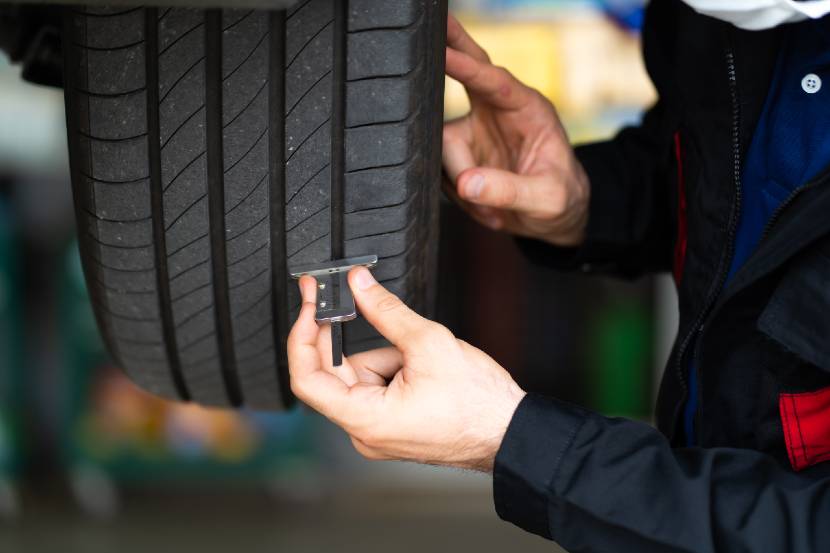
How to check tyre tread depth
Tread helps your car grip the road, especially when it’s wet. Less tread usually means less control.
By law, the minimum tread depth in the UK is 1.6mm, measured across the middle 75% of the tyre and all the way round.
You can check with a tread gauge or use the quick and easy 20p tyre test:
-
Place a 20p coin in the main tread grooves
-
If you can’t see the coin’s outer rim, you’re above the legal limitIf you can see it, your tread might be too low
-
Do this in 3 spots around each tyre, just in case one bit’s worn more than the rest.
- Longer stopping distances
- Less grip in the rain
- Higher risk of aquaplaning
Most modern tyres have small moulded bars built into the tread grooves at the legal 1.6mm minimum. When the tread surface is level with these bars, you've hit the legal tyre tread limit for the UK and it's time for new tyres.
Why tyre tread matters
Tread helps clear water from the road. So the deeper the tread, the better your grip.
This is especially important in winter and when driving in the snow and on icy roads. While the legal minimum tread depth in the UK is 1.6mm, experts recommend a minimum of 4mm for winter tyres to maintain adequate grip in severe conditions.
Brand new tyres usually have around 8mm of tread. Most experts suggest changing them when they hit 3mm, not 1.6mm; that’s when braking distances start to increase.
Worn tyres can lead to:
What if my tyres aren’t legal?
If your tyres fall below the legal tyre limit in the UK, you could face £2,500 per tyre and 3 points on your licence.
Got four dodgy tyres? That’s £10,000 and potentially losing your licence.
Worse still, your insurance might not pay out if you crash with illegal tyres.
So don’t chance it. A five-minute check now could save you a lot later.
Tyres are a crucial safety feature and are expensive to replace. Completing a quick MOT check means you can check if a car has had previous issues or recurring tyre damage.





 cookie usage