

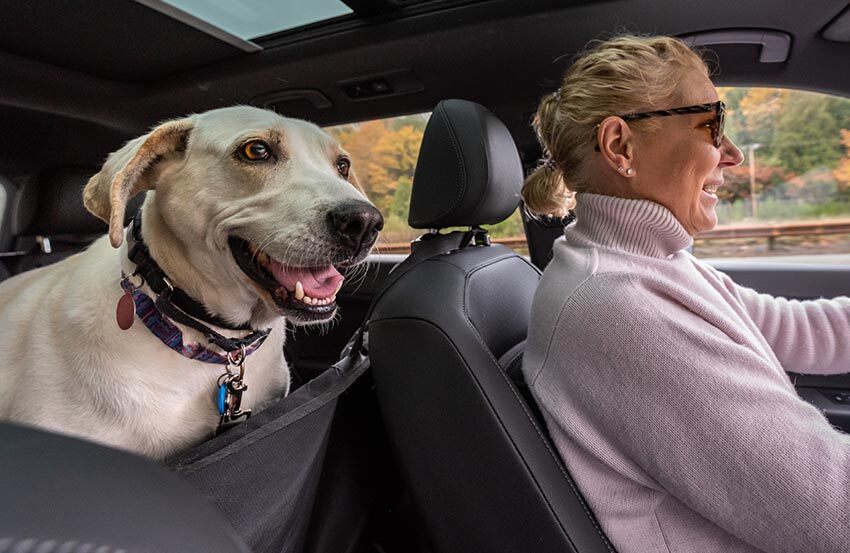
Planning a road trip with your pooch? Before you load the car with gravy bones, it’s important that you have everything you need to keep your dog - and your car insurance policy - secure.
Key takeaways:
- When you’re driving, your dog needs to be properly restrained. If you skip doing this, you’ll be breaking Highway Code Rule 57.
- Fines for driving with an unrestrained dog can be hefty. It can be up to £1,000 - or £5,000 plus 9 points on your licence if it’s treated as careless driving.
- Want your dog to ride shotgun? Having them in the front seat is allowed, but they must be restrained in order to avoid potential airbag injuries.
- Some dogs can suffer from motion sickness. The tell-tale signs include drooling, panting, lip-licking, and a reluctance to get in the car.
- Leaving a dog in a hot car is extremely dangerous and should never be done, even if it’s just for a few minutes.
What are the laws and rules around driving with your dog?
In the UK, driving with a dog that's not properly secured can lead to some pretty severe legal penalties. That’s because an unrestrained dog is more likely to distract you when you're driving, which could lead to an accident.
The rule is laid out explicitly in Highway Code Rule 57. Essentially, it says you should use either a seat belt harness, pet carrier, dog cage or dog guard to restrain your furry friend.
You can choose whichever option your dog is most comfortable with. If fitted properly, these methods can help keep your dog out of harm's way while you concentrate on the road.
It’ll also help you avoid any penalties. As it stands, you could be met with an on-the-spot fine of up to £1,000 for ‘driving without proper control’. That hikes up to £5,000 and 3-9 points on your licence if the offence is treated as ‘careless driving’.
Fines aside, keeping to the rules is important for safety reasons, too. If they’re not secured, your dog could get seriously hurt. For example, if you have a crash, they could injure themselves, escape, get killed, or injure a passenger if they're thrown forward.
What our motor insurance expert says
“Despite the rules, many drivers still get behind the wheel without properly restraining their dog. But beyond the risk of fines and penalty points, driving with an unrestrained dog jeopardises your car insurance. And, in the case of an accident, your insurer could refuse to pay out.”


Getting your dog used to travelling in the car
Pushing your dog to travel when they aren't ready isn't a good idea. We're the first to admit that we're not experts on dog behaviour, so if you have any concerns, speak to your vet or ring the Dogs Trust free helpline for tips.
In the meantime, here are some ideas that could help your dog get used to your car:
-
Get them acquainted: Without taking your dog actually inside the car, bring them around your car and reward them for getting near. If it’s safe to do so, drop some treats close to the car and take a toy or a game out with you too. This shows the dog that the car is a nice place to be.
-
Give inside a try: With your car doors open and engine off, have a go at sitting inside the car with your dog. Have their favourite toy, long-lasting chews, or a few treats scattered for them to find. If they're not there yet, that's fine! Just go back to the first step and keep building up the positivity.
-
Do a stationary test: If you find your dog is happy going inside the car, try closing the door and turning the engine on - remember, you're not going anywhere at this point. Start with just a few seconds, then build it up. Keep up the toys, chews and rewards. Again, go back to the previous step if you find they're not comfortable.
-
Test out the restraint: Before you speed off, it’s important to get your dog used to their restraint. You could switch to a different type of restraint if you think that's the main cause of anxiety. For example, swapping a harness for a crate. Just make sure you line the crate or boot with a blanket so they're comfortable and won't slip.
-
Time to drive: At this point, you might be ready to hit the road! Make sure you drive to a place where you can walk home if they seem to be getting nervous. And once you're happy, build up the journey time gradually. If you notice at any time that they're showing signs of discomfort (drooling, panting, sickness, or shaking), go back a step.
Another point to remember: There will be times where you have to drive your dog to places that they're not fond of. For example, the vet or the groomers. For these first few drives, keep it positive and make sure the destination is somewhere fun for your dog!
For more information, the PDSA has some great tips on travelling with your dog in the car.
Tips for driving with your dog in the car
Before you start travelling
Plan your journey. Make sure it's in the cooler times of the day if you're travelling in the summer and that you've got plenty of stops factored in.
Although the more direct route means you'll be there more quickly, there might not be many stopping opportunities. Going cross-country might mean there are more country parks and rural laybys where you can stop.
If it's a hot day, make sure you're doing everything you can to keep the car cool. For example:
- Check your air conditioning reaches the back of the car
- Invest in sunshades to put on the windows
- Roll the window down a little bit, but never let your dog stick their head out of the window, it's really dangerous
Don't feed your dog for two hours before travelling. This might help with car sickness. You could also take your dog for a long walk so they have time to go to the loo, it might help them settle in the car too.
Use a crate, carrier, or comfortable restraints
There are a few different ways to secure your dog in the car:
In the boot with a boot guard. Usually boots have a good amount of space, so it's a great option for your dog. Particularly if you put some blankets down. Just make sure you use a boot guard so your dog doesn't climb into the passenger area. Also, make sure your dog knows to wait until they're on their lead before jumping out of the boot.
In a crate. A crate can be a good option if your dog is comfortable with them. You can position this either in the boot or in the rear passenger section of the car. But you need to make sure it's secured with anchor straps and that your dog has enough room inside.
Seatbelt harness. This could be a good option for maybe more nervous dogs who might find comfort in seeing you. They're also a good option for smaller cars. As long as it fits properly, you can use your dog's regular harness for this and get a seat belt attachment.
Or you could get a specific car harness that indicates to the dog that they're going in the car. You just need to make sure it fits them correctly - this means snug, but not too tight. Your local pet shop can help you fit one if you need it.
Dog carriers for smaller dogs. You can get small pet carriers for dogs like pugs, Chihuahuas and Dachshunds. These might look a bit like cat carriers.
Again, you need to make sure you can secure them in the back seat with a seatbelt and that they've got enough room.
Always have plenty of water
Make sure your dog has access to water. Your dog might not want to drink while the car is in motion, but make sure you stop regularly and offer them a drink. Give them time to think about having a drink too, they might not want anything as soon as the car stops while they adjust.
Don't forget food and treats for long journeys or emergencies
If your dog doesn't have motion sickness, you could give them a few treats when you stop to make the journey more enjoyable for them. You should also pack some food just in case you break down at the side of the road.
Make regular stops
Make sure your dog can stretch their legs and go to the loo often. Like we've mentioned, it's a good time to give them a drink and maybe a few treats if they're not car sick.Treating motion sickness
If you notice your dog drooling, panting, lip-licking, or generally displaying a reluctance to get into the car, they might have dog travel sickness.
Think you’ve got a motion-sick pup on your hands? Speak to your vet first, as they might be able to offer some tips or even medication. But you could try these too:
-
Don't feed your dog anything for two hours before your journey.
-
Try anti-anxiety products if you think your dog needs them - calming collars, supplements and compression coats might help.
-
Anti-sickness medications. You can get these medications from the vet, never use human anti-sickness meds for dogs, though.
Got a dog on the more junior side? It’s often the case that puppies grow out of motion sickness the more their inner ear develops. So, if they’re finding travel tough, the silver lining is it might just be a phase.
Can dogs sit in the front seat?
Yes, dogs can sit in the front seat, but you have to stick to these rules to prevent injury to both you and your dog:
- Make sure your dog is wearing their seatbelt harness
- Turn off the passenger airbag
- Make sure the passenger seat is as far back as possible
Although it's legal to have your dog in the front seat, it's best to have your dog in the boot or in the rear passenger seats. Your dog is less likely to distract you in the back, and if your airbag goes off it could seriously injure your dog.
Can a passenger hold a dog in the car?
No, someone holding a dog in a car doesn't count as a restraint. Your dog could wriggle free and end up distracting the driver.
Is it illegal to leave your dog in the car?
It's not illegal to leave a dog in a car, but it is cruel in some cases. In hot weather, temperatures in a car can sore. The dog can get dehydrated and die. If this happens, the owners could be charged with animal cruelty under the Animal Welfare Act 2006. This could mean a prison sentence or a fine. The same applies to a very cold day. Your dog might not be able to stay warm.
When should I not travel or drive with my dog?
Don't travel with your dog if you don't have the proper restraints. Or if you can't stop for your dog to have a comfort break. It's not a good idea to travel with your dog if they've had an operation, or certain medical issues.
Also, if your dog is showing signs of anxiety, it's worth starting travel training with them before you go on a journey.
What do I need when driving abroad with my dog?
If you're taking your pet abroad in the car, you'll still need to make sure you can follow the points mentioned earlier in the guide. Make sure your dog can have comfort breaks regularly and that they're properly secured. If you're driving to the EU or Northern Ireland, your pet will also need:
- A microchip
- A valid rabies vaccination
- An animal health certificate for the country you're travelling to
- If you're going directly to Ireland, Finland, Malta or Norway, you'll need a tapeworm treatment
This applies to all pets including service animals. But you should check the requirements for the country you're visiting as they can vary.
The animal health certificate has replaced pet passports now after Brexit. Make sure you have all your documentation to hand when leaving and entering a different country.




 cookie usage